
Pre-Primary School in Puducherry for Nursery, KG1 and KG2
A joyful, ambitious beginning at 21K School, Puducherry
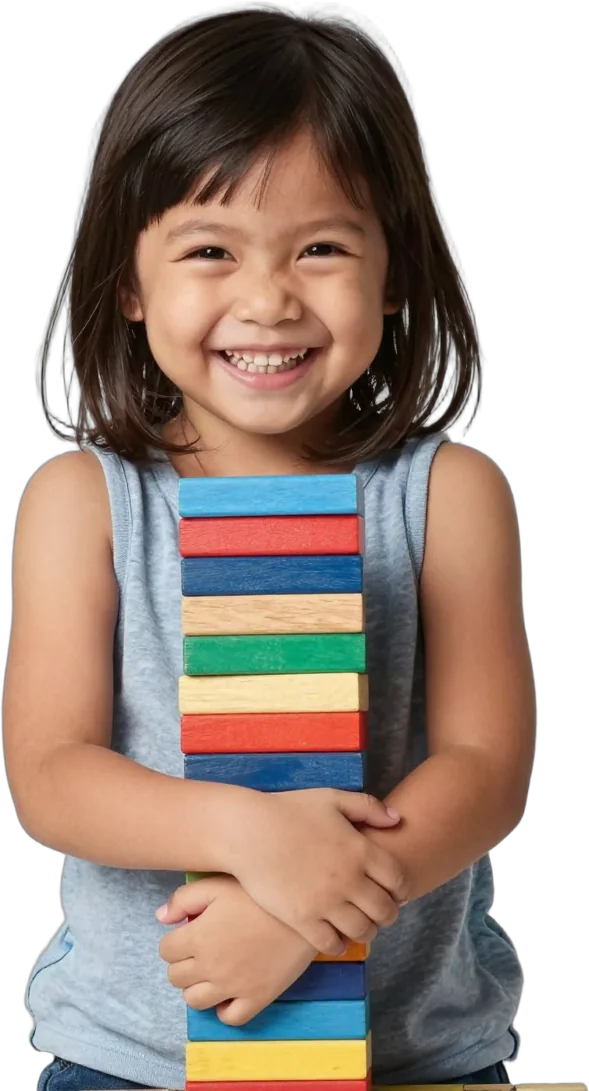



Where a love for learning begins
The early years shape far more than readiness for the next grade. They shape how a child speaks, listens, moves, makes friends, responds to challenge and begins to see themselves as a learner.
At 21K School, Puducherry, Nursery, KG1 and KG2 are designed as active, joyful years of discovery. Children learn through play, stories, conversation, movement, music, art, exploration and thoughtfully guided experiences. They build strong early foundations without losing the curiosity, imagination and energy that make childhood extraordinary.
With two facilitators in every Nursery, KG1 and KG2 class, specialist experiences and a maximum of 24 learners in a section, every child has the space to participate, be understood and grow with confidence.
A carefully limited beginning
- Maximum 24 learners in a section
- Two facilitators per class
- Maximum two sections per level
- Monday to Friday
- 8:30 a.m. to 12:00 noon
- No personal laptop required
Pre-Primary is housed in Aarambh—The Beginning—within La Lumière, the campus identity of 21K School, Puducherry.
Why parents choose pre-primary at 21K School, Puducherry
A child is known, not managed in a crowd
Young children communicate in many ways—through words, movement, play, questions, silence, enthusiasm and hesitation. Two facilitators work with each class, allowing them to notice these patterns over time and understand when a child needs reassurance, a fresh challenge, another opportunity to practise or simply the confidence to try independently.
Learning is active, not passive
A pre-primary child is not expected to sit still and listen for long stretches. The day moves through stories, rhymes, games, movement, conversations, creative work, role play, outdoor experiences and hands-on exploration. Children are invited to notice, ask, predict, create, explain and share.
School readiness goes beyond worksheets
Reading and number foundations matter, but readiness for Primary School is wider. Children learn to follow routines, express needs, listen to others, manage belongings, take turns, persist with a task, solve simple problems and become increasingly independent. Gross motor skills, fine motor control, thinking skills, questioning and Habits of Mind are developed throughout the programme.
Strong foundations without unnecessary pressure
Children progress at different rates in the early years. We do not use marks, ranks or competitive comparisons. Facilitators observe what each child can understand and do, then plan experiences that help the child take the next meaningful step.

Nursery, KG1 or KG2: Where should your child begin?
The recommended level is based primarily on the child’s age, previous learning experience and the school’s interaction with the family and learner. The age ranges below are a practical guide.
- 1
Nursery: Usually 3 to 4 years
Nursery gives children a gentle, engaging introduction to school life. The focus is on communication, comfort within routines, physical development, sensory exploration, relationships, play and the confidence to participate. Early literacy and mathematical ideas are introduced naturally through stories, sounds, sorting, patterns, songs and everyday experiences.
- 2
KG1: Usually 4 to 5 years
In KG1, children deepen their language, early reading, number sense, physical coordination and understanding of the world. They begin to sustain attention for longer, explain ideas with greater clarity, work with others and approach activities with increasing independence.
- 3
KG2: Usually 5 to 6 years
KG2 strengthens the foundations required for a confident transition into Grade 1. Children develop greater fluency in communication, early literacy and mathematics while learning to organise their thinking, complete multi-step activities, reflect on their work and participate responsibly within a group.
For the academic year beginning in June, the recommended age is calculated as of 1 July: three years for Nursery, four years for KG1 and five years for KG2. Exceptional consideration may be given where the child reaches the relevant age by 30 September, subject to the school’s review and applicable requirements.
An EYFS-based early-years programme
Our Pre-Primary programme is based on the Early Years Foundation Stage approach. It recognises that young children learn best when care, relationships, play, purposeful teaching and an enabling environment work together.
Learning is organised around seven interconnected areas. They are not taught as isolated subjects. A story about a garden, for example, may lead children to learn new words, count seeds, observe changes, move like insects, create art, work with a partner and talk about caring for living things—all within one meaningful theme.
Communication and language
Children listen to stories and one another, build vocabulary, ask and answer questions, describe experiences and grow more confident in expressing ideas. Conversation, storytelling, rhymes and role play make language a living part of the day.
Personal, social and emotional development
Children learn to recognise feelings, develop positive relationships, cooperate, take turns, respond to routines and grow in independence. Warm, respectful relationships help them feel secure enough to participate, take appropriate risks and recover when something does not go as planned.
Physical development
Movement is central to the programme. Outdoor play, games, balance, coordination and whole-body activities develop gross motor strength. Drawing, threading, construction, manipulation and early writing experiences build fine motor control and hand–eye coordination.
Literacy
Children encounter books, stories, poems, songs, sounds, symbols and meaningful opportunities to draw and write. The aim is not hurried performance, but a secure relationship with language and print that supports later reading and writing.
Mathematics
Number, pattern, shape, measurement, comparison and spatial reasoning are explored through objects, movement, games, stories and daily routines. Children learn to notice relationships and explain how they reached an answer—not merely repeat one.
Understanding the world
Children investigate people, places, nature, materials and everyday technology. They observe, compare, predict and ask questions, building the early habits of inquiry that later support science, social studies and responsible citizenship.
Expressive arts and design
Art, music, dance, drama, imagination and making give children different ways to express what they know and feel. They explore materials, develop ideas, perform, create and discover that there can be more than one meaningful response.
How children learn at 21K School, Puducherry
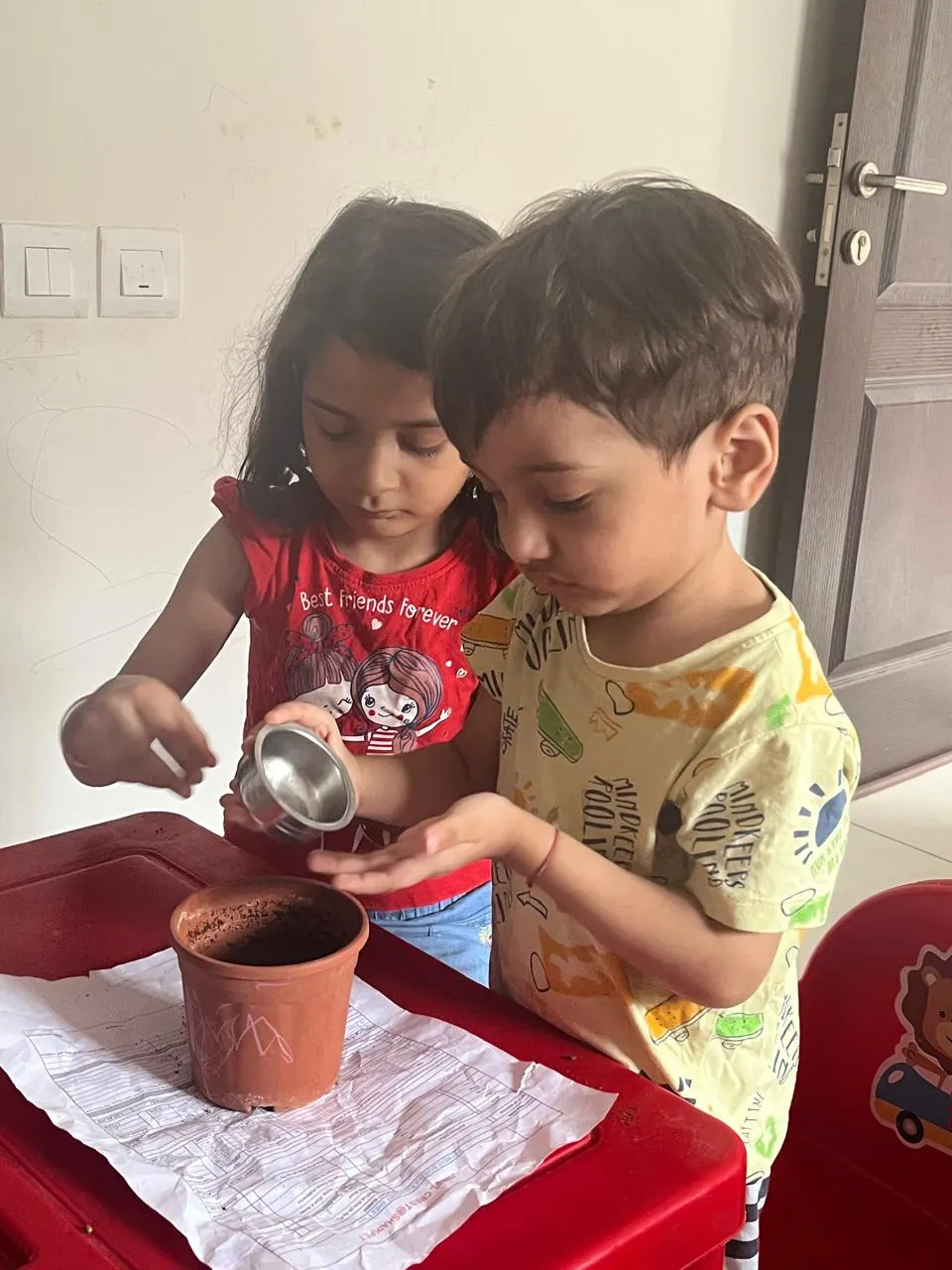
Themes that connect ideas
Learning is planned through age-appropriate themes that help children connect language, mathematics, the world, movement and creativity. Instead of moving through disconnected worksheets, children revisit ideas in different ways and build understanding over time.
Play with purpose
Play allows children to test ideas, negotiate roles, use language, solve problems and make sense of experience. Facilitators observe carefully, join at the right moments, introduce new vocabulary, ask thoughtful questions and extend the learning without taking ownership away from the child.
Guided teaching when it adds value
Early-years learning is not unstructured. Facilitators model sounds, language, movement, thinking strategies and routines; introduce new concepts; guide small-group experiences; and provide practice that is appropriate to each level.
Questions before quick answers
Children are encouraged to wonder, notice and ask. A question may lead to an investigation, a story, a drawing, a conversation or a simple experiment. This helps develop curiosity, reasoning and the confidence to think independently.
Habits that support lifelong learning
Children begin to practise persistence, listening, flexibility, careful observation, imagination, reflection and collaboration. These Habits of Mind help them engage with increasingly complex learning as they grow.
A typical day in pre-primary
A young child’s day needs rhythm without becoming rigid. The Pre-Primary day runs from 8:30 a.m. to 12:00 noon, Monday to Friday, with age-appropriate variation across Nursery, KG1 and KG2.
- Arrival, settling-in time, movement and play
- Morning assembly and a warm start with the class community
- Short thematic learning experiences led by the class facilitators
- Stories, rhymes, music, conversation and role play
- Fine motor, creative and hands-on activities
- Outdoor movement, physical play and short breaks
- Snack or food brought from home
- An age-appropriate Zero Period for enrichment, reinforcement, individual attention or a calm reflection on the day
The sequence is planned around children’s attention, energy and developmental needs. Transitions, movement and play are part of learning—not interruptions to it.
No laptop. No device-led childhood.
Nursery, KG1 and KG2 learners will not require personal laptops and will not use the Computer Lab. Their learning will be rooted in people, objects, books, movement, nature, conversation and the physical campus.
Where a facilitator uses classroom technology, it will be brief, purposeful and guided. A digital display may help bring a sound, image, song or distant place into the room, but it will not replace play, personal interaction or hands-on experience.
Two facilitators in every pre-primary class
Continuity matters in the early years. Every Nursery, KG1 and KG2 class has two facilitators. A consistent homeroom facilitator anchors the child’s daily experience, while the second facilitator strengthens observation, participation and age-appropriate support across the group. Together, they create familiarity and help the school understand each child’s development as a whole. Specialist facilitators add depth through areas such as music, movement, art, dance and physical education.
Early-years facilitators will be graduates or postgraduates with relevant early-years or teacher-training qualifications. They will also participate in continuing professional development through 21K’s Learning Excellence system, including learning science, phonetics, child development and social-emotional understanding.
Movement, creativity and outdoor experience
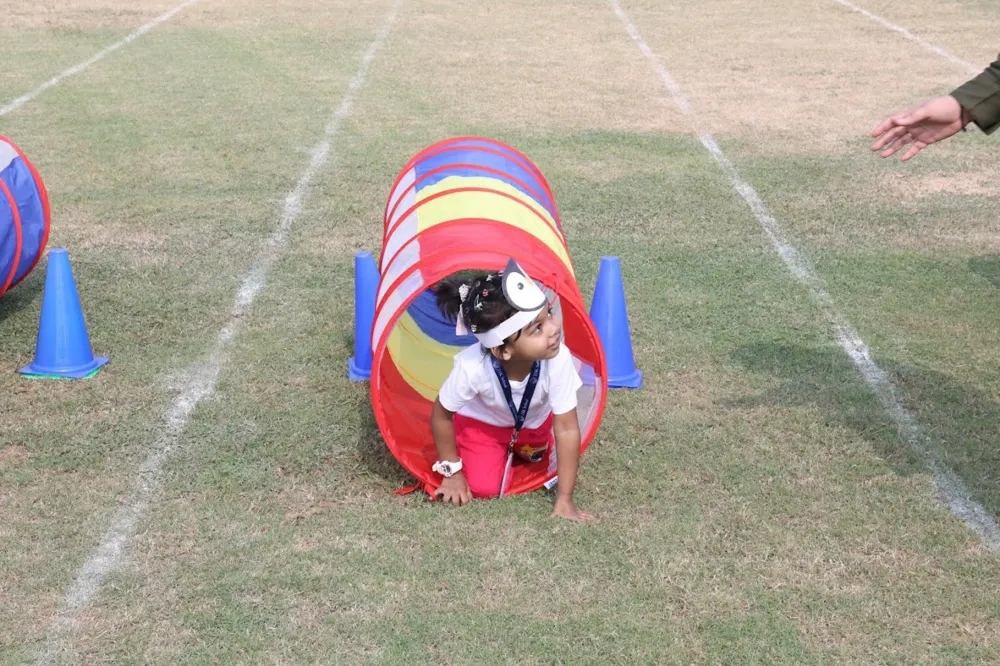
Pre-Primary is not confined to a classroom. Children use movement and outdoor play to build strength, balance, coordination and confidence. Music, dance, art, drama and theatre experiences develop expression, rhythm, imagination and communication.
The wider campus gives children access to thoughtfully designed activity spaces while Aarambh provides a familiar home for their daily learning. Experiences are selected for the child’s age and readiness, with safety and participation at the centre.
Support for different strengths and needs
Some children need more time with a skill; others are ready for a richer or more complex experience. Some may have identified learning, developmental, medical or accessibility needs. Our approach is to understand the learner rather than attach assumptions to a label.
The class facilitators, family and learning-support system work together to identify appropriate reinforcement, enrichment or specialist support. Online counsellors and relevant specialists may contribute where appropriate. Admission and support requirements are considered individually, based on the child’s needs and the school’s ability to provide suitable support.
21K School, Puducherry is being developed as an inclusive and physically accessible campus.
Safety, care and wellbeing
Young children learn best when they feel secure. The campus will have a full-time qualified nurse, an infirmary and a tie-up with a local hospital for emergency support. Staff will complete background and police verification before joining.
The school’s child-protection framework will include a designated safeguarding lead, trained staff, controlled visitor access, defined reporting and escalation processes, and POCSO and POSH compliance. CCTV will cover classrooms, entrances and appropriate common areas, with access restricted to authorised personnel under privacy and retention protocols. Footage will not be available for routine parent viewing.
Professional housekeeping, supervised arrival and departure, campus security and age-appropriate personal-safety learning will form part of the wider care system.
A strong partnership with parents
Parents know their child in ways a school cannot; facilitators see the child learning within a group in ways a family may not. When both perspectives come together, the child benefits.
Parents will have scheduled parent–teacher meetings, on-demand conversations, Coffee Meets, surveys, one-to-one parent connects, formal reports and access to relevant progress information. Communication should not begin only when there is a concern—it should build a shared understanding throughout the year.
From KG2 to Grade 1
The move to Primary School should feel like progression, not a sudden change in what learning means. By the end of KG2, children should be increasingly able to communicate ideas, participate in routines, approach early reading and mathematics with confidence, work with others, manage age-appropriate responsibilities and sustain effort.
They will continue into a Primary programme that develops strong academic foundations while preserving inquiry, creativity, movement, relationships and active learning. From Grade 1, English remains the medium of instruction and learners begin the school’s language-choice structure.
Age eligibility and admissions
The Pre-Primary programme is planned to open with Nursery, KG1 and KG2 in the inaugural 2027–28 academic year. Admissions are expected to open in January 2027, with classes planned from June 2027.
Admission considers age eligibility, available previous records where applicable, a parent interaction, an age-appropriate interaction with the child, the school’s ability to support the learner appropriately and seat availability. There is no competitive entrance examination.
The academic year runs from June to May across two terms. April is a compulsory Summer School Programme for enrolled learners, while May is the summer break.
Questions parents ask
Is 21K School, Puducherry a physical school?
Yes. It is 21K School’s on-campus school in Puducherry. Core teaching, relationships, play, activities and campus experiences take place face-to-face. Selected online systems and expertise support the wider learning model where age-appropriate.
Which Pre-Primary levels will be available?
The inaugural programme is planned to include Nursery, KG1 and KG2.
Which early-years curriculum will the school use?
Pre-Primary will use an EYFS-based programme organised across communication and language; personal, social and emotional development; physical development; literacy; mathematics; understanding the world; and expressive arts and design. Learning is thematic and integrated rather than divided into conventional school subjects.
What is the recommended age for each level?
The recommended ages are three years for Nursery, four years for KG1 and five years for KG2 as of 1 July of the academic year. Exceptional consideration may be given if the child reaches the relevant age by 30 September, subject to review and applicable requirements.
What are the school timings?
Pre-Primary runs from 8:30 a.m. to 12:00 noon, Monday to Friday. Arrival and departure procedures will be shared before the school opens.
Will my child need a laptop or use the Computer Lab?
No. Nursery, KG1 and KG2 learners will not require laptops and will not use the Computer Lab. Learning will remain hands-on, social, physical and play-led. Any classroom technology will be used briefly and purposefully by the facilitator.
How many learners will be in a section?
Each section will have a maximum of 24 learners and two facilitators, with no more than two sections at each level.
Will children receive homework?
The school will avoid routine, heavy homework. Families may occasionally receive a purposeful reading, conversation or simple activity that helps connect school learning with the child’s world at home.
How will I know whether my child is progressing?
Progress will be shared through observations, portfolios, skill-development indicators, narrative feedback, formal term reports, parent–teacher meetings and relevant dashboard information. Pre-Primary does not use marks, ranks or competitive comparisons.
Does the programme prepare children for Grade 1?
Yes. KG2 develops the communication, early literacy, mathematics, physical coordination, independence, social capability and learning habits needed for a confident move into Primary School. Readiness is built through meaningful experience rather than pressure or premature formalisation.
What should children bring for food?
Children will bring their food from home, following the school’s final food, allergy and safety guidance. Detailed requirements will be shared with enrolled families.
Will a uniform be required?
Yes. A school uniform will be compulsory and supplied by the school. Details will be communicated before the academic year begins.
Will transport be available?
The school plans to provide transport coverage across Puducherry city through a carefully selected transport partner. The campus is approximately a 30-minute drive from central Puducherry. Final routes and stops will be announced closer to opening.
Can the school support a child with additional needs?
The campus is being designed to be inclusive and physically accessible. Support needs will be considered individually through conversations with the family and review by the relevant school team, based on the child’s needs and the school’s ability to provide appropriate support.
Give your child a beginning filled with possibility
The right early-years experience does not rush childhood. It uses childhood well—turning play into inquiry, conversation into language, movement into confidence and curiosity into the foundations of lifelong learning.
At 21K School, Puducherry, your child’s journey begins in Aarambh with the security of being known, the freedom to explore and the encouragement to keep asking what else may be possible.
Regulatory disclosure
21K School, Puducherry is a proposed school, subject to recognition by the Directorate of School Education, Government of Puducherry.
From Primary School onward, the school proposes to follow the CISCE curriculum and syllabus and intends to seek affiliation with the Council for the Indian School Certificate Examinations (CISCE), New Delhi, subject to the prescribed approvals and requirements.
Social development belongs in the school day
Children learn to become part of a community by living within one. In the classroom, playground, assembly and shared campus spaces, they practise greeting others, listening, waiting, sharing, asking for help, resolving small disagreements and contributing to a group.
Assemblies, celebrations, arts experiences, the School Carnival and age-appropriate campus events give children further opportunities to participate and feel that they belong. The House system—Google, Amazon, Microsoft and Apple—supports identity, service and participation without competitive points, ranks or winners.