
Habits of Mind at 21K School: Building 16 Habits for Thoughtful Learning
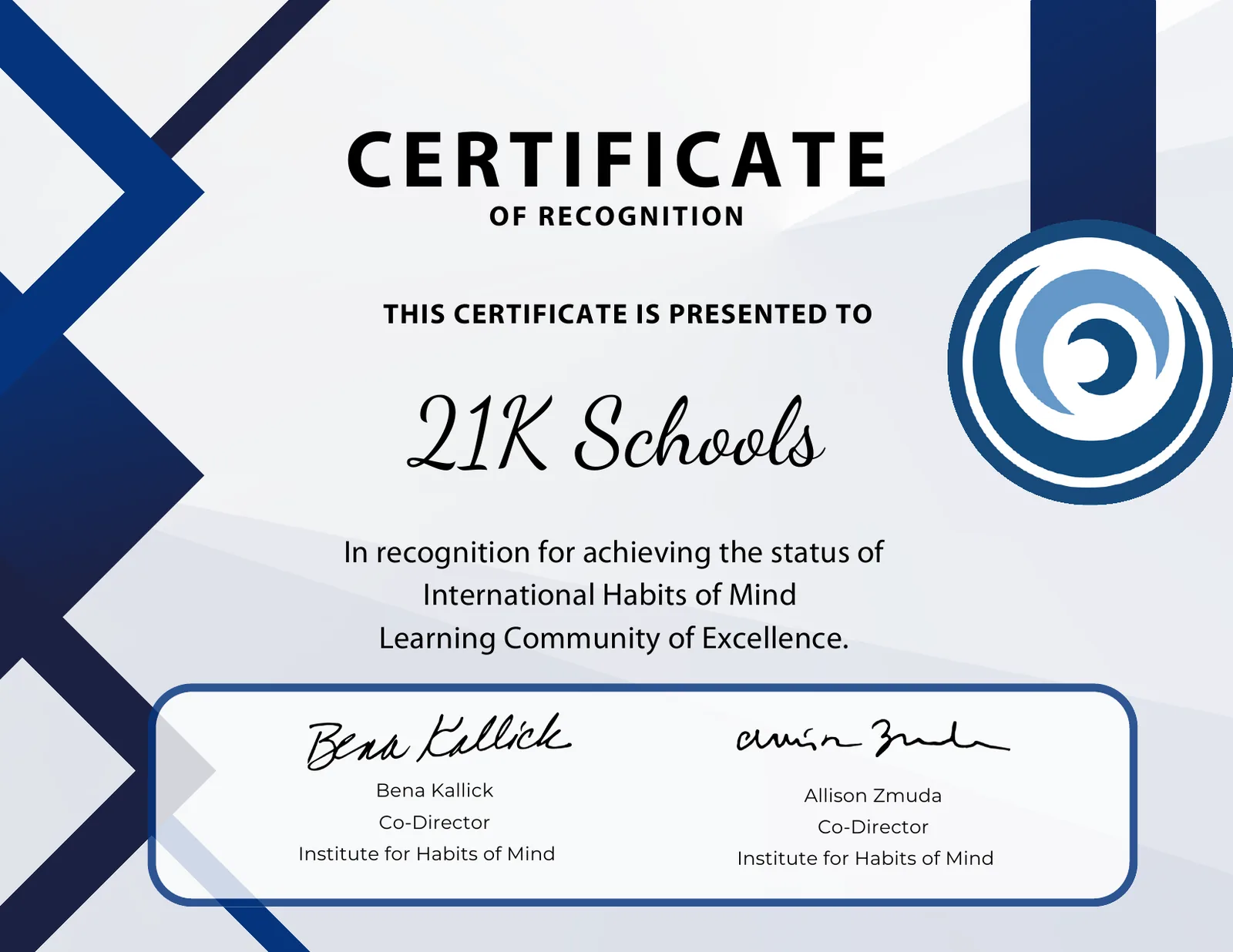
Learners practise 16 Habits of Mind across their learning, supported by 21K School’s recognition as Asia’s first International Habits of Mind Learning Community of Excellence.




Knowledge matters. But the situations that shape your child’s future will often be unfamiliar, complex and open-ended. In those moments, success depends on how the learner responds: whether they persist, ask a better question, consider another perspective, use evidence and reflect on their approach.
Habits of Mind gives 21K School a shared language for developing these intelligent behaviours across learning and life.
A learning culture built around Habits of Mind
The Milestone 3 recognition reflects how the 16 Habits of Mind are embedded across learning, assessment and school culture.
The 16 Habits of Mind were developed by educators Dr Arthur Costa and Dr Bena Kallick. They describe dispositions people draw upon when they face a problem whose answer is not immediately known.

21K School is the first school in Asia to be recognised as an International Habits of Mind Learning Community of Excellence. Our certification has been renewed as an International Habits of Mind Learning Community of Excellence — Milestone 3. The recognition reflects a commitment to embed the habits across curriculum, pedagogy, assessment and culture rather than treating them as isolated lessons.
The 16 Habits of Mind and what they look like in learning
A practical look at the thinking habits learners develop to approach challenges, choices, ideas and relationships thoughtfully.
- Persisting means staying with a worthwhile challenge and changing strategy when needed.
- Managing impulsivity means pausing, considering and acting with intention.
- Listening with understanding and empathy means seeking to understand another person’s meaning and perspective.
- Thinking flexibly means viewing a situation in different ways and being willing to revise an approach.
- Thinking about thinking means becoming aware of one’s strategies, assumptions and learning process.
- Striving for accuracy means checking, refining and taking pride in quality.
- Questioning and problem posing means identifying what needs to be understood and asking questions that open inquiry.
- Applying past knowledge to new situations means transferring learning rather than keeping it trapped in one lesson.
- Thinking and communicating with clarity and precision means choosing language and evidence carefully.
- Gathering data through all senses means observing attentively and using varied sources of information.
- Creating, imagining and innovating means generating possibilities and developing original, useful ideas.
- Responding with wonderment and awe means remaining curious and finding significance in learning.
- Taking responsible risks means moving beyond comfort with thought, preparation and responsibility.
- Finding humour means recognising incongruity and using perspective in healthy, respectful ways.
- Thinking interdependently means contributing to and learning with a group.
- Remaining open to continuous learning means recognising that understanding can always deepen.
How learners build Habits of Mind through practice
Challenge, thoughtful support and reflection give learners repeated opportunities to practise the habits in real learning situations.
Children do not develop persistence because a poster tells them to persist. They develop it when a task is challenging enough to require effort, support is available without removing the thinking, and reflection helps them recognise what worked.
The same is true for empathy, accuracy, creativity and collaboration. Every live class, project, discussion and assessment can create a reason to practise one or more habits.

How inquiry builds questioning and flexible thinking
Learners investigate meaningful questions, examine evidence and develop their own understanding rather than only receiving answers.
Inquiry begins with questions that matter. Instead of only receiving information, learners investigate, develop possibilities, gather evidence and construct understanding.
A learner exploring water conservation might study local use, interpret data, consider causes and design a response. The academic content remains important, but the learner also practises questioning, thinking flexibly and applying knowledge to a new situation
How projects put Habits of Mind into practice
Planning, research, collaboration and feedback make the habits visible while connecting learning across subjects.
Authentic projects require learners to plan, research, calculate, create, collaborate, receive feedback and improve. A challenge such as designing a more sustainable neighbourhood can connect Science, Mathematics, Social Studies, communication and design.
The process makes Habits of Mind visible. Learners persist when an idea fails, strive for accuracy in evidence, think interdependently and communicate choices with clarity.

How learners develop awareness of their own thinking
Reflection, self-assessment and feedback help learners recognise what worked, where they struggled and what to try next.
Strong learners notice how they learn. Reflection journals, self-assessment, feedback conversations and learner-led conferences help children identify strategies, strengths and priorities.
After an assessment, a learner might ask: Which strategy helped? Where did I become uncertain? What will I do differently? This turns a result into information for growth.
How learners build Habits of Mind together
Shared goals, active listening and respectful disagreement help learners develop empathy, collaboration and flexible thinking.
Working with others is not simply sitting in the same online room. Learners need roles, shared purpose, listening, respectful disagreement and collective responsibility.
Live classes and projects create opportunities to explain thinking, test an idea against another perspective and improve work through peer contribution. These experiences develop both empathy and intellectual flexibility.
When collaboration creates impact beyond the classroom
Madina Behbod turned her belief in education into collective action by founding UDA (Unbroken Dreams Association). Working with 28 volunteers around the world, the initiative has delivered free online education to more than 500 Afghan girls and children in Gaza. At 21K School, Madina was also elected Student Council President by her peers. Her journey makes Thinking Interdependently tangible: bringing people together around a shared purpose and using collaboration to turn an idea into meaningful action.
How Habits of Mind shape assessment and feedback
Facilitators look beyond the final answer to strategies, questions, evidence, reflection and how learners respond to feedback.
Assessment can reward more than the final answer. Our teachers whom we call facilitators can notice the strategy a learner selected, the quality of a question, the use of evidence, the response to feedback and the willingness to revise.
Habits are not turned into a simplistic personality score. They help educators and learners describe the behaviours that made progress possible and identify what to practise next.
How Habits of Mind develop at different ages
The habits evolve from everyday choices in Early Years to independent learning, collaboration and preparation for future study.
In Early Years, a child may persist with a puzzle, wait for a turn, listen during show-and-tell or wonder aloud. In Primary School, learners begin naming strategies and applying past knowledge. In Middle School, habits support complex collaboration, research and growing independence. In Senior School, they strengthen examination preparation, subject decisions, resilience and university readiness.
| Stage | What Habits of Mind Can Look Like | Example Habits |
|---|---|---|
| Early Years | Persisting with a puzzle, waiting for a turn, listening during show-and-tell and wondering aloud. | Persisting, Managing Impulsivity, Listening with Understanding and Empathy, Questioning and Problem Posing |
| Primary School | Naming strategies, drawing on previous learning and trying different approaches when something does not work. | Applying Past Knowledge to New Situations, Thinking Flexibly, Metacognition |
| Middle School | Collaborating on more complex tasks, conducting research and taking greater responsibility for learning. | Thinking Interdependently, Gathering Data Through All Senses, Striving for Accuracy |
| Senior School | Preparing purposefully for examinations, making subject decisions, responding to challenges and planning for university. | Persisting, Thinking Flexibly, Metacognition, Remaining Open to Continuous Learning |
- Stage
- Early Years
- What Habits of Mind Can Look Like
- Persisting with a puzzle, waiting for a turn, listening during show-and-tell and wondering aloud.
- Example Habits
- Persisting, Managing Impulsivity, Listening with Understanding and Empathy, Questioning and Problem Posing
- Stage
- Primary School
- What Habits of Mind Can Look Like
- Naming strategies, drawing on previous learning and trying different approaches when something does not work.
- Example Habits
- Applying Past Knowledge to New Situations, Thinking Flexibly, Metacognition
- Stage
- Middle School
- What Habits of Mind Can Look Like
- Collaborating on more complex tasks, conducting research and taking greater responsibility for learning.
- Example Habits
- Thinking Interdependently, Gathering Data Through All Senses, Striving for Accuracy
- Stage
- Senior School
- What Habits of Mind Can Look Like
- Preparing purposefully for examinations, making subject decisions, responding to challenges and planning for university.
- Example Habits
- Persisting, Thinking Flexibly, Metacognition, Remaining Open to Continuous Learning
The situations change; the capacity to respond intelligently continues to grow.
How 21K facilitators model Habits of Mind
Facilitators make thinking visible through questioning, reflection and professional judgement while continuing to develop their own practice.
Our teachers, whom we call facilitators, model the habits as well as develop them. They may think aloud, acknowledge uncertainty, revise an explanation, ask learners to justify an answer or create time for reflection.
Continuous professional learning helps facilitators use the framework purposefully across subjects and age groups.
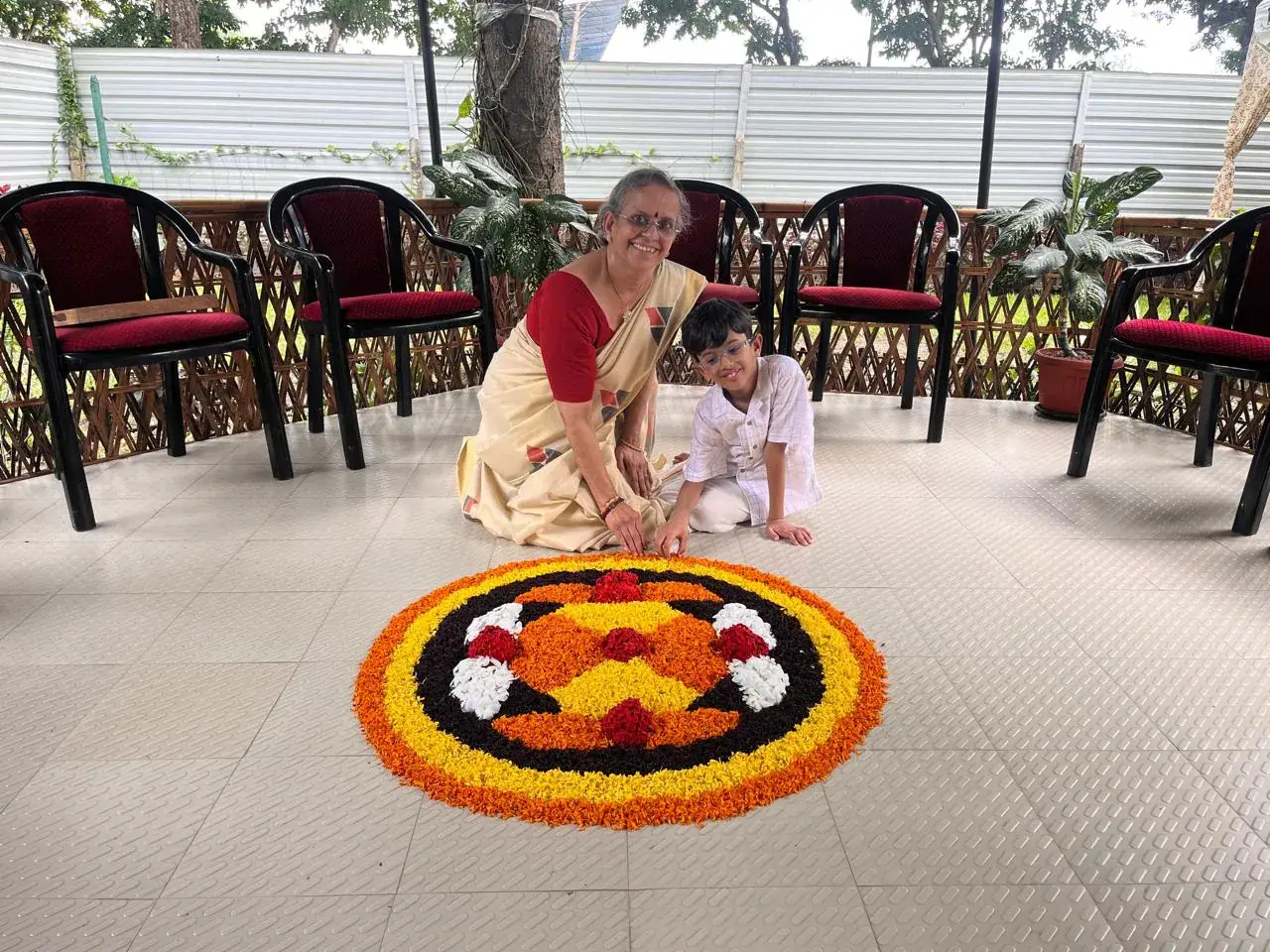
Modelling the habit of seeing another perspective
In a Social Science and History class, a 21K School facilitator used a role-play debate on the Indian National Movement to help learners explore history through different perspectives. Learners stepped into the roles of British administrators and Indian freedom fighters, listening to opposing viewpoints and developing arguments from perspectives beyond their own. The activity strengthened historical understanding while giving learners a real opportunity to practise empathy, communication and flexible thinking.
Five ways to strengthen Habits of Mind at home
Simple everyday conversations can reinforce persistence, reflection, empathy and thoughtful decision-making without recreating school at home.
Parents can reinforce Habits of Mind without recreating school at home. Ask a child what they tried before offering an answer. Notice careful revision, not only speed. Invite another perspective. Talk about a mistake as evidence. Let children see adults change their minds when new information appears.
The language works best when it supports real situations rather than becoming another set of labels.
| # | What you can do | What it encourages |
|---|---|---|
| 1 | Ask what they tried first. Before offering an answer, ask your child to explain the approaches they have already explored. | Persistence and reflection |
| 2 | Notice thoughtful revision. Recognise when your child checks, improves or refines their work. | Striving for accuracy |
| 3 | Invite another perspective. Ask, “How might someone else see this?” | Flexible thinking and empathy |
| 4 | Treat mistakes as useful evidence. Talk about what a mistake reveals and what your child might try next. | Learning from experience and metacognition |
| 5 | Model changing your mind. Let your child see you reconsider an idea when new information becomes available. | Open-mindedness and continuous learning |
- #
- 1
- What you can do
- Ask what they tried first. Before offering an answer, ask your child to explain the approaches they have already explored.
- What it encourages
- Persistence and reflection
- #
- 2
- What you can do
- Notice thoughtful revision. Recognise when your child checks, improves or refines their work.
- What it encourages
- Striving for accuracy
- #
- 3
- What you can do
- Invite another perspective. Ask, “How might someone else see this?”
- What it encourages
- Flexible thinking and empathy
- #
- 4
- What you can do
- Treat mistakes as useful evidence. Talk about what a mistake reveals and what your child might try next.
- What it encourages
- Learning from experience and metacognition
- #
- 5
- What you can do
- Model changing your mind. Let your child see you reconsider an idea when new information becomes available.
- What it encourages
- Open-mindedness and continuous learning
Why Habits of Mind matter for your child’s future
Questioning, judging evidence, adapting to change and working with others help learners navigate a future that will continue to evolve.
Technology will continue to change what information is available and which tasks can be automated. Children will still need to frame worthwhile questions, judge evidence, work with others, make ethical choices and continue learning.
Habits of Mind helps prepare learners not for one predicted future, but for the capacity to meet futures we cannot yet predict.
Questions parents ask about Habits of Mind
Is Habits of Mind a subject?
No. It is a framework woven into teaching, projects, assessment, reflection and school culture.
Are all 16 habits introduced at once?
Learners encounter the habits in age-appropriate ways. Emphasis can vary with the learning situation and developmental stage.
Does the framework replace academic content?
No. The habits help learners engage with content more intelligently and apply it more effectively.
How will I know my child is developing these habits?
Look for changes in language and behaviour: asking better questions, revising work, explaining a strategy, listening more carefully or recovering after difficulty.
Can a shy child develop communication and collaboration?
Yes. Online participation can offer different entry points, and confidence can be built gradually through structured experiences.
Are the habits graded?
Habits inform observations, reflection and feedback. They're never reduced to a single competitive score.
Why is external recognition relevant?
It indicates that the framework is embedded systematically across the learning community rather than used only as promotional language.