

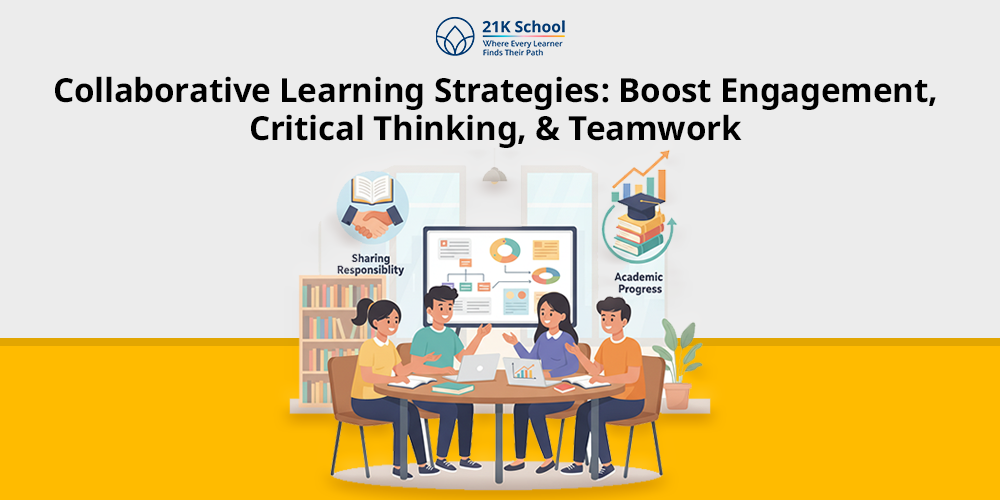
Collaborative Learning is a dynamic educational approach where learning is done by performing group work, with students working together as a team.
When students are getting involved in collaborative learning, they get more actively involved in working on a particular topic or problematic task for better outcomes for everyone.
This learning method improves the classroom environment, making it more effective & interactive among the students.
Let us try to find out some of the best and effective collaborative learning strategies in this write-up.
Table of Contents
What is a Collaborative Learning Strategy?
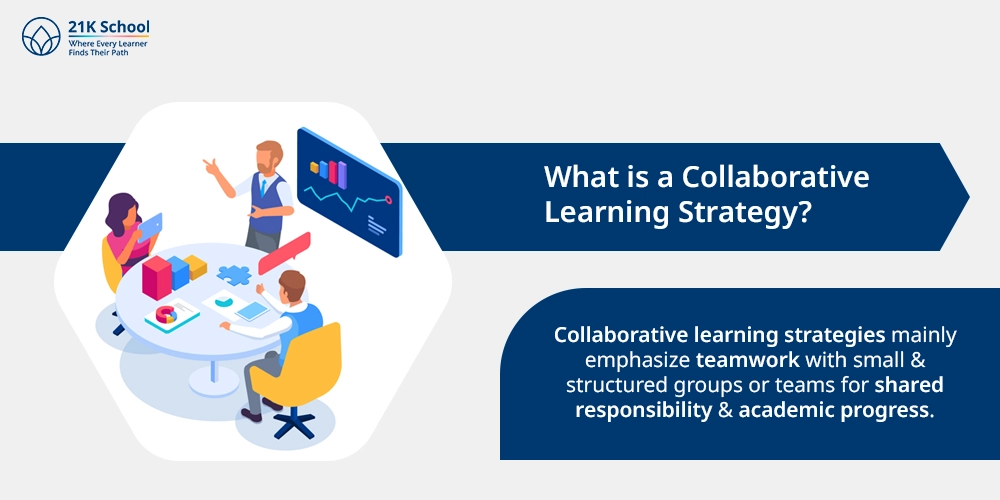
Collaborative learning strategies mainly emphasize teamwork with small & structured groups or teams for shared responsibility & academic progress.
Techniques such as Think-Pair-Share & Jigsaw Method encourage critical thinking skills, communication & leadership skills among the students.
This learning strategy identifies the roles within groups to ensure proper balanced participation & engagement within the class. This enhances deep understanding & active involvement in holistic education.
Key Principles & Components of Collaborative Learning Strategies
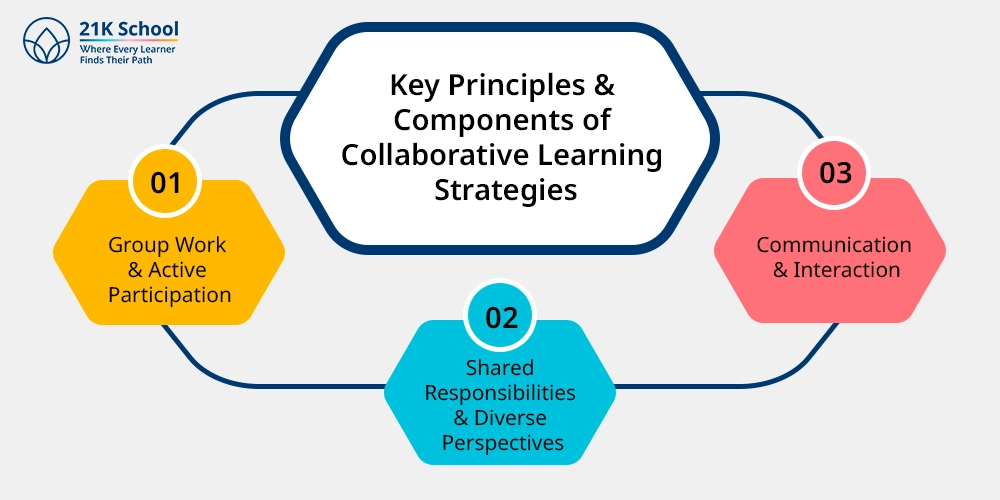
The key principles and components of these collaborative learning strategies are:
1. Group Work & Active Participation
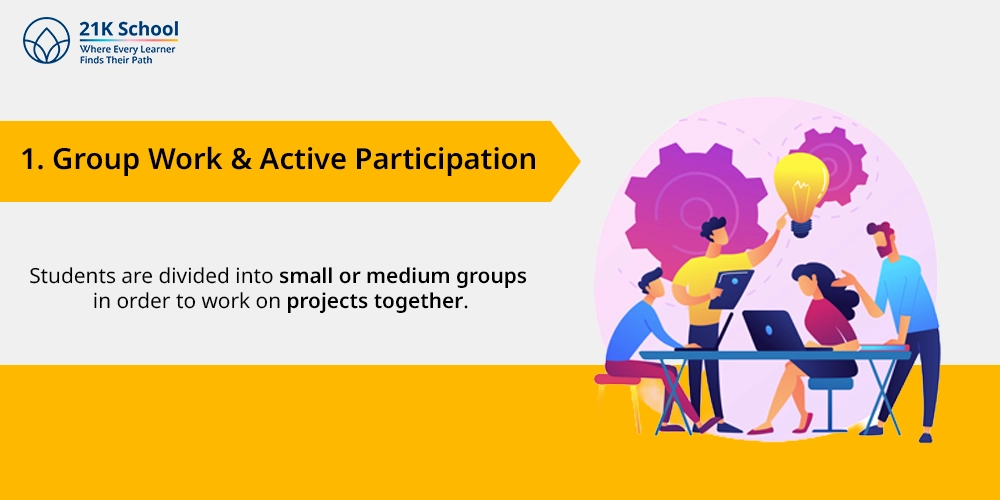
Students are divided into small or medium groups in order to work on projects together. So, the size of the group can be different, but it was actually kept small enough so that every individual can participate among themselves.
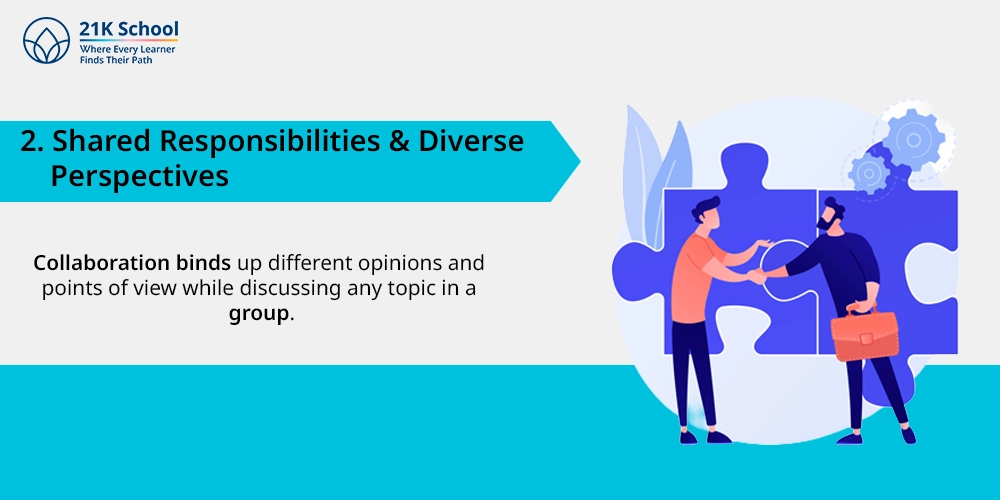
Collaboration binds up different opinions and points of view while discussing any topic in a group. So in collaborative learning, every individual in the group is accountable for sharing their ideas in the task, which encourages students to work together efficiently.
3. Communication & Interaction
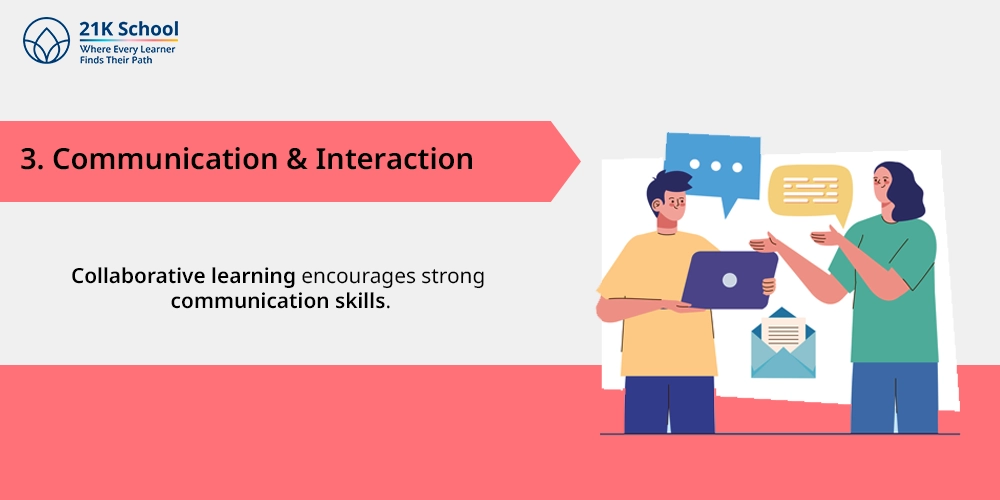
Collaborative learning encourages strong communication skills. Every student must share their thoughts properly, listen to each other & work on a task accordingly to solve the task.
So by implementing these principles & components, collaborative learning assures the skill development for students in both academic & professional settings.
10 Collaborative Learning Strategies
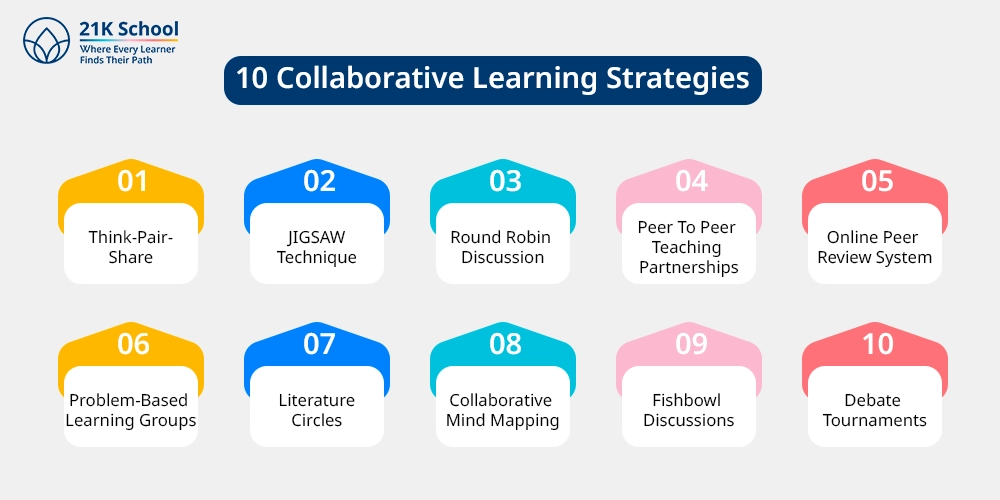
The easy yet impactful collaborative learning strategies cover think-pair-share, jigsaw techniques, and others like:
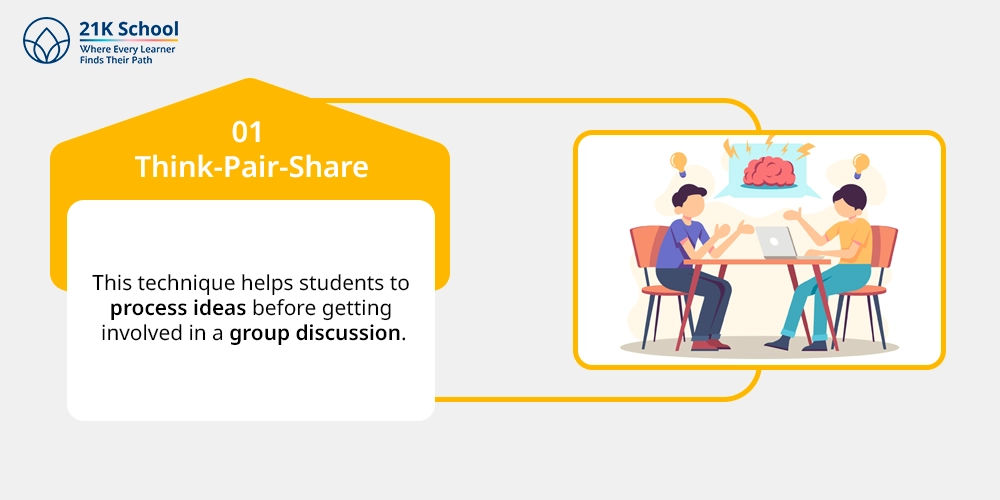
This technique is a powerful collaborative learning strategy where students usually think first individually about the topic or question, then they pair up with a partner in order to share or discuss their viewpoints with their class or group.
This technique helps students to process ideas before getting involved in a group discussion.
USE:
- It is usually used in ideal classroom discussions & even works well in both traditional learning & online classroom setups.
- It also encourages the students to discuss all kinds of topics or questions.
IMPORTANCE:
- Its main purpose is to create or keep students engaged and participate actively in the class discussions.
- It also helps students to improve their communication skills & confidence.
- It also boosts the critical thinking ability among the students by providing them with time before the discussion.
2. JIGSAW Technique:
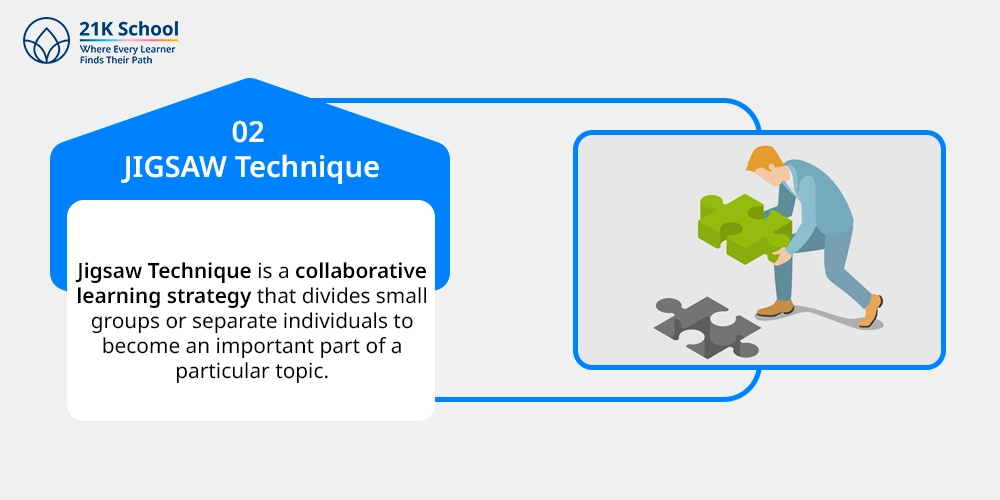
Jigsaw Technique is a collaborative learning strategy that divides small groups or separate individuals to become an important part of a particular topic.
After acquiring proper knowledge about it, the group or individual needs to make it understood to the rest of the class.
USE:
- It is useful for subjects like history, literature, or science, where the content can be divided.
- It also enhances research & explanation skills among the students.
IMPORTANCE:
- Here, the students are being provided with a chance to contribute to a group discussion.
- It also helps them to learn life skills such as communication & working within a deadline.
- It most effectively enhances the problem-solving & analytical skills of a student.
3. Round Robin Discussion:
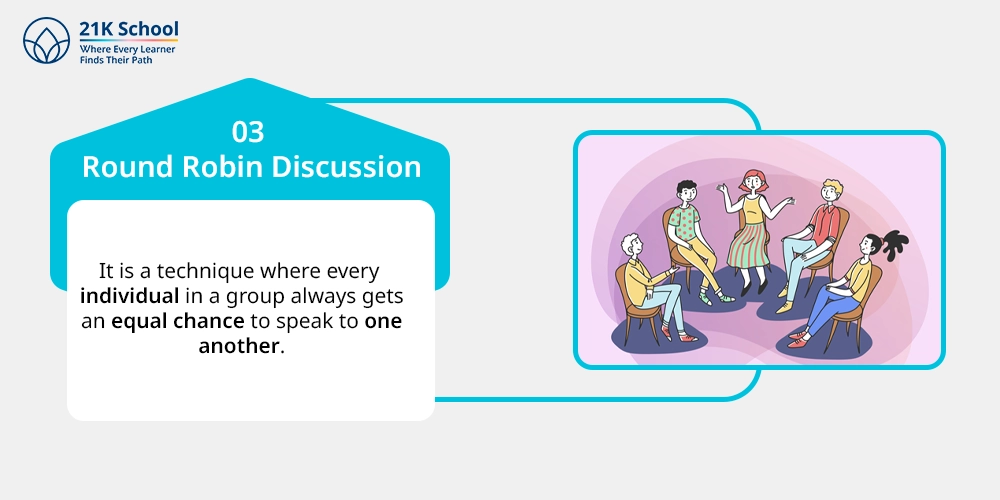
It is a technique where every individual in a group always gets an equal chance to speak to one another.
Every individual shares their thoughts in a proper order without any interference. Therefore, this enhances the confidence of the students.
USE:
- It usually works well for sharing various ideas that can be used in literature discussions or problem-solving.
- It is always important in both physical classrooms & e-learning classes as well.
IMPORTANCE:
- It encourages equal involvement & enhances the confidence & listening skills of the students.
4. Peer To Peer Teaching Partnerships:
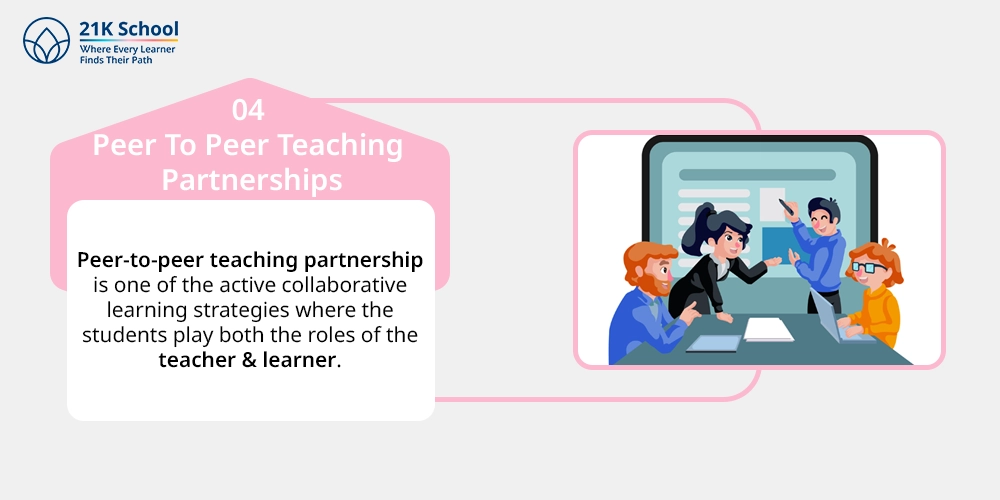
Peer-to-peer teaching partnership is one of the active collaborative learning strategies where the students play both the roles of the teacher & learner.
Here, in place of receiving ideas from instructors, students elaborate their own ideas to their peers.
They get it clarified by asking questions, which makes their foundation even stronger. Students teach & gain knowledge by sharing their own ideas & getting experience in the same.
USE:
- It is useful for problem-solving tasks and group projects where students feel free to share their innovative ideas.
- It is helpful in online classes, where the students are engaged in discussing forums, feedback & collaborative assignments.
IMPORTANCE:
- It enhances active learning, builds communication & leadership skills as students deliver their ideas clearly to others.
- It builds a supportive learning environment where students learn how to mutually respect each other & work together in a team.
5. Online Peer Review System:
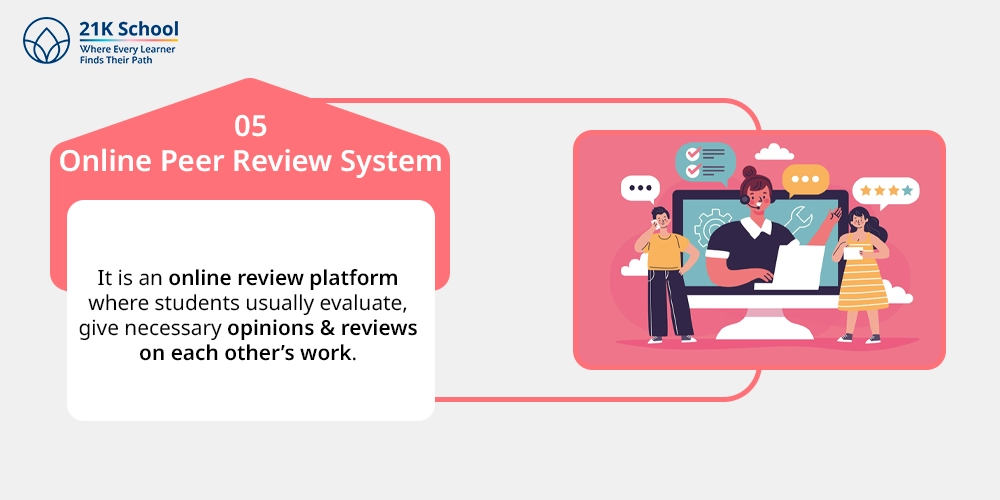
It is an online review platform where students usually evaluate, give necessary opinions & reviews on each other’s work.
Instead of waiting for the assignments that need to be checked by teachers, they review their own assessments.
This technique not only enhances the quality of the task but also encourages critical thinking skills.
USE:
- It is commonly used while writing assignments, & works in detail for presentations or creative projects.
- It can also be utilised in professional training, where the employees can review each other’s task submissions easily.
IMPORTANCE:
- It improves critical learning, in order to learn or analyse each other’s strengths & weaknesses.
- It creates a collaborative mindset because students learn to value peer’s opinions rather than waiting for the teacher’s instruction or view-point.
6. Problem-Based Learning Groups:
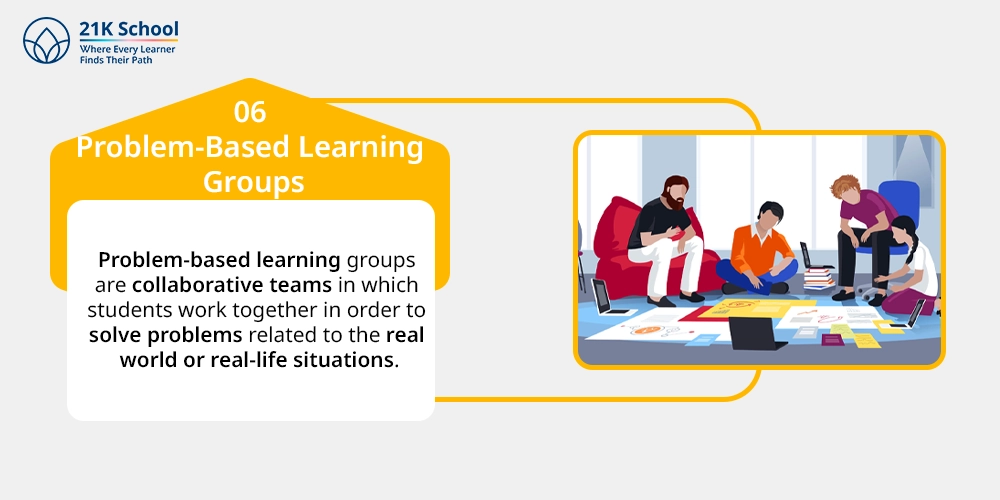
Problem-based learning groups are collaborative teams in which students work together in order to solve problems related to the real world or real-life situations.
Here, the students are provided with a complicated issue & they are asked to do some research work on the same & find a solution.
The teachers act as a coordinator by only guiding them instead of directly sharing answers.
USE:
- Making students with complex situations will give them a reason to think analytically.
- Students will participate in the group discussion and can get them involved by sharing their viewpoints to solve the problem.
IMPORTANCE:
- It improves critical thinking ability, problem-solving skills & strengthens confidence in the students.
- It usually makes learning fun & practical because students can connect their academic concepts to life scenarios.
- It makes students capable of working in a team & collaborating with the team members.
7. Literature Circles:
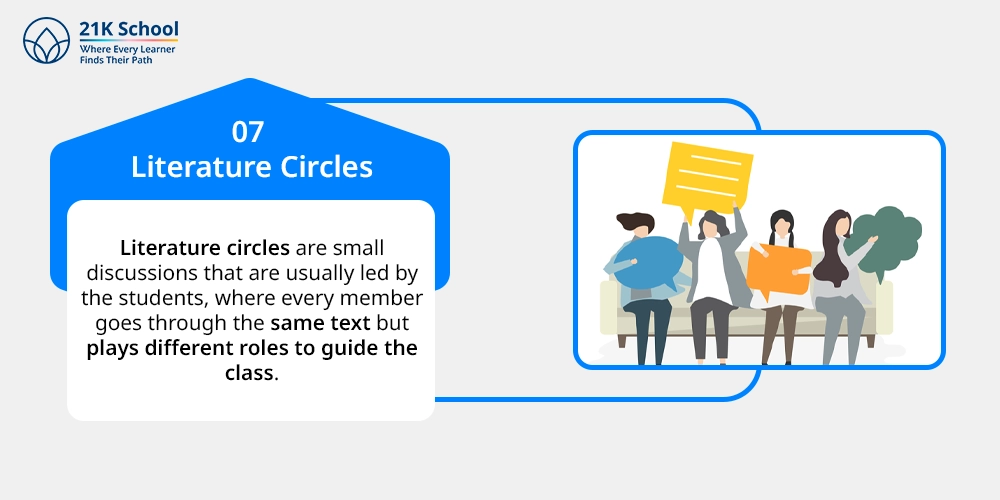
Literature circles are small discussions that are usually led by the students, where every member goes through the same text but plays different roles to guide the class.
The level of the literature circle will always vary, but it includes some organised & some unorganised discussions amongst the students.
USE:
- The main motive of this is to create strong communication skills & critical reading amongst the students.
IMPORTANCE:
- It enhances active student engagement while passive reading.
- Improves critical thinking skills and analysis.
- Boosts confidence to put forth their viewpoints boldly.
8. Collaborative Mind Mapping:
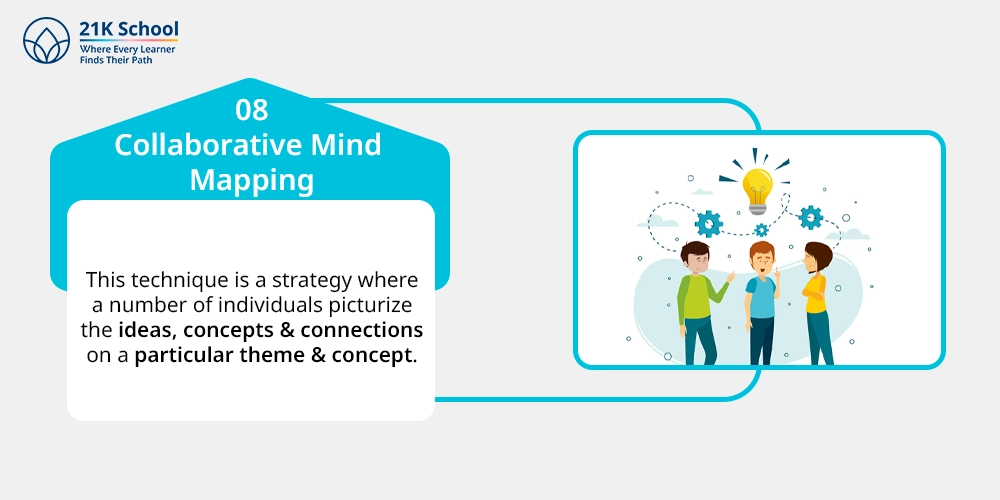
This technique is a strategy where a number of individuals picturize the ideas, concepts & connections on a particular theme & concept.
With the help of this, a student will be able to create an overview of the topic in their mind before delivering the ideas.
USE:
- This method is mostly used in classrooms, workshops, & with professional teams in order to get creative & unique ideas on the topic or problem so that it can be solved easily.
IMPORTANCE:
- It influences active participation, because every individual should share their own ideas & creativity without feeling ignored.
- It Improves visual learning by making complicated topics easy to understand.
- It forms connections between concepts in order to help the students to visualize by relating them to real-life scenarios.
9. Fishbowl Discussions:
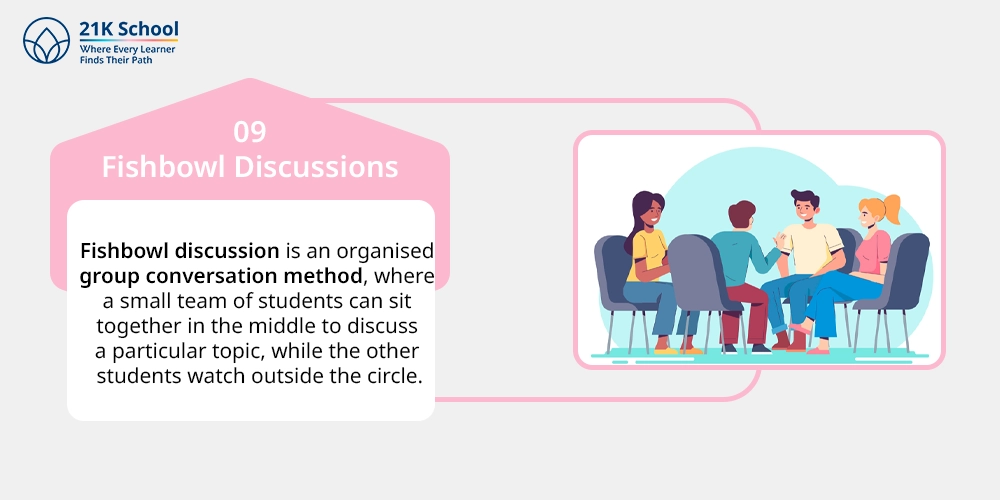
Fishbowl discussion is an organised group conversation method, where a small team of students can sit together in the middle to discuss a particular topic, while the other students watch outside the circle.
After some time, the roles are reversed so that no individual feels left out & everyone can get an equal chance to participate in the discussion.
USE:
Fishbowl discussions are used in
- Classrooms to analyse texts, & to debate on a particular topic.
- Workshops to get different viewpoints on a complicated topic.
IMPORTANCE:
- Promotes active & equal participation.
- Builds critical thinking skills & it works well for sensitive topics.
10. Debate Tournaments:
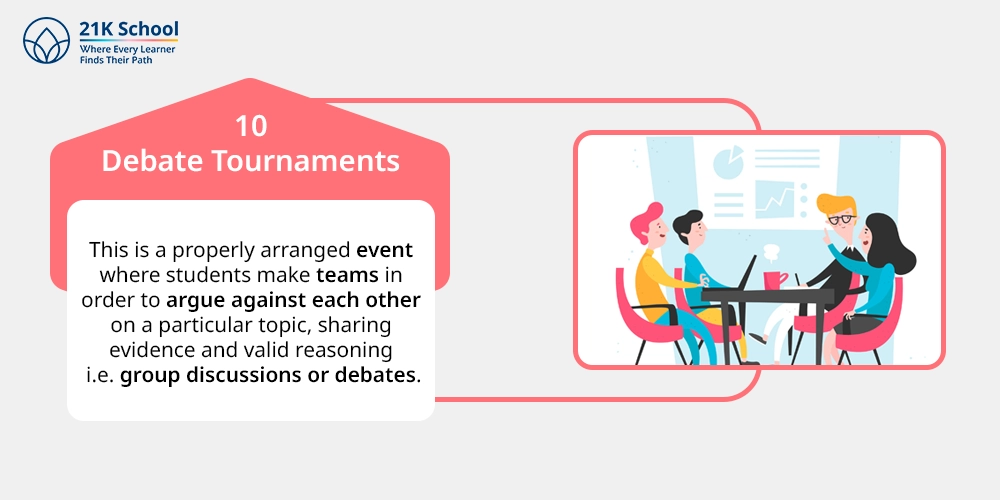
This is a properly arranged event where students make teams in order to argue against each other on a particular topic, sharing evidence and valid reasoning i.e. group discussions or debates.
USE:
It is mostly used in schools & universities, corporate training programs, & e-learning classes in order to improve the decision-making skills.
IMPORTANCE:
- It improves critical thinking ability & analytical skills.
- Helps in enhancing the public speaking skill & confidence between the students.
- Focuses on teamwork & makes the students ready for real-life challenges.
Also explore the benefits of collaborative learning.
Implementing Collaborative Learning: A Step-by-Step Guide
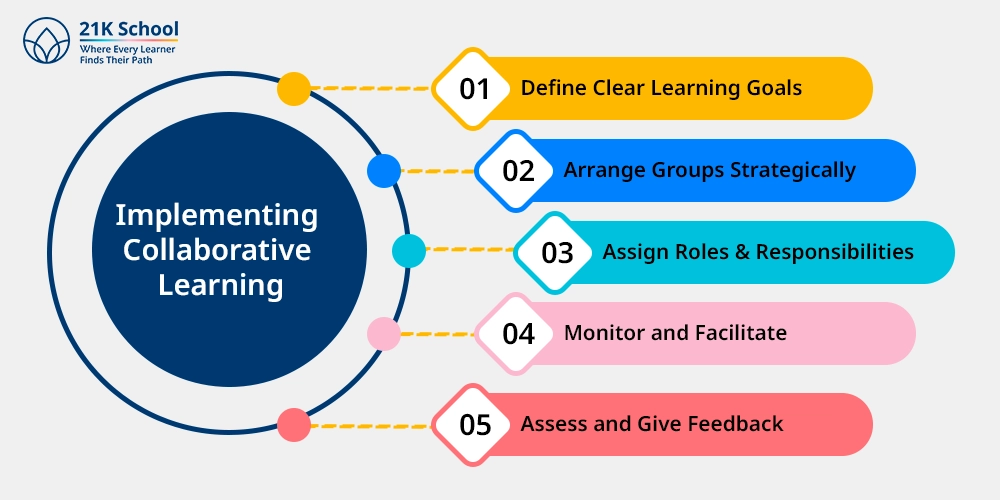
To establish collaborative learning in classrooms requires a lot of planning, execution, & guidance & dedication.
So, here is a step-by-step guide for the students & instructors to implement it effectively:-
1. Define Clear Learning Goals:
Before starting or attempting, teachers or mentors need to set a target or goal that needs to be achieved, whether to improve skills such as critical thinking, communication, etc.
Because setting clear goals ensures that the team activities are purpose-driven.
2. Arrange Groups Strategically:
A proper group size should be decided; mostly, small groups are best for working because all participants can be engaged in the discussion.
3. Assign Roles & Responsibilities:
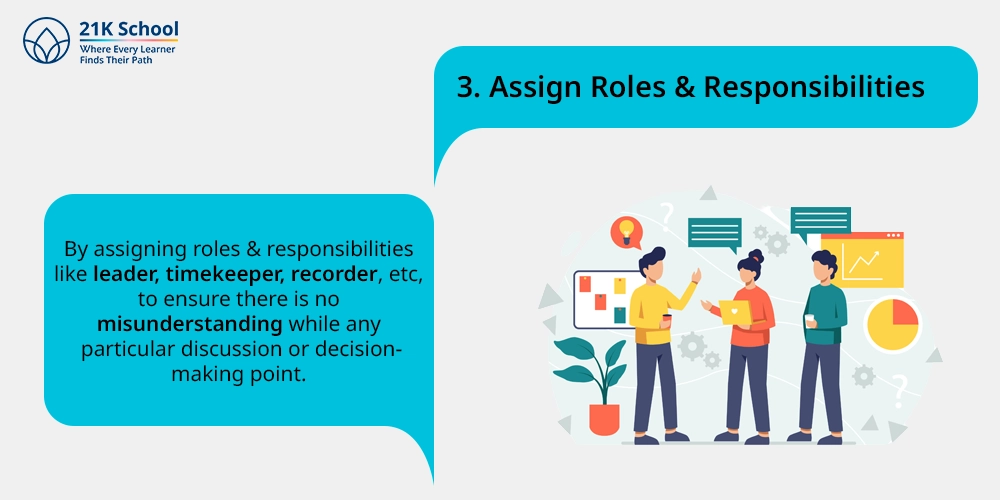
By assigning roles & responsibilities like leader, timekeeper, recorder, etc, to ensure there is no misunderstanding while any particular discussion or decision-making point.
This ensures equal participation of every individual in the group.
4. Monitor and Facilitate:
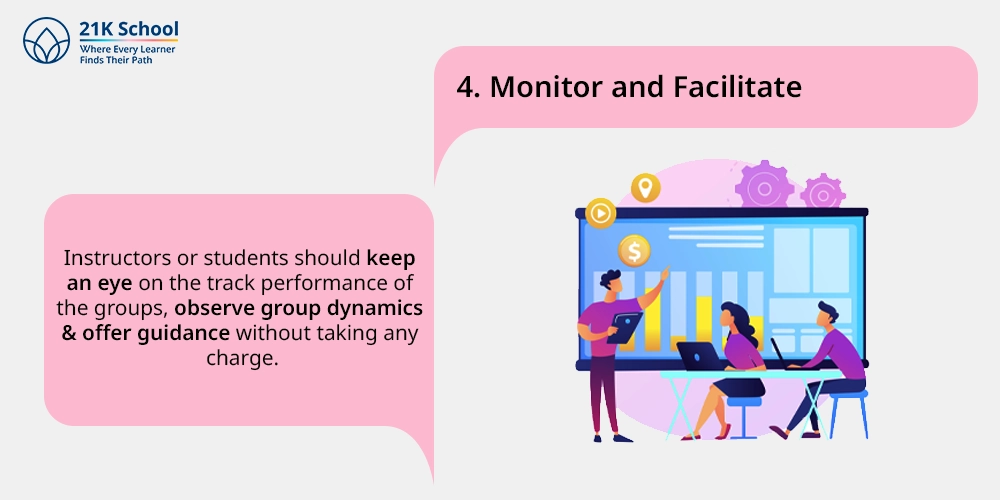
Instructors or students should keep an eye on the track performance of the groups, observe group dynamics & offer guidance without taking any charge.
5. Assess and Give Feedback:
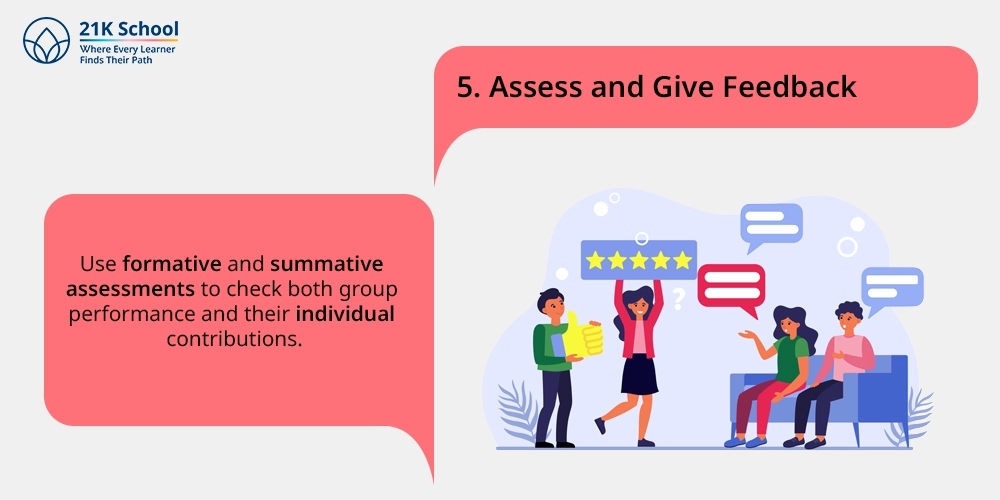
Use formative and summative assessments to check both group performance and their individual contributions.
By keeping a track of the students’ performance regularly through teacher reviews & reports & results of assessments can improve the students’ performance.
Conclusion
Collaborative learning is now just changing the education from a traditional teaching method into a Student-led and activity-oriented approach.
This is not only building the academic skills of students but also improving the communication, empathy, problem-solving & critical thinking skills among the students of all age groups.
Therefore, when established carefully, collaborative learning is just building a community or group for the students who are now supporting & encouraging simultaneously.
It fosters the creative & independent thinkers who know the value of performing or working with a team & making students ready for final exams, but for life to go beyond in the near future.

You may also want to read