

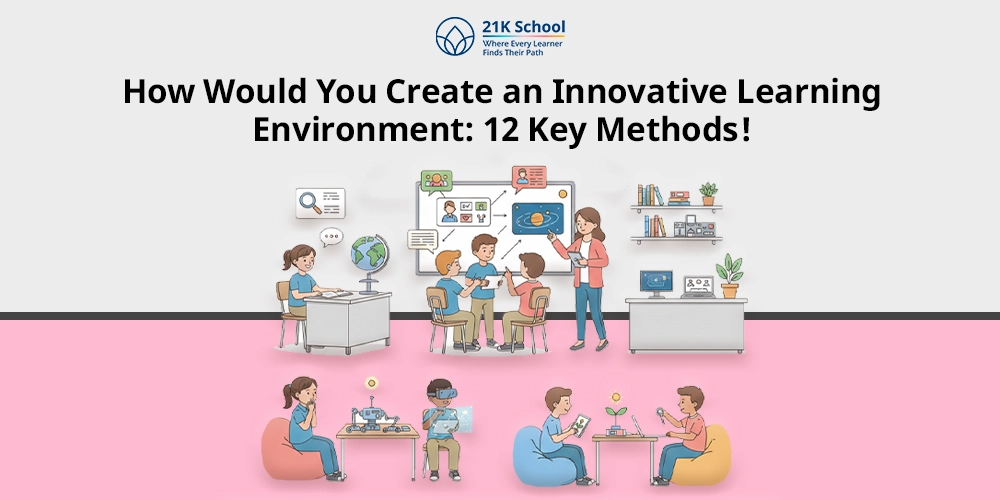
Did you ever think about how it is possible to build a creative learning environment?
The creation of an innovative learning environment does not imply the presence of traditional classrooms and traditional ways of teaching. It means the establishment of curious spaces and experiences that generate an impulse to be creative and a variety of learning needs.
A creative climate uses modern tools, multimodal approaches and collaboration to help learners think critically and creatively and solve real problems.
One can come up with learning spaces that can successfully enable students to discover, participate and prosper by embracing new concepts as well as adjusting to the contemporary demands of the education sector.
Table of Contents
- What is an Innovative Learning Environment?
- How would you create an Innovative Learning Environment- 12 Easy yet Effective Ways
- 1. Create a Positive Mindset
- 2. Develop Self-Reflection
- 3. Create a Flexible Learning Environment
- 4. Promotes Positivity in Work and Education
- 5. Engage in Problem-Solving Activities
- 6. Encourage Risk Taking
- 7. Use the Flipped Classroom Model
- 8. Focus on Practical Learning
- 9. Focus on Student Centred Learning
- 10. Use a Blended Learning Approach
- 11. Integrate Technology
- 12. Promotes Collaborative Learning Environment
- Ending Note
What is an Innovative Learning Environment?
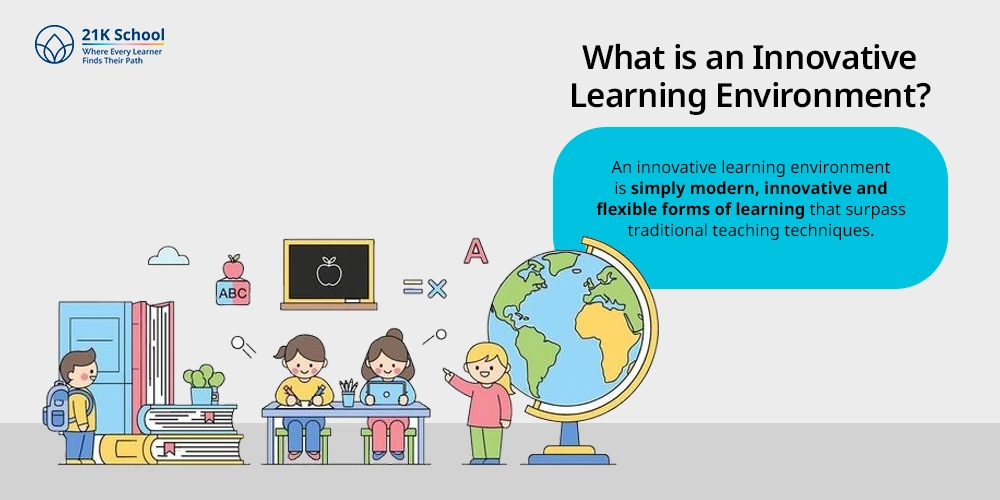
An innovative learning environment is simply modern, innovative and flexible forms of learning that surpass traditional teaching techniques. It focuses on active engagement, problem-solving, teamwork and integration of technology to promote knowledge.
New learning stimulates the learner to think critically, experiment, and test their thoughts in the practical world. It aims at designing purposeful, interactive, and personalised learning processes that equip people with a dynamic world.
How would you create an Innovative Learning Environment- 12 Easy yet Effective Ways
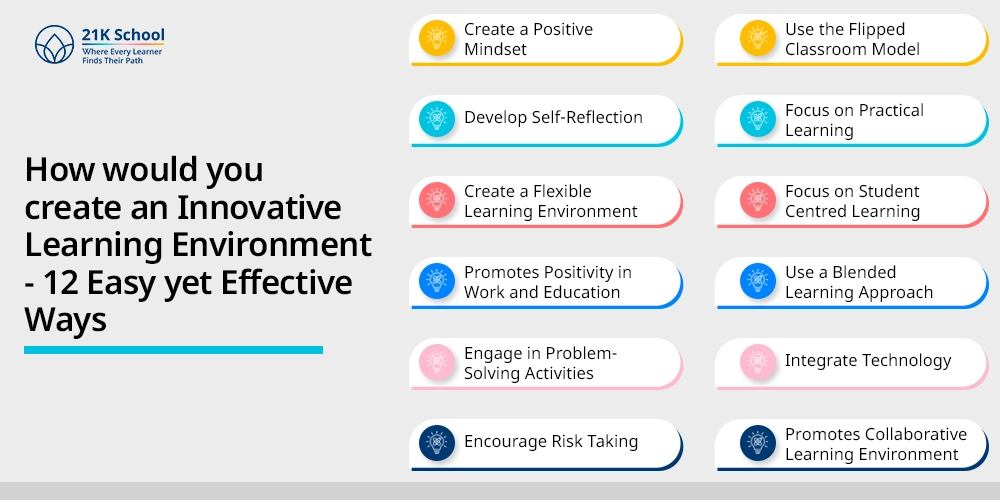
Creativity, active learning, and new techniques of learning are stimulated in an innovative learning environment. It dwells on adaptable areas, group work and application of technology to increase understanding. The following are the ways to create an innovative learning environment.
1. Create a Positive Mindset
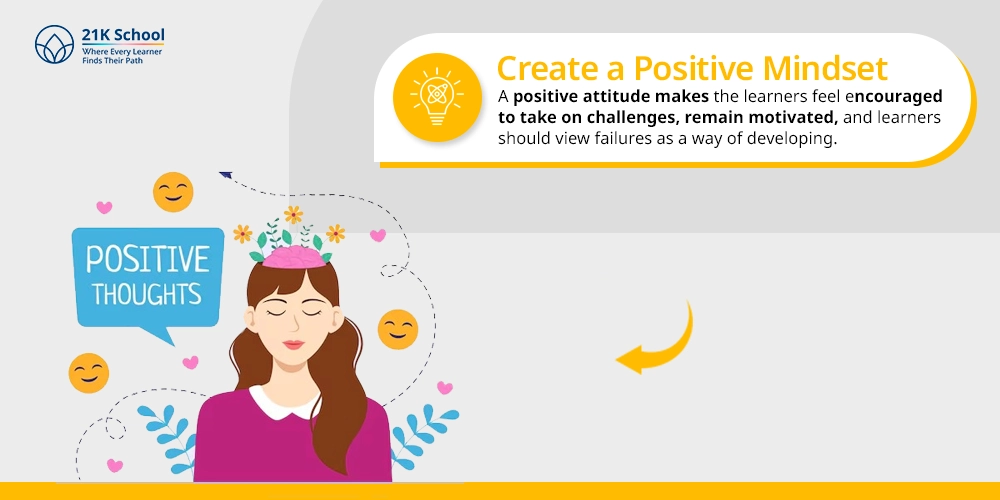
A positive attitude makes the learners feel encouraged to take on challenges, remain motivated, and learners should view failures as a way of developing. The teachers may be able to be optimistic models, offer positive feedback and applaud successes.
When the learners are comfortable and interested in a task, they would devise an innovative and dynamic learning environment by being creative, resilient and willing to experiment, which will play a central role in developing a positive learning environment.
2. Develop Self-Reflection
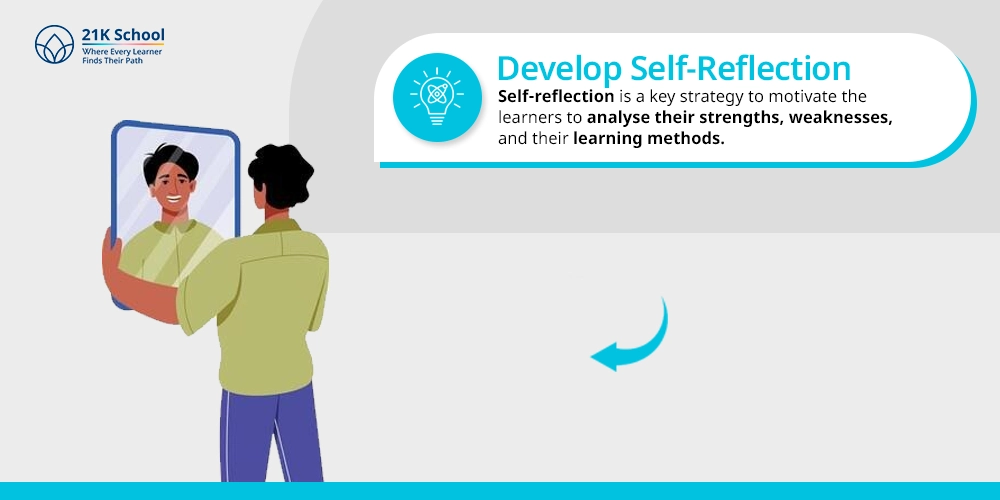
Self-reflection is a key strategy to motivate the learners to analyse their strengths, weaknesses, and their learning methods. Regular assessment of the progress and reflection on the ways to improve make students more independent and self-aware.
The reflection process helps in developing critical thinking, problem-solving, and personal growth, in which a learner is able to change their practices and ideas. Teachers may use journals, discussions, or portfolios that will aid in supporting reflective practices and contribute to constant innovations and continuous learning.
3. Create a Flexible Learning Environment
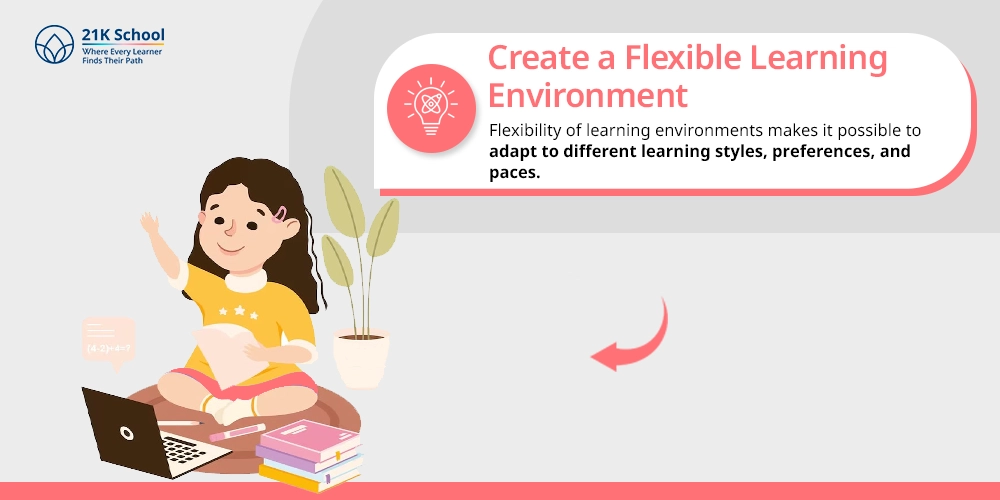
Flexibility of learning environments makes it possible to adapt to different learning styles, preferences, and paces. This includes flexible learning, various teaching concepts and selection of either individual or group work.
A flexible environment not only removes stress in the students but also encourages creativity and allows learners to study what best suits them. It promotes adaptation, logic and team problem-solving skills.
4. Promotes Positivity in Work and Education
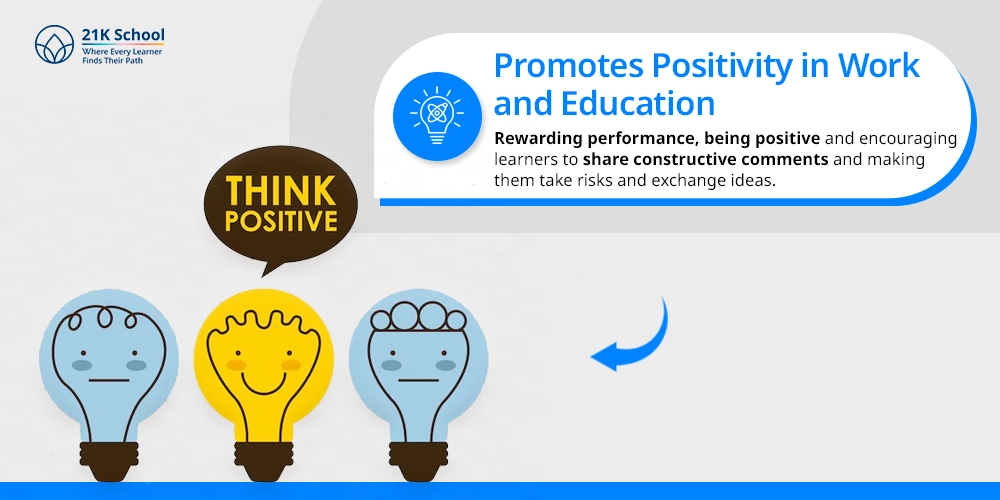
Inspiring positivity in the learning environment promotes interaction, inspiration and self-confidence. Rewarding performance, being positive and encouraging learners to share constructive comments and making them take risks and exchange ideas.
Positivity increases teamwork, minimises the fear of failure, and arouses interest. The learners will be motivated to be active and offer creative solutions when they feel appreciated and encouraged.
5. Engage in Problem-Solving Activities
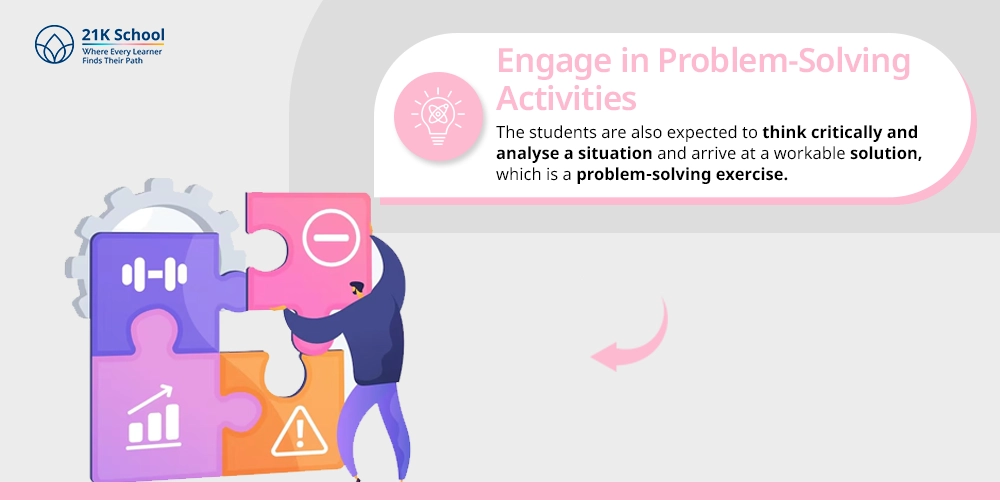
The students are also expected to think critically and analyse a situation and arrive at a workable solution, which is a problem-solving exercise. Such activities develop creativity and decision-making skills.
Educators can facilitate brainstorming, simulations, or project-based learning activities and facilitate an environment where experimentation, innovation, and critical thinking may flourish.
6. Encourage Risk Taking
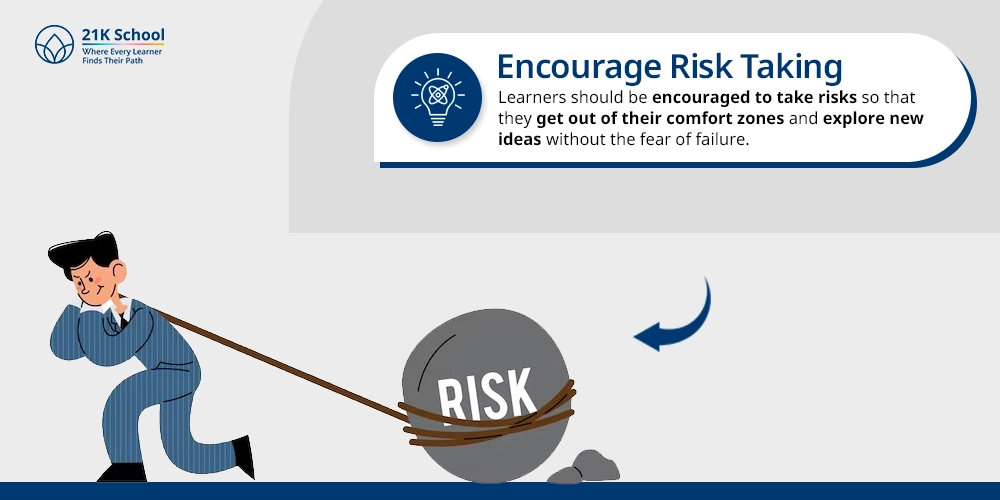
Learners should be encouraged to take risks so that they get out of their comfort zones and explore new ideas without the fear of failure.
When learners feel comfortable enough to take risks, be creative, be resilient and be adaptable, the learner is able to develop creativity, resilience and adaptability. Teachers are able to model risk-taking, which would provide supportive feedback and celebrate effort over achievements and encourage innovative thinking.
7. Use the Flipped Classroom Model
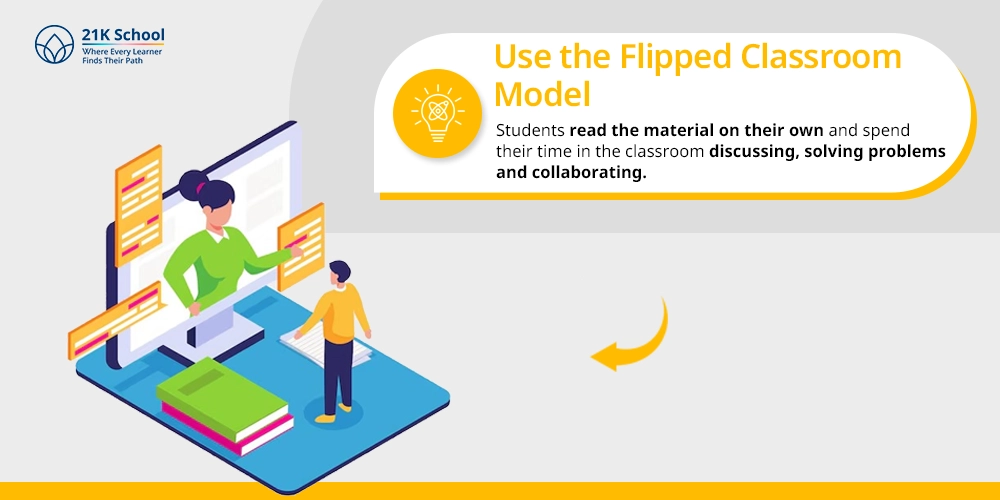
The flipped classroom uses the opposite form of learning, wherein students read the material on their own and spend their time in the classroom discussing, solving problems and collaborating.
The strategy promotes active learning, critical thinking and self-directed learning. Teachers are facilitators who show the learners how to use the concepts and not memorise them.
8. Focus on Practical Learning
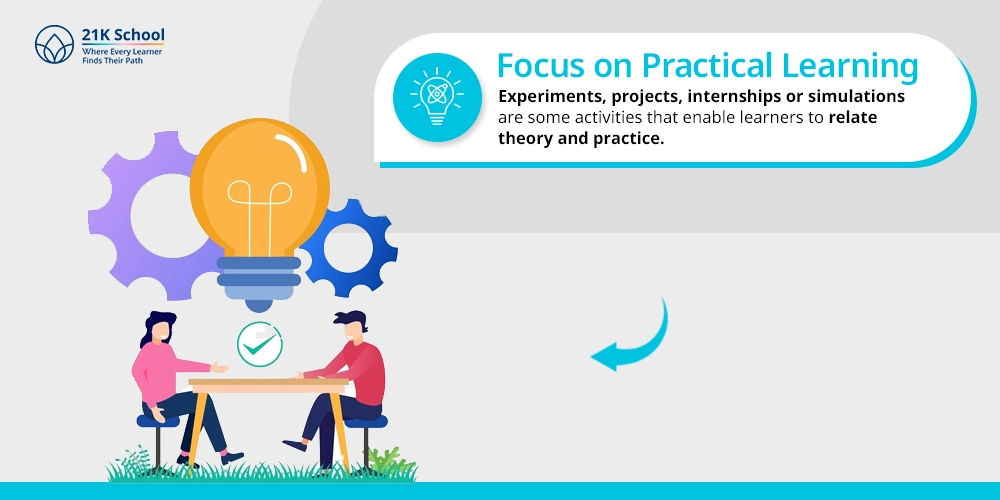
Practical learning focuses on real-life application or practical knowledge. Experiments, projects, internships or simulations are some activities that enable learners to relate theory and practice.
Through practical work, learners are able to understand critical thinking, problem-solving, as well as transferable skills. This method improves retention, relevance and innovativeness, and it invents a new learning environment where one applies knowledge as opposed to receiving knowledge passively.
9. Focus on Student Centred Learning
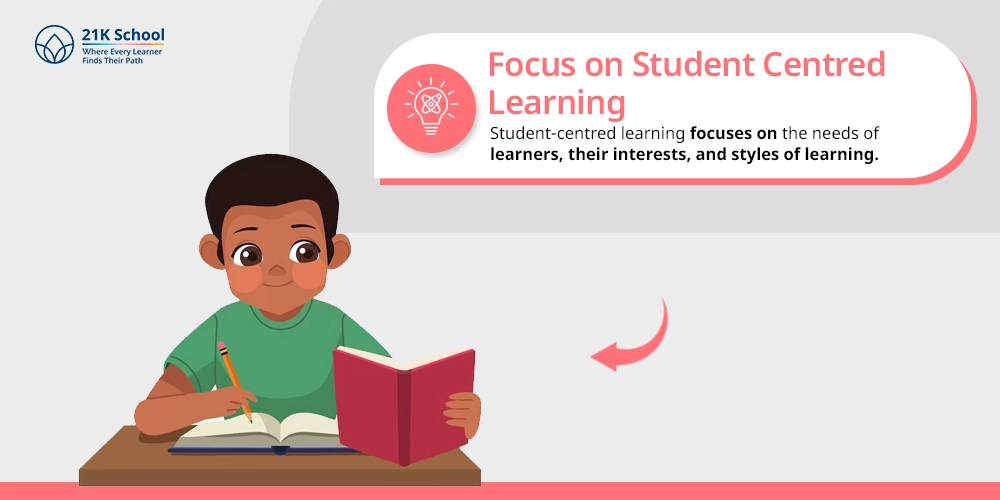
Student-centred learning focuses on the needs of learners, their interests, and styles of learning. It promotes independence, choice and participation.
Teachers are seen as facilitators of learning and not the sole source of knowledge, whereby students can engage themselves in a topic, ask questions and own the learning. This method encourages participation, innovation and analytical skills that create an innovative climate specific to individual and team development.
10. Use a Blended Learning Approach
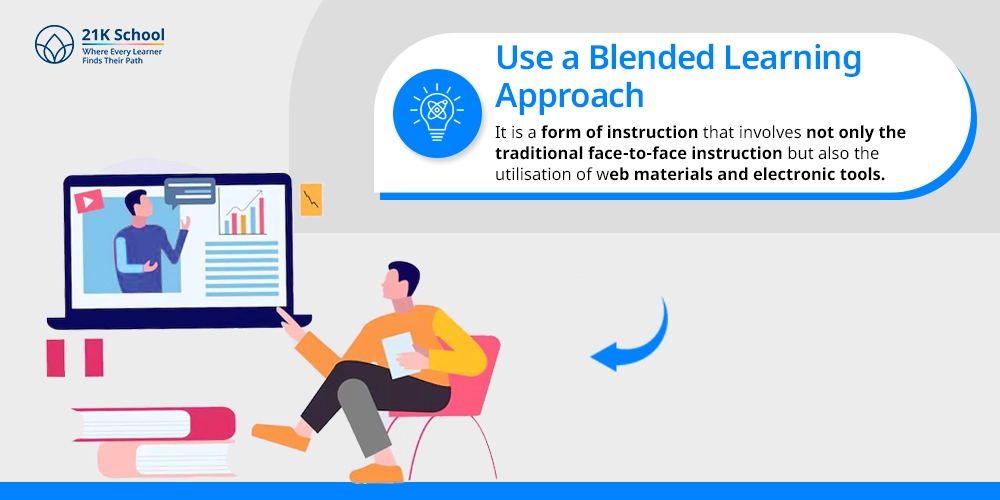
Blended learning is a form of instruction that involves not only the traditional face-to-face instruction but also the utilisation of web materials and electronic tools. This approach is flexible, personalised and exposes one to diverse learning materials.
The students can also study at their own pace, and they can also work in groups and interact. Blended learning facilitates innovation, expertise and creativity in education and learning through a mix of strategies.
11. Integrate Technology
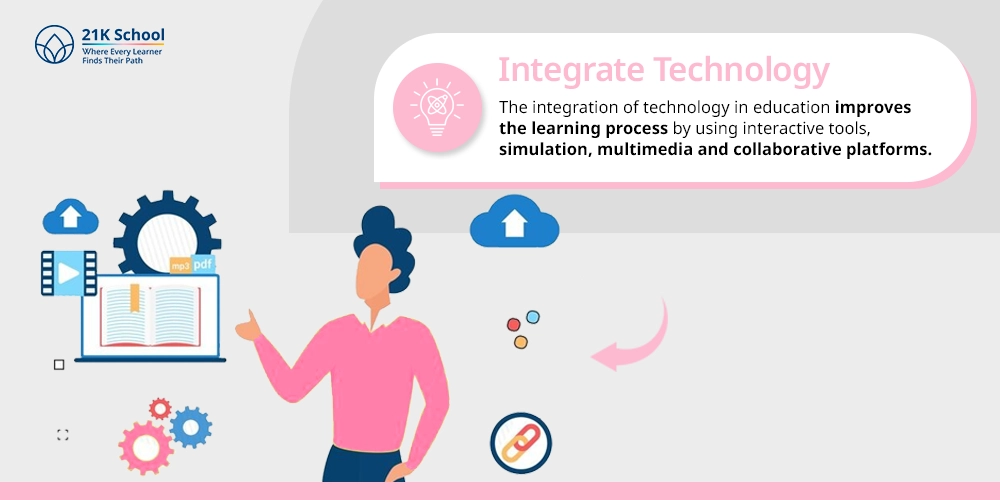
The integration of technology in education improves the learning process by using interactive tools, simulation, multimedia and collaborative platforms. Electronic materials make the process of learning interesting, accessible, and personal.
Experimentation, feedback that is data-driven and being linked with global sources of knowledge is also enabled by technology.
12. Promotes Collaborative Learning Environment
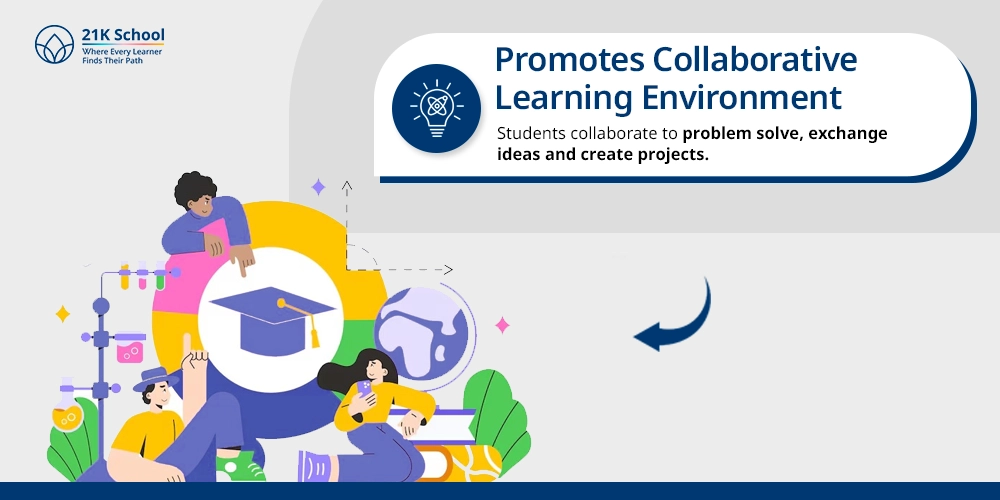
Teamwork, communication, and peer-to-peer learning come as a result of collaborative learning. Students collaborate to problem solve, exchange ideas and create projects. Teamwork improves innovative capacity, logical reasoning, and communication.
Teachers can introduce group discussions, projects, and group activities and offer a friendly environment with the consideration of various opinions. The importance of teamwork lies in the area of innovation and the provision of real-world skills to the learners.
Ending Note
In order to render the learning process innovative, one should bring the aspects of creativity, flexibility and collaboration by using the existing tools and pedagogical techniques.
Through the support of developing positive attitudes, taking risks, making solutions practical, student-centred and technology-based, and being able to learn skills that will ultimately make them fit the requirements of the real world.
Learning is innovative, which guarantees student engagement, development, and valuable learning experiences.

You may also want to read