

What would become of learning if there were no classroom rules?
Classroom rules are significant principles that make students study in a secure, respectful, and orderly atmosphere. They help student become responsible, disciplined, and learn to cooperate with peers.
Clear rules are also quite helpful to restrain contradictions and distractions, and everyone is focused on what he or she wants to accomplish.
By being aware of and watching classroom rules, students may acquire good habits which can help them succeed in school and in their lives, becoming responsible and confident people in general.
Table of Contents
- What are Classroom Rules for Students?
- Top 40 Classroom Rules for Students
- 1. Respect your Teacher and Peers
- 2. Listen to the Teacher First
- 3. Don’t Speak in the Classroom (Without Permission)
- 4. Raise Your Hand to Speak
- 5. Respect and Listen to Your Classmates
- 6. Ask Questions
- 7. Respect and Listen to the Teacher
- 8. Raise Your Hand to Speak
- 9. Be Prepared for Class
- 10. Be Quiet When the Teacher Is Talking
- 11. Be Quiet When Classmates Are Talking
- 12. Share New Ideas
- 13. Keep Your Hands to Yourself
- 14. Respect Others’ Property
- 15. Keep Your Workspace Tidy
- 16. Be Kind
- 17. Always Do Your Best
- 18. Walk, Don’t Run, in the Hallways
- 19. Be a Good Friend
- 20. Be on Time
- 21. Share with Others
- 22. Use Equipment Properly
- 23. Help Keep the Classroom Tidy
- 24. Listen to All the Teachers
- 25. Obey All School Rules
- 26. Finish Your Homework on Time
- 27. Be Respectful of Classmates Who Are Working
- 28. Have a Good Attitude
- 29. Use Positive Language
- 30. Line Up Neatly and Quietly
- 31. Stay in Your Seat
- 32. Listen with Your Ears and Your Eyes
- 33. Contribute to Discussions
- 34. Be Respectful of Others’ Ideas
- 35. Follow the Teacher’s Directions the First Time
- 36. Cooperate with Your Classmates
- 37. Be Creative
- 38. Be Honest
- 39. Use Technology Appropriately
- 40. Be Proud of Your Work
- Classroom Rules for Students with Special Needs
- 5 Easy Steps for Teachers to Create Classroom Rules for Students
- Conclusion
What are Classroom Rules for Students?
Rules in the classroom are rules that facilitate the creation of a safe classroom learning environment that is respectful, and effective. These things make them good listeners, good followers, good at respecting teachers and fellow students, in attending school on time and submitting of assignments with no cheating.
Discipline, cooperation, and responsibility are also encouraged through the rules that minimise distractions and conflicts.
Adhering to classroom rules, a student is able to concentrate more, engage, and create a good environment where each one feels important, and learning becomes enjoyable and effective towards academic and life development.
Top 40 Classroom Rules for Students
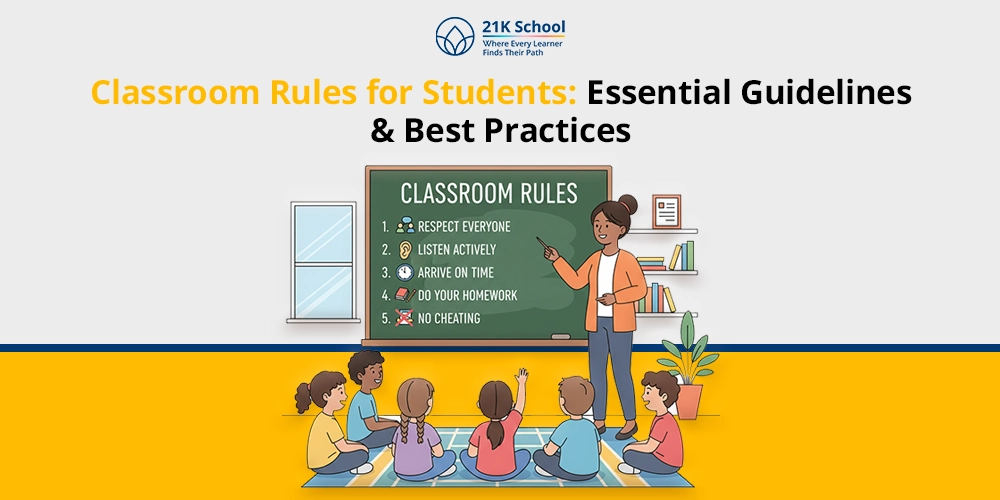
The classroom rules instruct the students to be respectful, attentive, and work conscientiously. Their presence allows building an orderly, safe, and positive learning environment in which all participants will be able to achieve success and develop.
1. Respect your Teacher and Peers
Respect refers to treating teachers and classmates nicely and politely. It involves speaking nice words, not interrupting to listen, and appreciating the opinions of everybody.
Once the students treat each other with respect, the classroom environment becomes a safe and good place. Respect instils trust, minimises conflicts and ensures that all feel at ease to learn to exchange ideas and develop as a team.
2. Listen to the Teacher First
The reason is that when they listen to the teacher, the students are assured of having a clear idea of the instructions. It evades confusion, inaccuracy and repetition of explanation. The students are able to listen; and lessons are carried out without any inconveniences; time is spent in a reasonable manner.
During listening, respect and responsibility are also observed. It helps the students to learn and work more effectively, to follow the rules correctly and complete their work with a definite understanding and accuracy.
3. Don’t Speak in the Classroom (Without Permission)
Interrupting to talk is disruptive and distracting. Being silent when one is assisting in keeping order and concentration. It gives all people the opportunity to listen to significant messages and acquire knowledge.
This principle is a lesson in self-control and patience. The ability to know when to speak and when to be silent is not only a skill in the classroom setting but also in the real world.
4. Raise Your Hand to Speak
It is better to raise your hand before talking to maintain order in the classroom. It makes sure that everybody has an equal opportunity to speak without being interrupted. This principle teaches patience, respect and good communication skills.
Discussions are made more understandable and worthwhile as the students take their turn. It also assists teachers in controlling the classroom and hearing the students appropriately.
5. Respect and Listen to Your Classmates
Hear the classmates and respect their ideas and feelings. All people are to be heard without interruptions and jokes. This rule assists in creating confidence and friendship amongst the students.
As such, when classmates listen to each other, they will work better as a team, and learning becomes fun.
6. Ask Questions
Asking questions may be regarded as a way of making the students comprehend the lessons. It demonstrates passion, attention and desire to study.
The questions asked from students assist in clearing up doubts, besides offering confidence to the students. The questions can also help the teachers know what is on the minds of the students.
7. Respect and Listen to the Teacher
Students are also taught by teachers and helped to acquire desirable skills. It is possible to listen to the teacher when he/she speaks and show his/her gratitude and respect.
The levels of respect accorded to the teacher make lessons run smoothly, and students do get to know subjects adequately.
8. Raise Your Hand to Speak
Elevating your hand will ensure that there is order and equity in the classroom. It does not allow all to talk simultaneously and create noise. The process inculcates tolerance and politeness among the students.
It also aids the teachers in establishing those students who would like to be engaged. Following this rule will simplify the group discussions, calm them down, and make them fruitful for everyone.
9. Be Prepared for Class
Preparation involves the timely carrying of books, notebooks, homework and materials. Prepared students have the opportunity to pay more attention to lessons, and this enhances students engagement.
This rule is one of responsibility, planning and time management. The lessons proceed smoothly when the students are ready to learn. Preparation relieves study stress and also makes students feel prepared and well during the day.
10. Be Quiet When the Teacher Is Talking
The ability to remain silent when talking to the teacher is one of the ways of making everyone listen to instructions correctly. It is courteous, and it avoids miscommunication. This is a regulation that enhances concentration and time conservation.
Lessons are made better when students are quiet listeners. It also makes the learning process serene, and students can grasp the contents of the learning without interruptions.
11. Be Quiet When Classmates Are Talking
When students stay quiet while peers speak, it shows respect, their thoughts and ideas. It makes them feel safe and honoured. This rule encourages listening and cooperative learning. There will be a chance of listening to the students, and discussions will be effective and structured.
When listening to others, one should respect them in order to help them establish a good classroom atmosphere in which they can all feel free to contribute.
Exchange of new ideas makes learning creative and interesting. It motivates students to think differently and confidently convey themselves. By exchanging ideas, all students learn something.
This rule fosters trust, interpersonal skills and collaboration. With an open classroom, students will be encouraged to learn and contribute their ideas in a classroom.
13. Keep Your Hands to Yourself
One of the ways of exercising safety and respect is by holding hands. It does not lead to accidents, fighting, and awkwardness with peers. The students will feel safe and at peace in the classroom by respecting the space of the people around them.
It also helps in focusing on education instead of getting distracted by irrelevant quarrels or distractions.
14. Respect Others’ Property
This is because when they are required to respect the property of other people, this implies that the individual will not steal, destroy, or in any other way abuse the property of other people.
The students are supposed to maintain school property and this also contributes to the establishment of trust and confidence with their fellow students. It also helps in upholding discipline in the classroom.
15. Keep Your Workspace Tidy
An organised work area will also make sure that students are in their place and do not become distracted. It helps in the search for books and materials and saves time. This is the principle of responsibility and cleanliness.
The classroom also looks nice and a bit more comfortable to study in when the desks are placed. Keeping the working area tidy will also ensure that the students develop good habits, which would be of interest in both school and in everyday life.
16. Be Kind
Being nice implies assisting other people, using nice words, and caring and courteous behaviour. Courteous behaviour creates a pleasant and cheerful classroom. It assures students of safety, appreciation and encouragement.
This regulation minimises bullying and conflicts and also promotes peer learning. With kindness as a daily practice, the students can develop strong friendship ties and learn how to be kind, compassionate and respectful.
17. Always Do Your Best
Giving your best entails doing it with your heart, even when work is hard. This regulation promotes hard work, integrity and perseverance. Not all people learn at a steady pace; however, by doing the best that you can, it will improve you.
It establishes self-esteem. Students who continuously put their best foot forward will grow in academics and have a positive attitude towards learning.
18. Walk, Don’t Run, in the Hallways
Walking in the halls ensures everybody is safe. Running and walking in the corridors may result in accidents, falls or injury. It is this policy that renders the students very cautious and responsible in shared areas.
The corridors are clean and silent when students are walking at a slow pace. It is also respectful of others and assists in keeping the schools safe and peaceful.
19. Be a Good Friend
One should be a good friend, and it means that he should be kind, honest and supportive. It is helping and serving other people, sharing and protecting classmates. Friendships are nice, and they make school entertaining and not lonely.
It is the principle of educating, caring and cooperation. When good friends are in the classroom, the classroom becomes a joyful place where all the students are made to feel integrated and valued.
20. Be on Time
Timekeeping manifests itself as a sign of professional behaviour and respect towards teachers and colleagues. Late arrival can cause interference and loss of learning. It is one of the rules which help the acquiring students to learn punctuality and time management.
Timeliness of students leads to a smooth start of classes, better learning, and students will have habits which are significant in their future achievements.
Sharing teaches benevolence, justice and collaboration. It assists in studying and collaborating, as well as making good friends and promotes peer-to-peer learning.
In the process of exchanging ideas, materials or even time, all the students gain. This policy promotes cooperation and minimises conflicts. Students can learn to share and be ready to cooperate and understand other people in real-life situations.
22. Use Equipment Properly
One of the ways to be safe and not to be destroyed is to maintain equipment properly. This will include books, computers, sporting products and classroom materials. This is a dimension of responsibility and care.
Proper utilisation of the equipment by the students makes it durable and may be utilised by everyone. Successful use will also help in instilling discipline and respect among the students for school resources.
23. Help Keep the Classroom Tidy
The help provided to keep the classroom clean and favourable creates an orderly environment during learning. It is concerned with the elimination of rubbish, the storage of materials and the cleaning of the activities. This value brings about discipline and teamwork.
An organised classroom will make students more concentrated and proud of their space, which will make the learning method comfortable and enjoyable.
24. Listen to All the Teachers
Listening to each teacher is a form of respect and enables students to learn because every teacher possesses skills and knowledge and areas where he or she teaches best. This principle educates learners to obey orders and appreciate the advice.
Students can listen attentively, grasp the lessons and prevent errors. Treating every teacher with respect enables the establishment of a good and orderly school environment.
25. Obey All School Rules
The school regulations are there to maintain the freedom of the students and order. Having to following them inculcates classroom discipline and accountability.
This law contributes towards the creation of a fair society that does not discriminate against the treated. When the students act in accordance with rules, then the school is in order and learning is boosted. It also prepares the students to respect regulations in society.
26. Finish Your Homework on Time
Homework is completed on time, which makes students exercise what they have learned in class. It develops management and responsibility.
This is one of the resources that helps students to remain organised and not be stressed. Students learn more and feel confident when they complete their homework on time. It is also demonstrative of commitment and appreciation of learning.
27. Be Respectful of Classmates Who Are Working
Respecting others means not disturbing them as they work. This assists classmates in being focused and performing optimally. This teaching is a lesson of consideration and self-control.
Students do not disrupt the classroom when they give the other learners their time. It provides the atmosphere in which all people can concentrate and achieve.
28. Have a Good Attitude
A good attitude means that he must be optimistic, work hard and never give up easily. It will enable the students to face challenges with boldness. This instruction encourages learning and motivation.
Students with a good attitude will have an improved attitude towards learning and motivation of others. It is the positive attitude that leads to success and improved behaviour.
29. Use Positive Language
Positive language means the use of nice and polite language. It helps to forestall insulted feelings and misunderstandings. It is a lesson in respect and appropriate communication skills.
The classroom will seem cosy and welcoming when students speak positive words. Affirmative language establishes good teacher-student relationships and contributes to the establishment of a conducive learning and development environment.
30. Line Up Neatly and Quietly
Order and safety are ensured by the power to line up in a good and quiet order. It gets rid of the pushing, noise and confusion. This guideline has taught me to exercise patience and discipline and to respect the space of other people.
Their movements are effective and calm in a case where the students are in a good line. It is also good-mannered, and the teachers can control the class with ease.
31. Stay in Your Seat
Sitting helps to be focused and alert in the classroom. It is possible to move around without permission and distract other people, and disrupt the learning process. It is a self-control rule, a self-responsibility rule.
Students can sit down, and lessons will run without any disturbances, and everyone is better placed to focus on what he or she is doing and what the teacher is saying.
32. Listen with Your Ears and Your Eyes
Listening with ears and eyes implies having full attention. It involves listening and observing the speaker.
This regulation aids the students in learning the lessons correctly and to avoid errors. Good listening consists of respect and interest. Students are able to learn better and communicate with complete concentration.
33. Contribute to Discussions
Participation in discussions helps the students to exchange ideas and learn. It builds trust, speech and logical thought.
This is a rule that incorporates participation. Lessons will be more interesting when students respectfully participate in them. Thought sharing also assists teachers in knowing the ideas of students and contributes to their education.
34. Be Respectful of Others’ Ideas
It is respecting the ideas of other people to listen without being judgmental or laughing. People fail to think alike, and thoughts become significant.
This rule teaches tolerance and open-mindedness. Conversations become more productive when students consider the opinions. It renders the environment secure, and the students feel free to talk and learn from different angles.
35. Follow the Teacher’s Directions the First Time
The first occasion of adherence to instructions is time-saving and eliminates misunderstanding. It shows respect and responsibility.
The students should be listening and giving a prompt response when learning. It also helps in school and life habits being good as they are acquired in the students.
36. Cooperate with Your Classmates
Collaborating implies cooperating nicely and reasonably. It assists students in doing tasks and solving problems in a team.
This rule educates the ability to work as a team and communicate. Learning is made easier and fun when classmates work together. It is also useful in developing friendships and providing a conducive classroom atmosphere.
37. Be Creative
To be creative is to apply imagination and originality. Learning is fun and exciting due to creativity. This policy helps to make students think out of the box and speak out their minds.
Being creative, students are more engaged in the learning process and acquire the ability to solve problems. Creativity assists the students in developing both academically and personally.
38. Be Honest
Being honest is being truthful and doing your own work. It develops confidence and admiration within the classroom. The rule instils good morals and accountability.
Students may be trusted by the teacher and peers when they are truthful. Honesty makes students proud of themselves and acquire good character.
39. Use Technology Appropriately
Appropriate use of technology in education involves adhering to guidelines in the usage of computers, tablets or smart boards. This involves being online and being safe. The rule instils digital etiquette and responsibility.
Technology is useful in aiding learning and averting issues when properly utilised. Adequate usage will make students smart digital citizens.
40. Be Proud of Your Work
You have to be proud of what you are doing and be grateful for what you have accomplished through hard work. This is a rule that promotes personal respect and self-confidence. Students have no qualms about working, and this encourages them to work harder in an attempt to improve.
A sense of pride in doing something is one of the motivating factors, and it helps the students to know about their strong points to do a better job next time.
Classroom Rules for Students with Special Needs
The student special-needs classroom rules are developed to provide a link to a safe, inclusive, and supportive environment for learning. With these rules, the students can know what is expected of them, acquire good behaviour and feel confident that they are capable of doing it. These are the regulations for students with special needs.
1. Ask for Help When Needed
The students with special needs should not be afraid to request help when they feel lost, overwhelmed or confused. Help creates self-dependence and reduces the feeling of frustration.
These directions, encouragement, or support of the instructors and peers might be employed to ensure that the students are not bored, understand the lessons more effectively and feel emotionally supported.
2. Use Positive Communication
Positive communication is the use of positive words, respectful postures, and even proper expressions to share ideas and emotions. Speech, signs, pictures or assistive tools can be used by students.
This rule will aid in avoiding misunderstandings, gaining confidence, strengthening relationships, and establishing mindfulness in the classroom.
3. Follow Daily Routine
Having a routine on a daily basis makes students with special needs feel safe and ready. Awareness of the subsequent thing eliminates student stress and enhances concentration.
Definite study schedules, visual schedules, and patterns of repetition facilitate the ease of transition, promote independence and enable the students to manage time and activities better.
4. Honour Diversity
Different students learn differently, and understanding that there will be variations in abilities, behaviour, as well as learning pace implies that one should accept the differences and respect as well as appreciate them.
This norm encourages generosity, compassion and integration. When the students are respectful of differences, they will have a friendly atmosphere where everyone will feel appreciated, nurtured and motivated to contribute without fear of being judged.
5. Be Patient and Co-operate
Cooperation and patience also aid the students in working together peacefully and effectively. Students get to know how to wait their turn, listen to others and assist their classmates in need.
Such skills would lessen conflicts, foster teamwork, and make the classroom a good place to be, where all people would enjoy learning and experience no stress.
5 Easy Steps for Teachers to Create Classroom Rules for Students
Responsibility and respect are encouraged by making classroom rules together with the students. These five easy steps can be used to make clear and positive rules that can lead to cooperation, focus and a supportive learning environment for all.
1. Use Positive Language
The students are made aware of what is to be done in a friendly manner with the help of positive language. It does not lay study stress on mistakes but on virtuous actions.
Positive words, when applied in a positive manner, motivate students, make them feel confident and bring out a positive classroom atmosphere where the students are motivated to follow rules and be responsible in their daily responsibilities.
2. Give Students Positive Feedback
Positive feedback would motivate students to keep on doing well and to work hard. Compliments on little success create a sense of confidence and encouragement. It makes the students feel appreciated and acknowledged.
In cases where the positive feedback is provided by teachers frequently, the students feel more engaged, responsible, and eager to change their behaviour and learning in the classroom.
3. Involve Students in Classroom Activities
Engaging students in classroom activities will make the students feel a part of the whole learning process. Involvement raises responsibility and interest.
Involving the students in the process of formulating rules or any other activity makes them more aware of the expectations. This action forms teamwork, collaboration, and ownership, which results in improved conduct and active learning.
4. Identify Core Behaviours
As to the core of behaviours, it means paying attention to the most crucial behaviours and behavioural problems, e.g. respect, listening, and responsibility. There is no difficulty in knowing what is expected due to explicit behaviours.
The step upholds simplicity and the efficiency of the rules. The students can then adhere to rules and create a positive or well-organised classroom, which is facilitated by the important behaviour knowledge.
5. Reflect on Teaching Goals
Reflecting on the goals of teaching will help teachers make sure that the rules are aligned with the learning goals. It upholds classroom policies to favour student growth and success.
The step assists the teachers in adapting rules to accommodate the students. When the rules are aligned with the goals in teaching, then the classroom is organised, directed, and conducive to learning.
Conclusion
Classroom rules are important in establishing a positive, secure, and productive learning environment. They shape the behaviour of the students, minimise distractions while studying, and enhance responsibility, collaboration, and benevolence.
Learning will be easier and pleasant for all when rules are well-understood and adhered to. Studying and learning how to abide by classroom rules, students make positive habits, build a good character and gain skills that contribute to their success both in school and in their daily life.

You may also want to read