

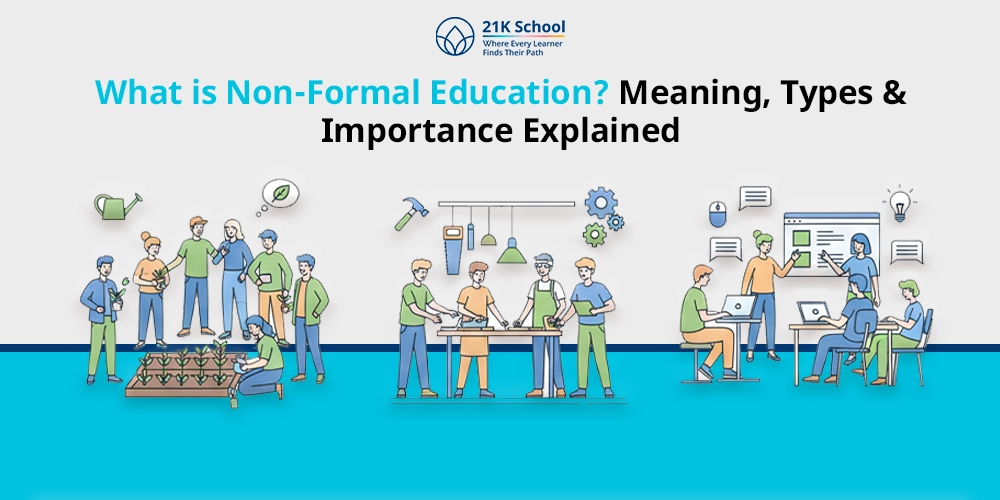
Non-formal education is the type of education provided outside the formal school systems.
It is especially formulated for the individuals who want to study but are binded by either jobs or any other personal or geopgraphical reasons.
It is equally valuable and can add to the resume of job seekers. This is best for providing flexibility without affecting the quality of education.
There are many professional courses in non-formal education for teachers who want to upskill themselves and be better at teaching.
To know more about non-formal education, you can read the following article and find its significance for learners.
Table of Contents
What is Non-Formal Education?
Non-formal education is structured and purposeful, which occurs outside the education system.
It is not based on a fixed curriculum, academic schedule, standard teaching, or exam systems.
It is usually short-termed, flexible, and intended to address the individual or group learning needs.
Adult education, vocational training, community development programs, continuing education, and skill-based education are normally taught through non-formal education.
Although it does not necessarily result in certifications or accredited degrees, it offers desirable understanding, useful skills, and self-development aspects.
It is most suitable for those learners who either have quit their studies and want to resume it or someone who is already earning but wants to upgrade their skills.
5 Key Characteristics of Non-Formal Education
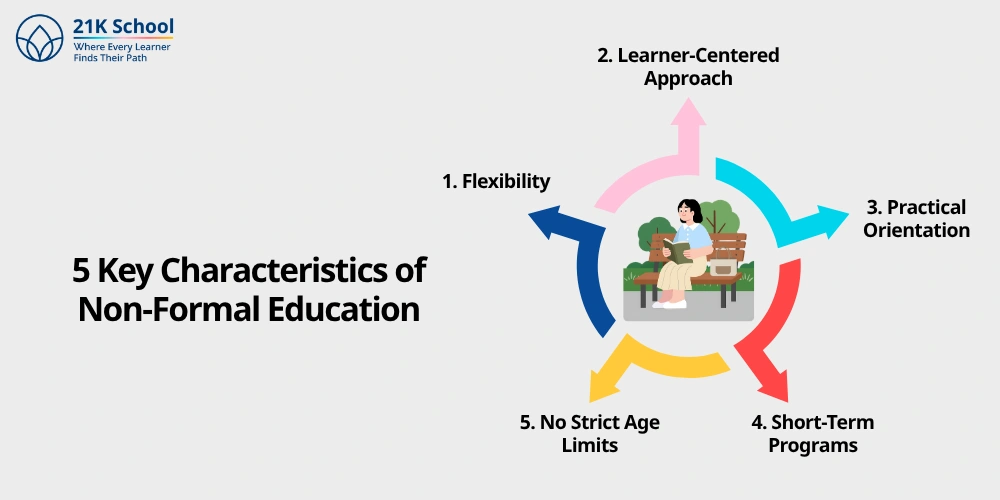
The five key characteristics of non-formal education are as follows:
1. Flexibility
Flexibility is one of the key aspects of non-formal education. Programs are tailored to the needs and learning pace of the learners.
The classes can be conducted during evening hours, on weekends, or even in short sessions.
This is so that working adults and marginalized communities could have access to the classes.
2. Learner-Centered Approach
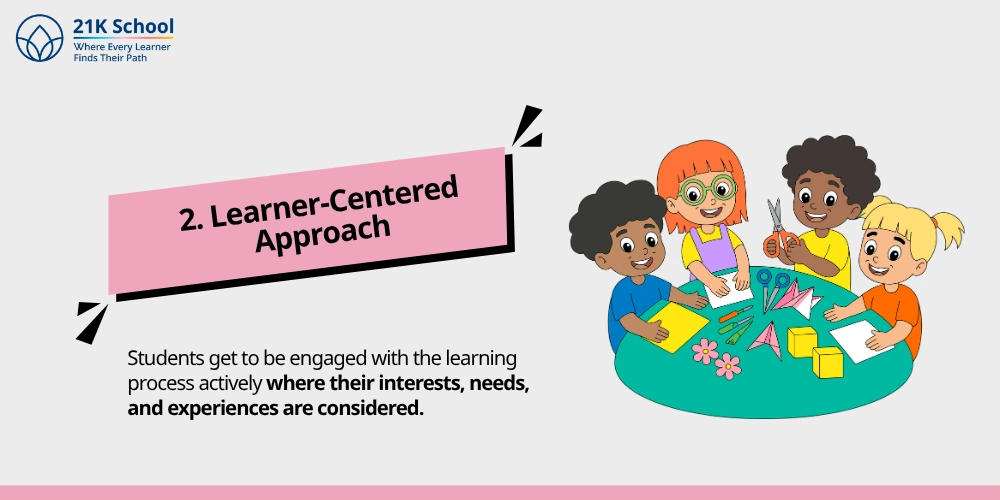
Non-formal education encompasses student-centered learning as opposed to teacher-centered learning.
Students get to be engaged with the learning process actively where their interests, needs, and experiences are considered.
This method promotes motivation and interest, that matters in learning.
3. Practical Orientation
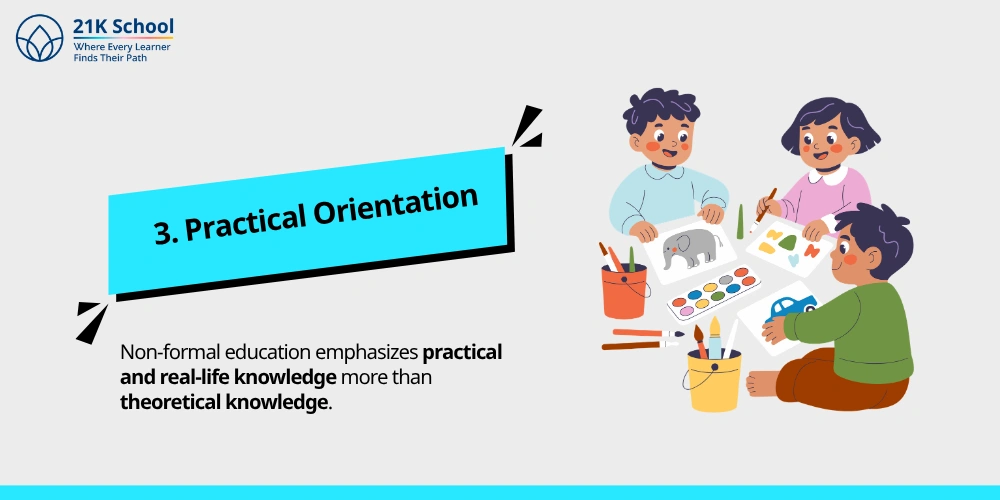
Non-formal education emphasizes practical and real-life knowledge more than theoretical knowledge.
Skill training, workshops, and demonstrations are all examples of learning activities that tend to be practical and also directly relatable to real life or work.
4. Short-Term Programs
The majority of non-formal education programs are short-termed and objective-focused.
They are functional and precise in their intended learning outcomes in a short period of time.
5. No Strict Age Limits
Non-formal education is available for students of all ages.
That is why people of every age including adults, youth, or kids can access education and develop their knowledge.
This inclusiveness promotes lifelong learning.
5 Types of Non-Formal Education
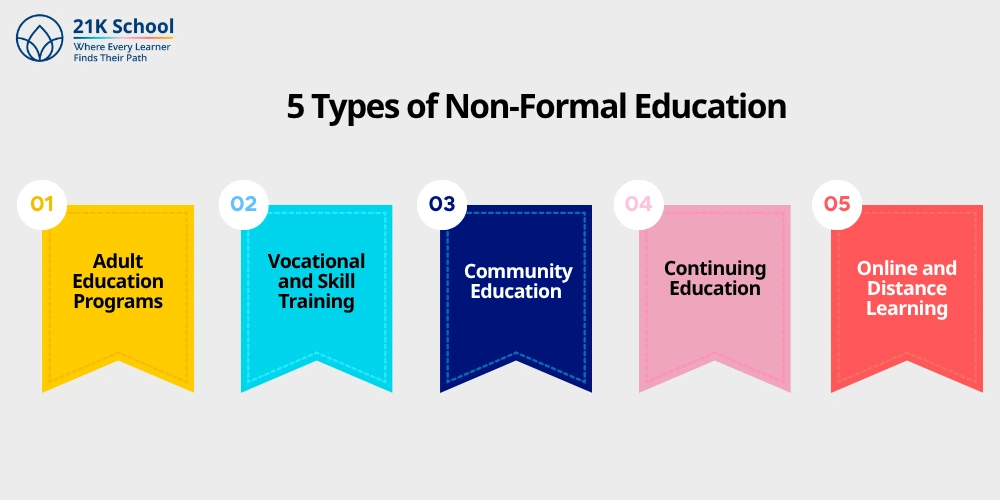
Non-formal education is divided into the following types:
1. Adult Education Programs
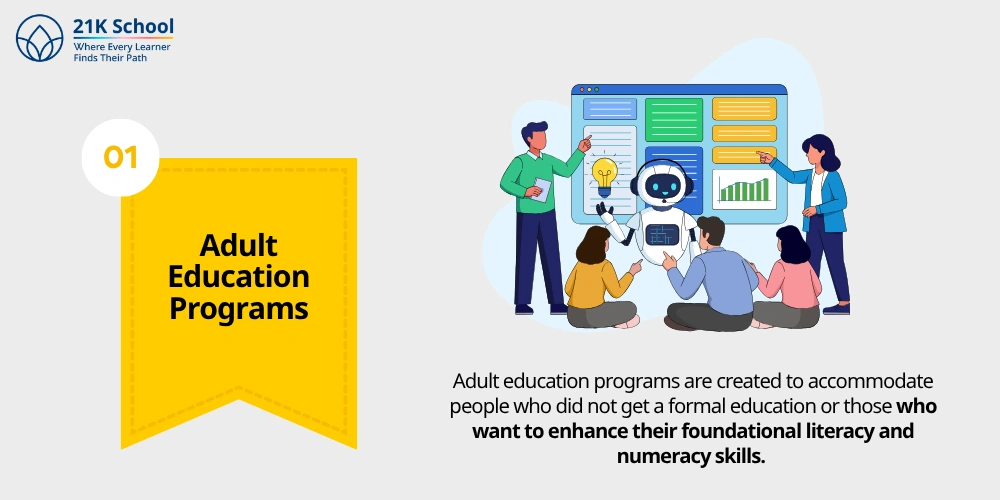
Adult education programs are created to accommodate people who did not get a formal education or those who want to enhance their foundational literacy and numeracy skills.
Such programs assist adults in acquiring confidence and being socially active.
2. Vocational and Skill Training
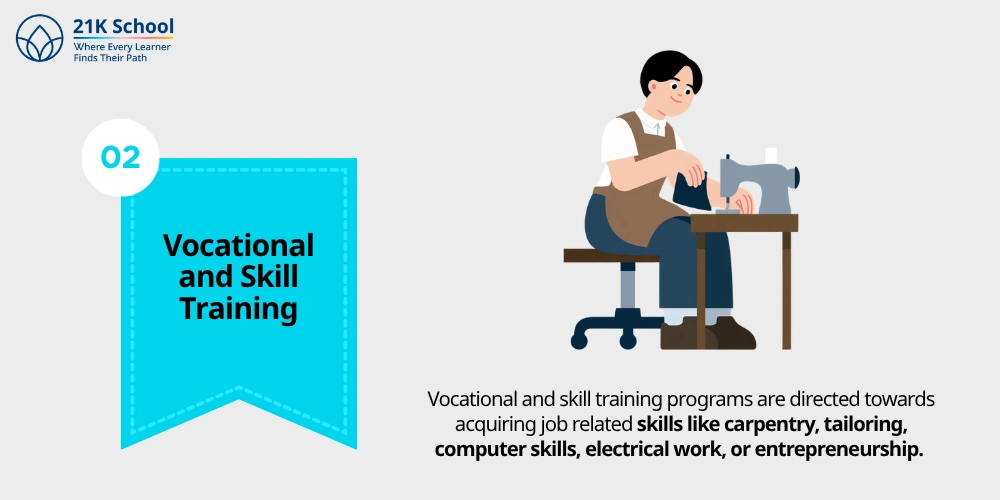
Vocational and skill training programs are directed towards acquiring job related skills like carpentry, tailoring, computer skills, electrical work, or entrepreneurship.
These programs can enhance employability and help in financial self-reliance.
3. Community Education
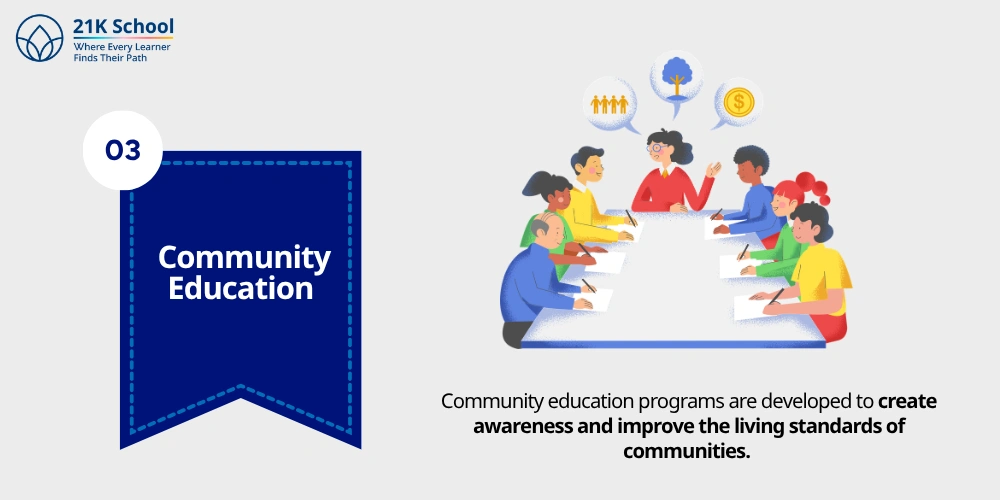
Community education programs are developed to create awareness and improve the living standards of communities.
They include health education, environmental education, civic education, and social development programs.
4. Continuing Education
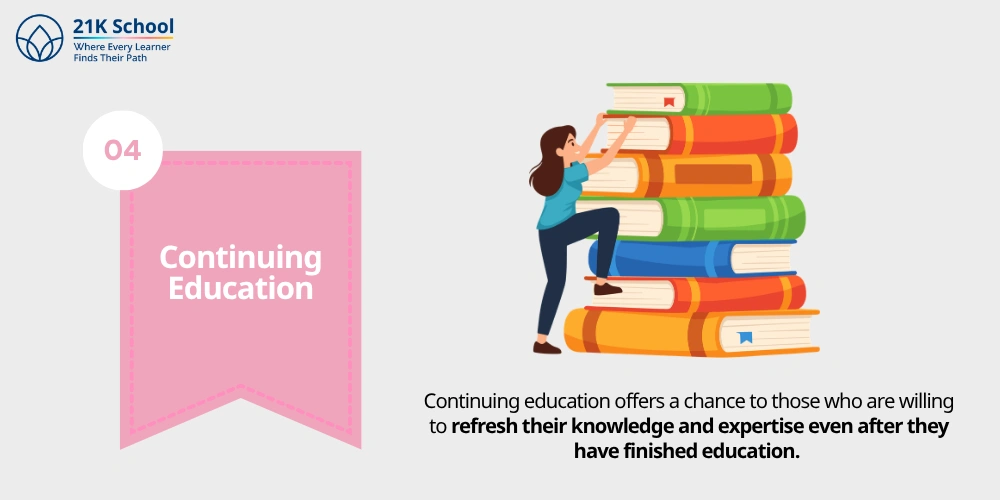
Continuing education offers a chance to those who are willing to refresh their knowledge and expertise even after they have finished education.
It provides refreshers courses and personal interest courses for professional development.
5. Online and Distance Learning
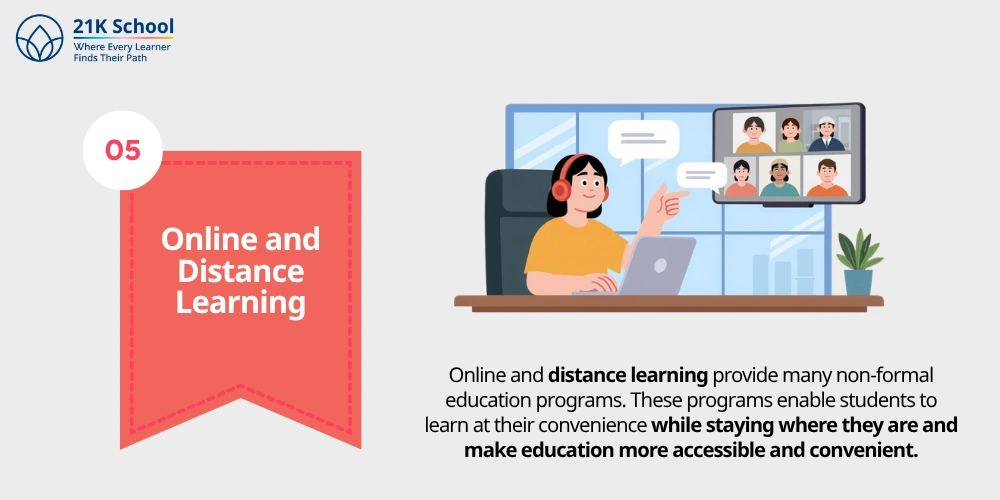
Online and distance learning provide many non-formal education programs.
These programs enable students to learn at their convenience while staying where they are and make education more accessible and convenient.
Objectives of Non-Formal Education
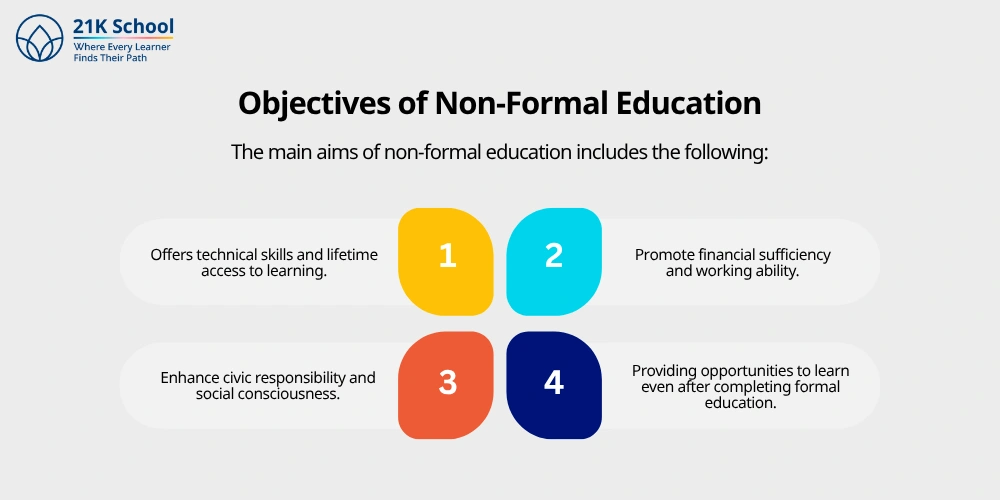
The main aims of non-formal education includes the following:
- Offers technical skills and lifetime access to learning.
- Promote financial sufficiency and working ability.
- Enhance civic responsibility and social consciousness.
- Providing opportunities to learn even after completing formal education.
Non-formal education aims at helping the learners be empowered and enable them to acquire relevant skills and knowledge that they can apply to real-life conditions.
5 Importance of Non-Formal Education
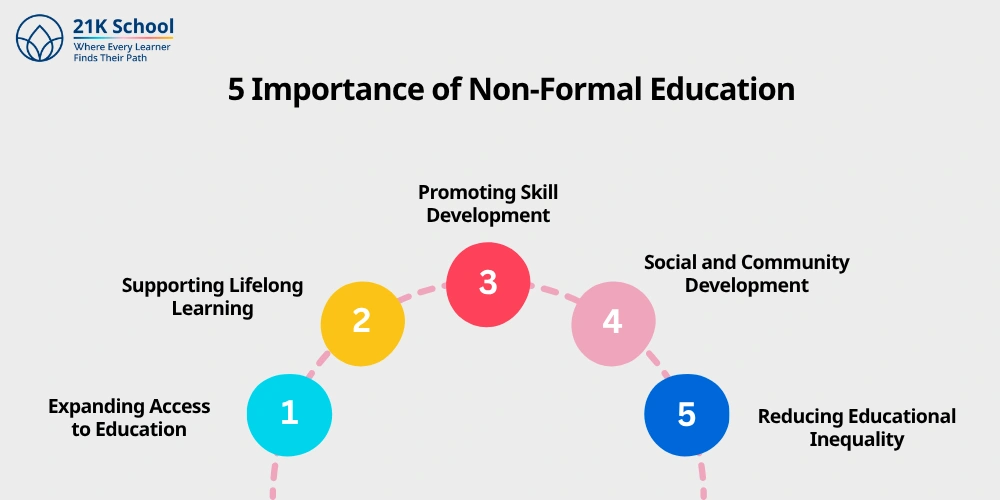
Non-formal education gains its place in society due to the following significance:
1. Expanding Access to Education
Non-formal education reaches individuals that might not have access to formal or school education because of poverty, geographical location, age, or personal obligations.
It guarantees learning that is accessible to everyone.
2. Supporting Lifelong Learning
Non-formal education is based on the principle that education should not be limited to only school and college.
It promotes lifelong learning as individuals are able to learn from anywhere and at any age, and to adapt with the social and economic changes.
3. Promoting Skill Development
Non-formal education enables students to be self-reliant and ready to take up employment by emphasizing on practical and job-related skills.
This can be of particular relevance when they want to pursue future jobs in the 21st century.
4. Social and Community Development
Through non-formal education, social awareness, civic responsibility, and individual participation are encouraged.
It assists one in understanding social problems and makes them responsible members of their society.
5. Reducing Educational Inequality
Non-formal education can help minimize the gap in education and inequality by offering alternative ways of learning.
It supports marginalized groups and encourages inclusive learning.
Non-Formal Education vs Formal Education
Formal education and non-formal education is mainly different because the former takes place in structured settings, while the other does not.
Let’s understand more about these differentiations through a table:
| Basis of Comparison | Non-Formal Education | Formal Education |
| Meaning | Learning that happens outside regular schools and colleges | Education provided through schools, colleges, and universities |
| Flexibility | Very flexible timing and content | Follows a fixed schedule and set syllabus |
| Curriculum | Designed according to learners’ needs and interests | Follows a planned and standardized curriculum |
| Duration | Usually short and focused | Long-term and continuous |
| Teaching Style | Interactive and learner-focused | Mostly teacher-led classroom instruction |
| Assessment | Little or no formal testing | Regular exams and evaluations |
| Certification | May or may not offer certificates | Provides officially recognized degrees or certificates |
| Age Limit | Open to people of all ages | Generally based on age groups |
| Examples | Skill training, workshops, adult learning programs | Schools, colleges, or universities |
Conclusion
If you want flexible learning, you can depend on non-formal education for boosting your knowledge along with your other commitments.
Not just that, it can be acquired at any point of time, at any age, and from anywhere.
This the main reason that so many individuals pursue non-formal education, including those who are working and the ones who had to leave their education at a certain point of life.
Non-formal education is a good means to continue learning and boost your skills for professional success in life.

You may also want to read