

Which type of online education would you find to be the best, as per your learning style and goals?
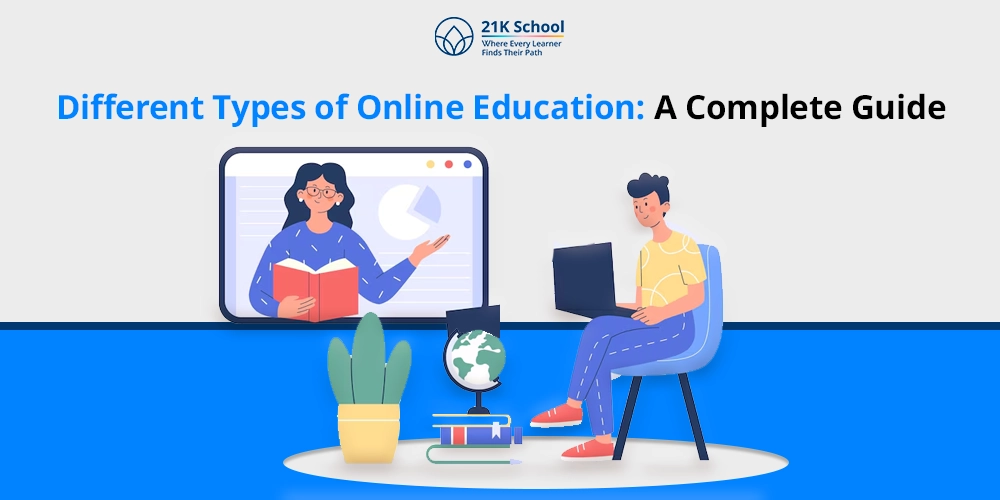
Online learning has transformed the way people learn by providing them with flexible, accessible and diverse ways of learning
As a result of the emergence of digital technologies, students have a variety of choices when it comes to online learning that can fit their schedules, the way they learn and their goals.
Online education has provided viable solutions to physical classroom education in terms of academic, professional, and personality development through the provision of alternative live virtual classes and self-paced courses.
Table of Contents
- What is Online Education?
- 6 Characteristics of Online Education
- Top 14 Types of Online Education
- 1. Synchronous Learning
- 2. Asynchronous Learning
- 3. Blended Learning
- 4. Hybrid Learning
- 5. Game-Based Learning
- 6. Microlearning
- 7. AI-Based Learning
- 8. Virtual Reality Learning
- 9. MOOCs (Massive Open Online Courses)
- 10. Web-Based Learning
- 11. Mobile Learning
- 12. Self-Paced Online Learning
- 13. Flipped Learning
- 14. Social Learning
- Tools and Platforms for Online Education
- Conclusion
What is Online Education?
Online education is one of the modern methods of learning that applies the uses of the internet in the provision of learning content and instruction. It provides the students with access to courses, learning materials and lectures wherever they go, and whenever they desire.
Online education is easy, flexible, and it offers a learner the opportunity to gain knowledge and skills without the need to be in a real physical classroom, which is done through the application of virtual classes, video, and interactive facilities.
6 Characteristics of Online Education
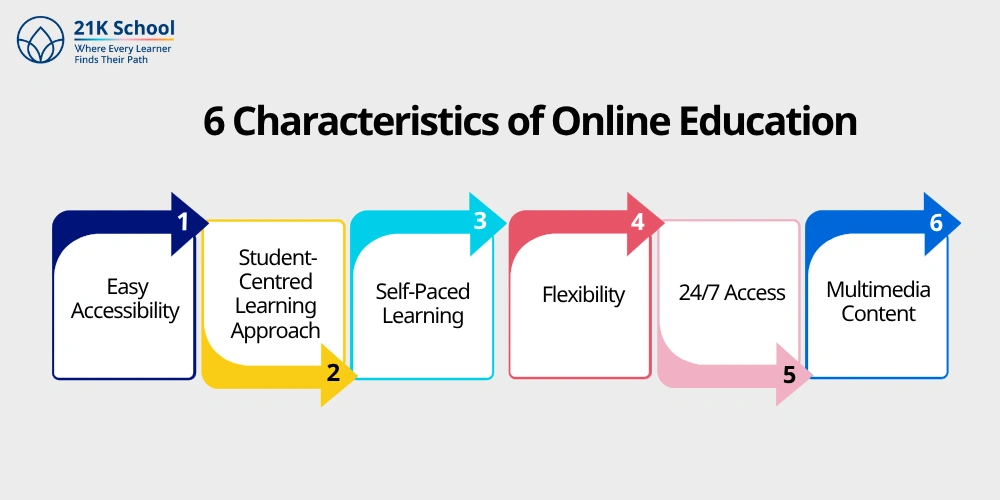
Convenience, interest to the student, self-direction, flexibility, 24/7 availability, and multimedia content constitute the most significant features of online education that make the learning method straightforward, student-centred, and flexible to each learner.
1. Easy Accessibility
Students can learn online at any time and from any place without necessarily using equipment such as laptops and smartphones. It has no geographical or physical borders that restrict one’s access to education, and anyone with the internet can obtain education.
This renders the unfortunate people in the workforce, remote learners, and students unable to access the normal classroom and access the learning opportunities.
2. Student-Centred Learning Approach
A student-centred learning approach is centred on the interests and speed of the learner. The learning process enables the learners to get resources and make decisions on the materials, and receive individual feedback.
It enhances interaction, cognitive and autonomous choices and renders learning more purposeful to each learner and a source of enhanced understanding compared to the intensive teacher-centred learning styles.
3. Self-Paced Learning
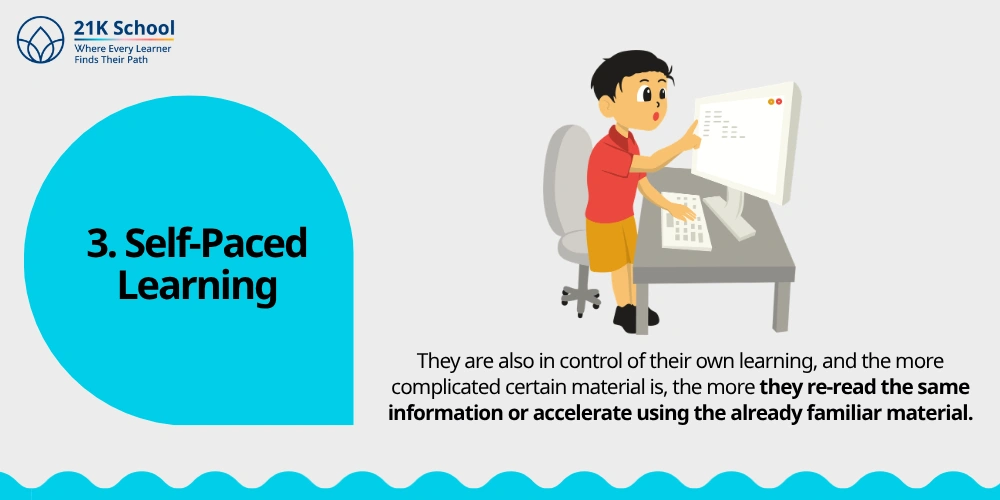
They are also in control of their own learning, and the more complicated certain material is, the more they re-read the same information or accelerate using the already familiar material.
The self-paced learning removes students’ stress, and it fits the pace at which an individual learns, and it allows a learner to balance between learning and other activities. It promotes content learning and personal learning responsibility.
4. Flexibility
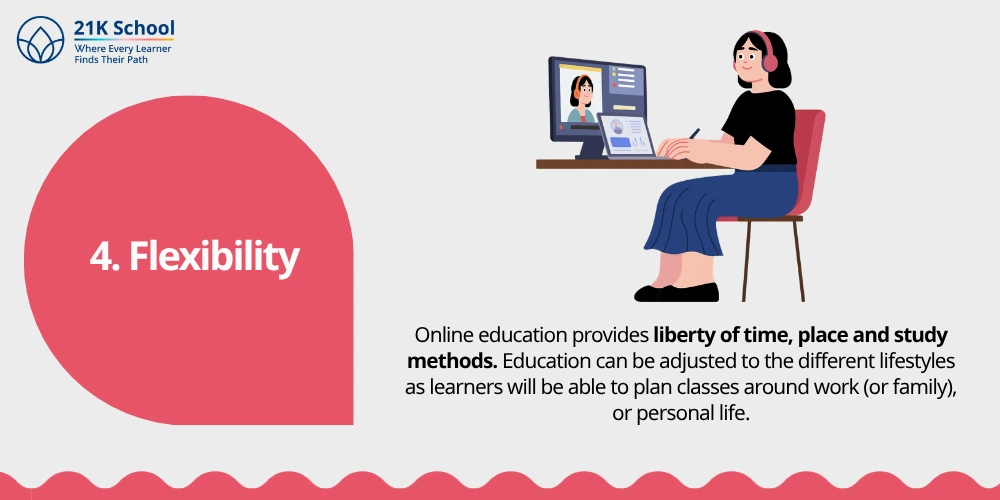
Online education provides liberty of time, place and study methods. Education can be adjusted to the different lifestyles as learners will be able to plan classes around work (or family), or personal life.
The flexibility makes the learning realistic, available, and adjustable to personal schedules without affecting the quality of education.
5. 24/7 Access
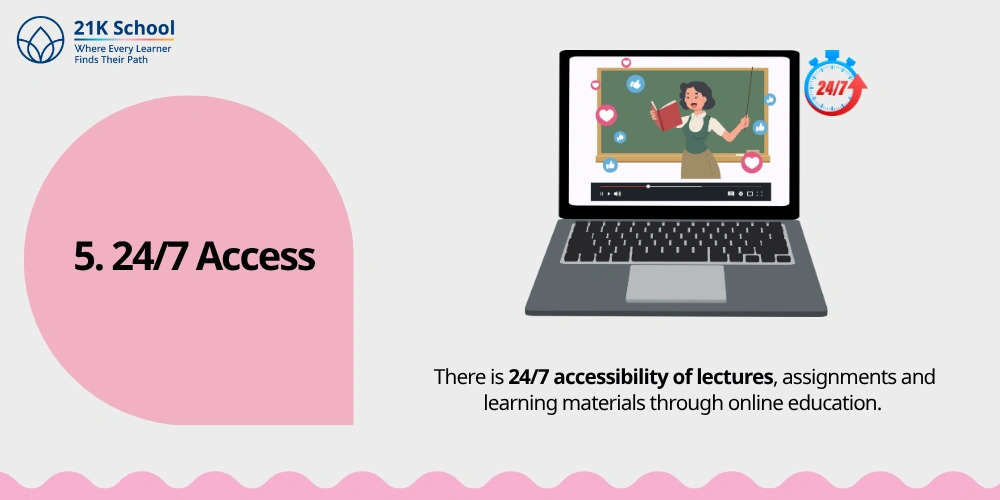
There is 24/7 accessibility of lectures, assignments and learning materials through online education. The students can study at their own convenience and re-read to ensure that they understand and complete tasks without time barriers.
The reason behind this is that it enables constant learning, convenience, and a combination of learning and work or personal obligations owing to this constant accessibility.
6. Multimedia Content
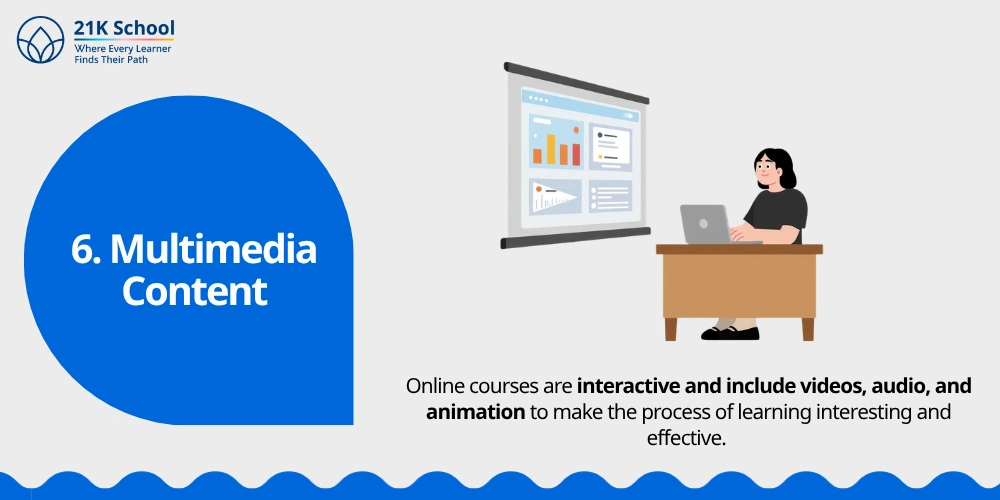
Online courses are interactive and include videos, audio, and animation to make the process of learning interesting and effective. Multimedia content provides support to various forms of learning, breaks down complicated issues and improves comprehension and retention.
The visuals, text, and interactivity will help the learners understand information more easily, be motivated and experience a rich and dynamic learning process.
Top 14 Types of Online Education
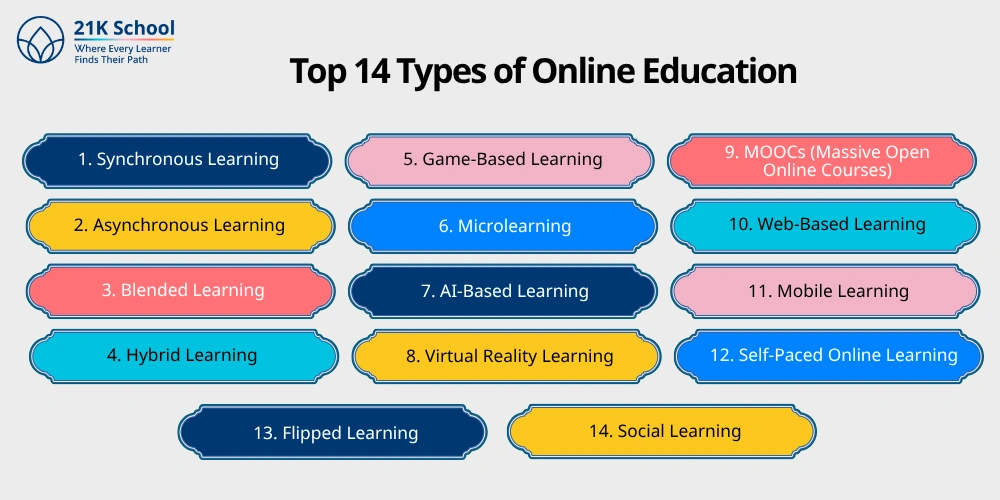
There are 14 most popular online education types that offer various learning methods, and they are synchronous, asynchronous, blended, hybrid, game-based, microlearning, AI-based, VR, MOOCs, web and mobile, self-paced, flipped and social learning.
1. Synchronous Learning
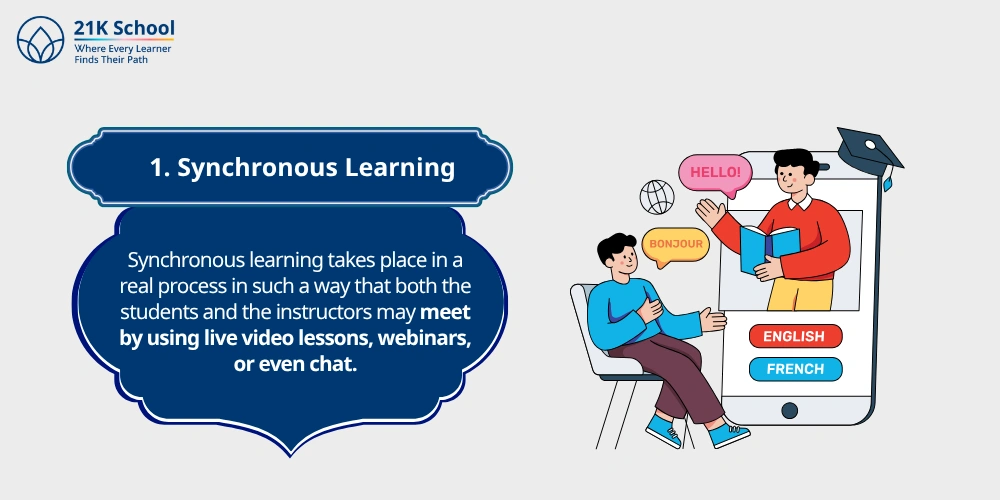
Synchronous learning takes place in a real process in such a way that both the students and the instructors may meet by using live video lessons, webinars, or even chat. It promotes real-time communication, interaction and real-time responsiveness.
This approach will be to mimic a normal classroom on the internet and generate cooperation and interaction. Students will be in a position to pose questions, discuss, and work within a well-organised schedule and still feel comfortable learning from anywhere else.
2. Asynchronous Learning
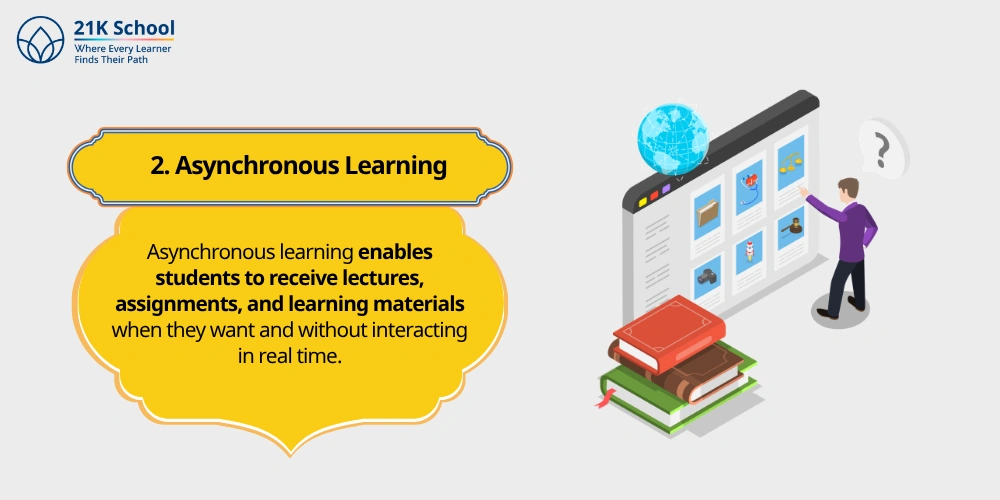
Asynchronous learning enables students to receive lectures, assignments, and learning materials when they want and without interacting in real time. Students are able to learn at their own pace and jump back to hard subjects, and are able to set a study routine when they feel most comfortable.
This adaptable style can be used in busy lives and varying learning rates to allow the student to combine school and work, personal engagements, or other activities, and still obtain detailed knowledge and skills enhancement.
3. Blended Learning
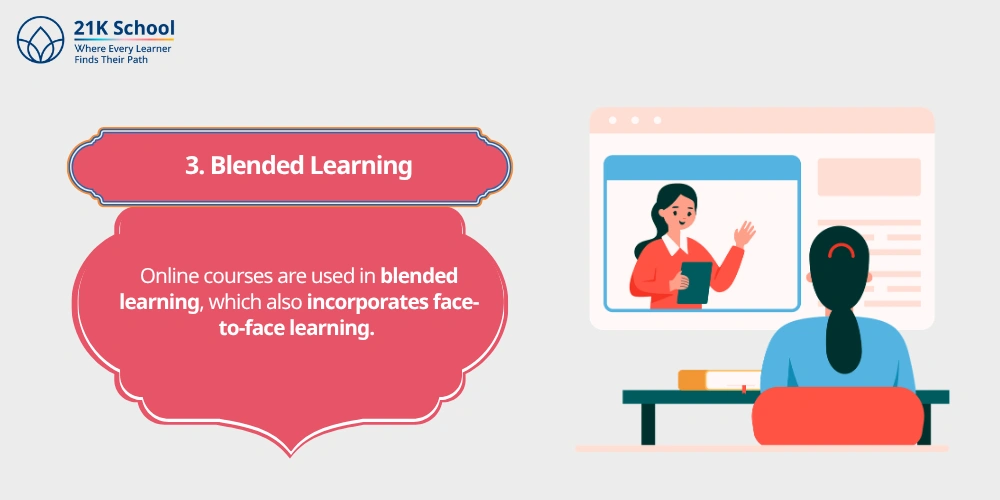
Online courses are used in blended learning, which also incorporates face-to-face learning. Digital learning entails students to learn through lectures, videos, and assignments, and physically attending classes as required. The given approach provides flexibility and personal interaction, which supports the ideas and enhances the understanding.
It is extensively applicable to schools, universities, and professional training programmes to maximise the learning experience so that learners may enjoy the convenience of the digital realm, as well as the face-to-face and proximity interaction.
4. Hybrid Learning
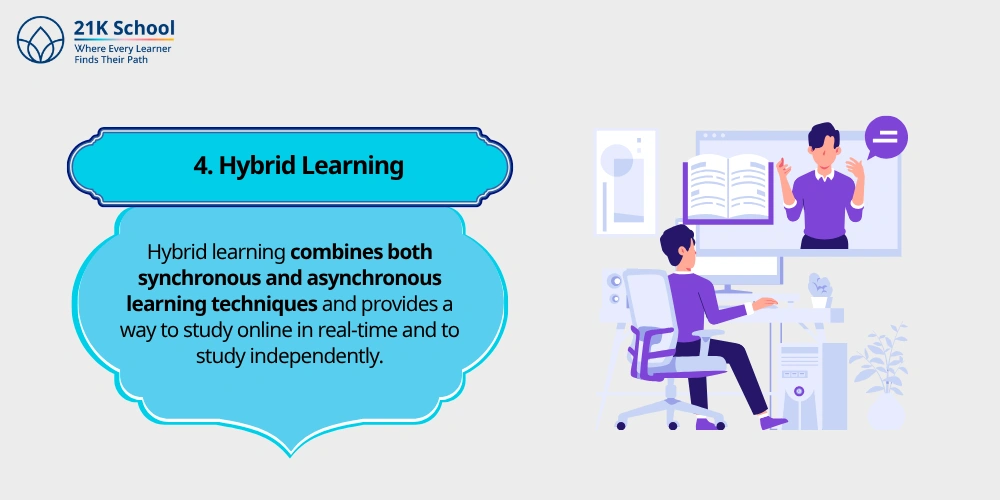
Hybrid learning combines both synchronous and asynchronous learning techniques and provides a way to study online in real-time and to study independently. Students are able to engage in live chats as they go through their assignments at their own time.
This model is adaptable and allows different learning styles, which provide it with form. It is applicable in academic, corporate and professional learning, and allows the learners to be more participatory, time-saving, and offers a more balanced and flexible learning process.
5. Game-Based Learning
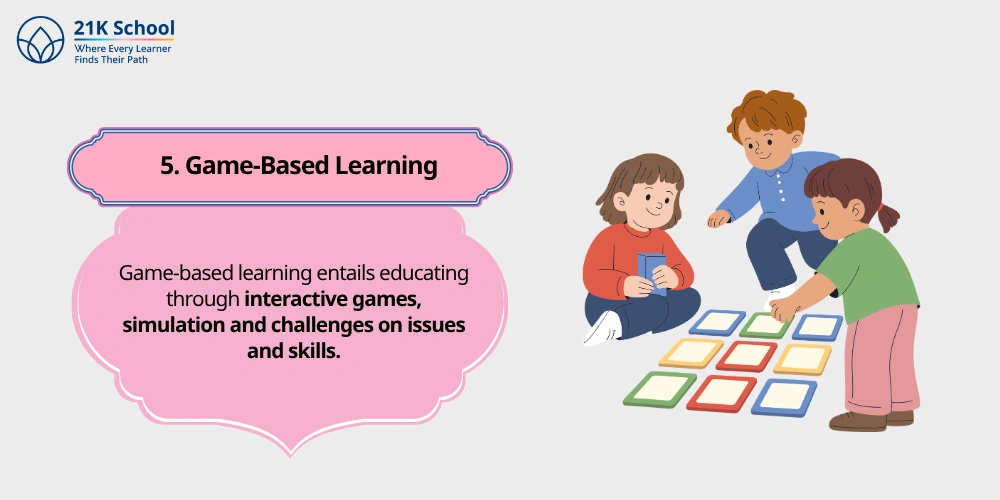
Game-based learning entails educating through interactive games, simulation and challenges on issues and skills. The encouragement of students to solve problems, active participation, and learning motivation will make the students have fun and make the lessons interesting.
It is also a more effective means of improving retention and critical thinking, particularly with short-form learning or skills-based training programmes. Game-based learning is a form of integrating learning with entertainment, which creates an interactive environment that results in enhanced learning, besides ensuring the pupils are also interested and amused.
6. Microlearning
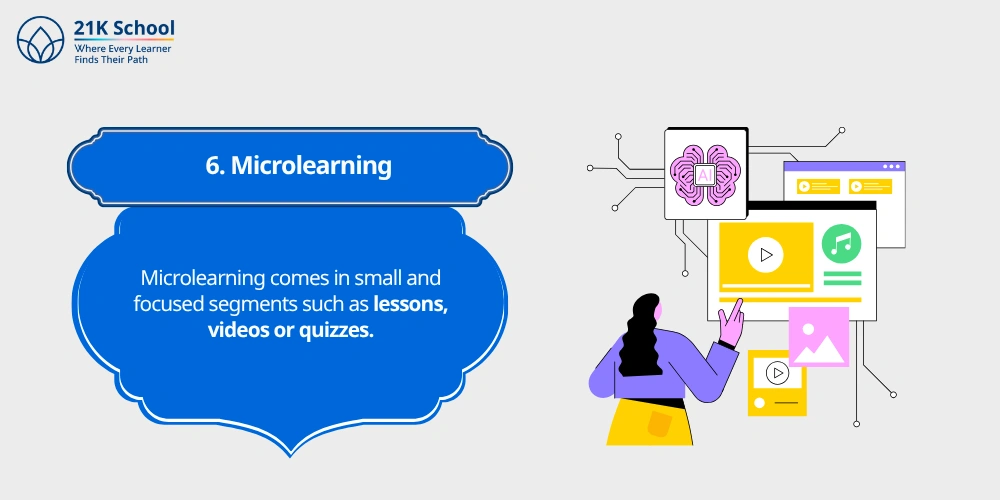
Microlearning comes in small and focused segments such as lessons, videos or quizzes. It is laid out in a way that it learns quickly, reinforces the skills, and is also not so difficult to remember. The learners will have the opportunity to study in small portions, practise the subjects repeatedly and organise learning into hectic routines.
This approach reduces the information load (i.e. it facilitates the perception); it increases the memory retentiveness, thus it is most applicable to corporate training, professional advancement, and even modern online training.
7. AI-Based Learning
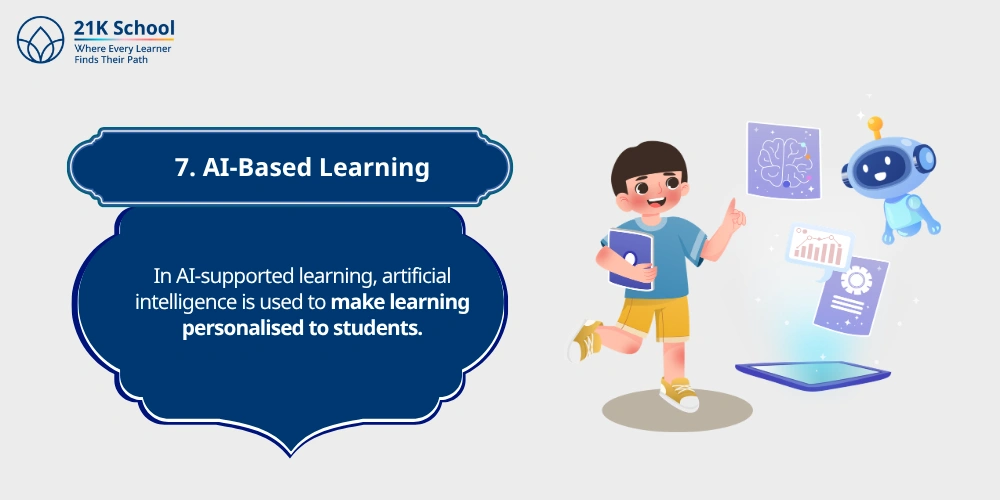
In AI-supported learning, artificial intelligence is used to make learning personalised to students It provides adaptive learning patterns, real-time feedback and performance evaluation to propose resources or adjust the level of difficulty.
The advantage of AI is unveiling the strengths and weaknesses, enhancing the interest and effectiveness of learning. This strategy optimises the outcomes, encourages self-directed learning and offers new solutions to the academic and professional development by individualising the education to the needs of the person.
8. Virtual Reality Learning
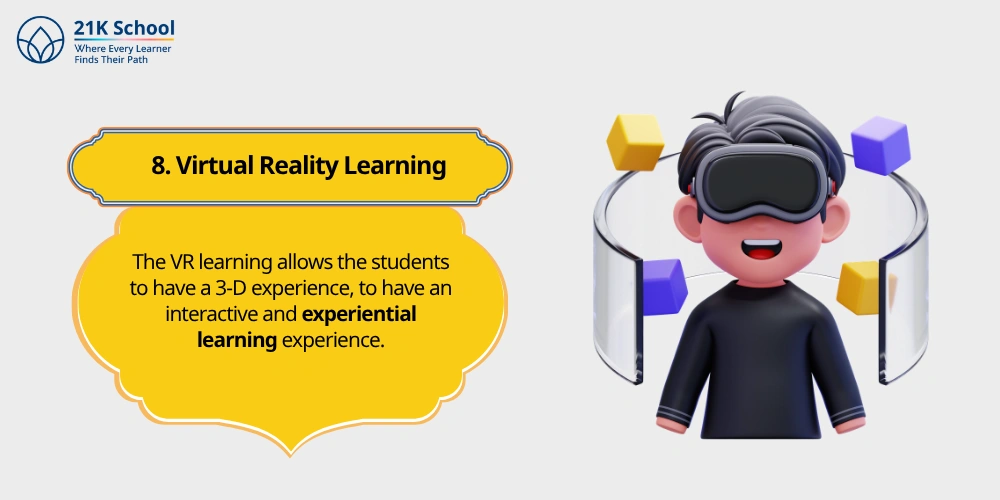
The VR learning allows the students to have a 3-D experience, to have an interactive and experiential learning experience. It may be applied in the practical situations, such as training some skills, simulation, and visualisation of some complex concepts.
VR does enhance learning, involvement and memorisation since the trainees will be able to observe life simulations in real-life scenarios without any damage. The resultant strategy will provide an experiential learning with no physical limits, so learning becomes simple, feasible and quite efficient both academically and professionally.
9. MOOCs (Massive Open Online Courses)
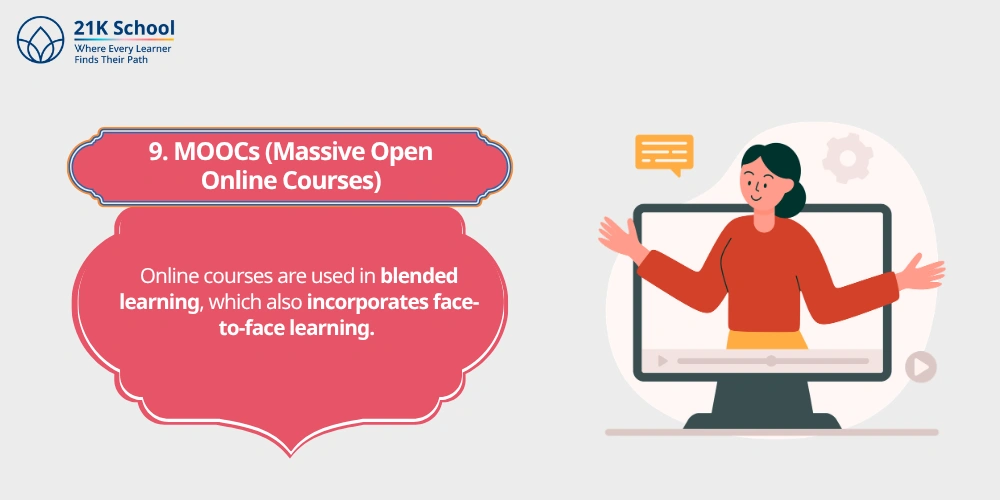
MOOCs are online courses that can be accessed worldwide by the masses at little or no cost. They are extensive in range and have video lectures, assignments and discussion forums.
MOOCs provide students, professionals, and other lifelong learning learners with high-quality and flexible learning services. They transcend geographical and financial limits to an extent that anyone with the use of the internet can be informed, gain competencies and be given a certificate or credentials provided by a renowned institution.
10. Web-Based Learning
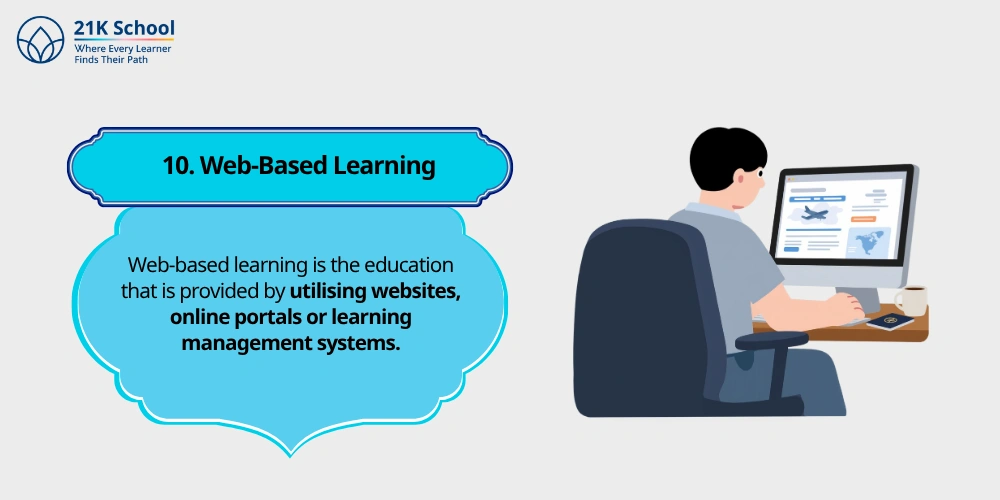
Web-based learning is the education that is provided by utilising websites, online portals or learning management systems. They enable students to have lectures, exercises and resources anywhere as long as they have an internet connection.
It is possible to learn interactively, interestingly and easily with the help of quizzes and other assignments. The process is highly versatile and can be applied in large scale, and can be applied to academic courses, corporate training, and self-directed learning, in which the learners can study independently or in a programme.
11. Mobile Learning
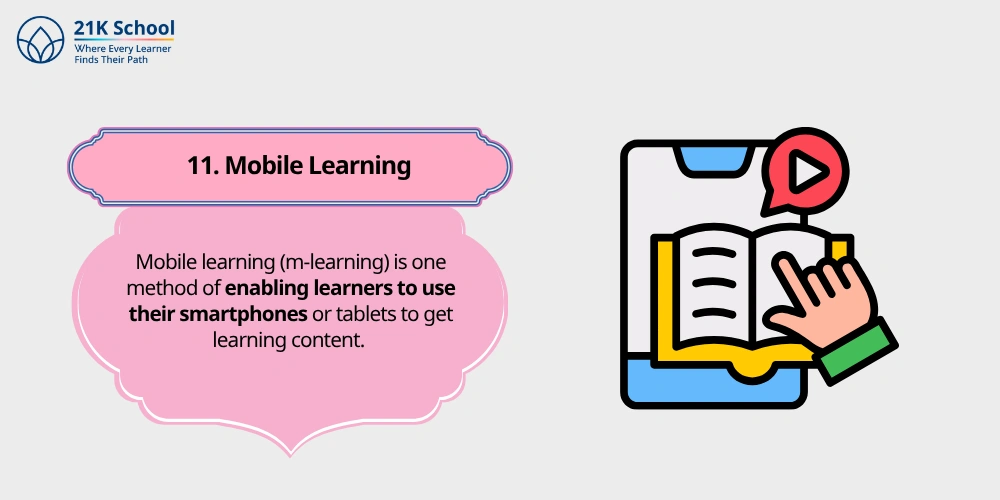
Mobile learning (m-learning) is one method of enabling learners to use their smartphones or tablets to get learning content. It allows one to study anywhere, any time, even when travelling, making it very convenient (busy lifestyles).
Mobile applications, micro learning modules, and interactive tools make education interactive, flexible and interesting. M-learning may fit into individualised and lifelong learning schedules, as well as instant access to resources, and a learner can study and work, travel and have personal appointments.
12. Self-Paced Online Learning
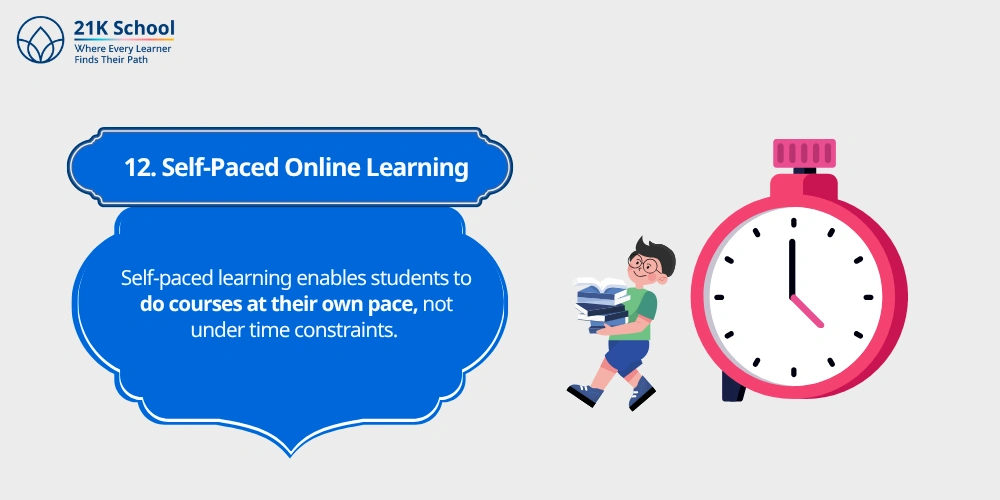
Self-paced learning enables students to do courses at their own pace, not under time constraints. Students have an opportunity to devote more time to difficult issues, reread texts and move at their own pace.
This freedom promotes self-directed learning, individualization and self-control. The self-paced courses are best suited for learners who have to combine their work, family, or other commitments with acquiring total knowledge and skill development at their own pace.
13. Flipped Learning
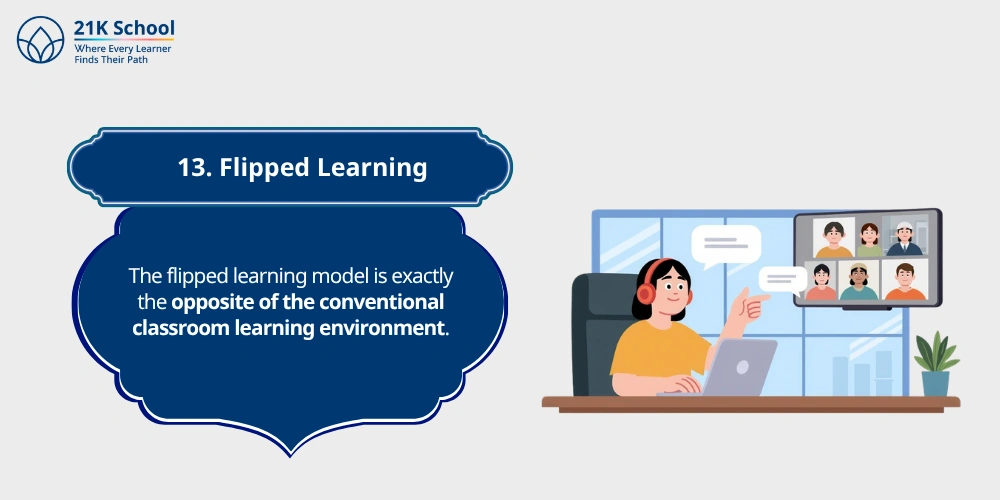
The flipped learning model is exactly the opposite of the conventional classroom learning environment, where lectures are provided online, and the classroom part of the course is dedicated to discussion, problem-solving exercises and practice.
The approach fosters critical thinking, cooperation and comprehension. Flipped learning, in its maximum utilisation, provides the maximum amount of interaction in the classroom, strengthening knowledge and effectively training students on problem-solving and analysis abilities.
14. Social Learning
Social learning is based on teamwork, communication and peer-to-peer education exchange. Students engage in discussion forums, group work and social sites to share ideas and learn together.
This strategy develops communication, community building and networking. Having the experience and opinions of other people, students learn and become deeper, motivated, and can have a positive learning environment that will positively influence the final learning results.
Tools and Platforms for Online Education
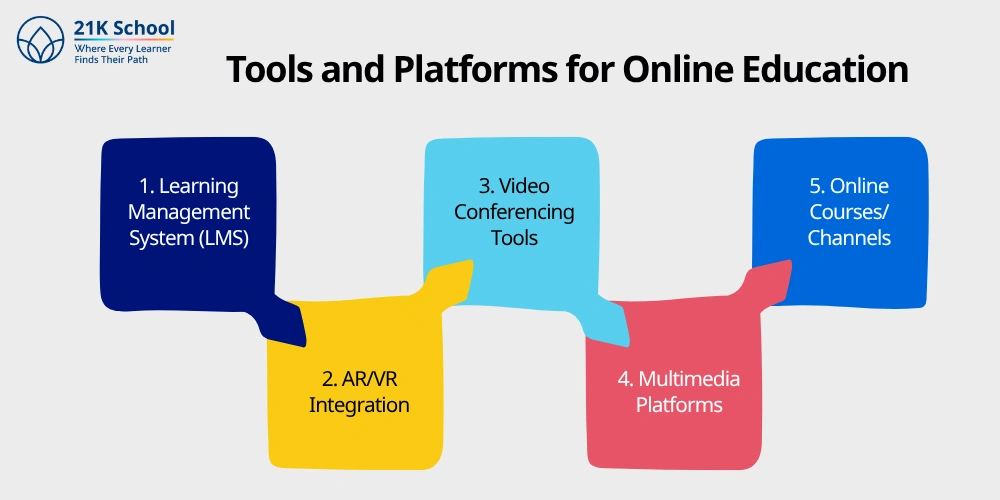
Online education tools and platforms offer digital solutions to facilitate, administer, and improve learning. These are LMS, AR/VR, video conferencing, multimedia platforms, and online courses to have flexible and interactive education.
1. Learning Management System (LMS)
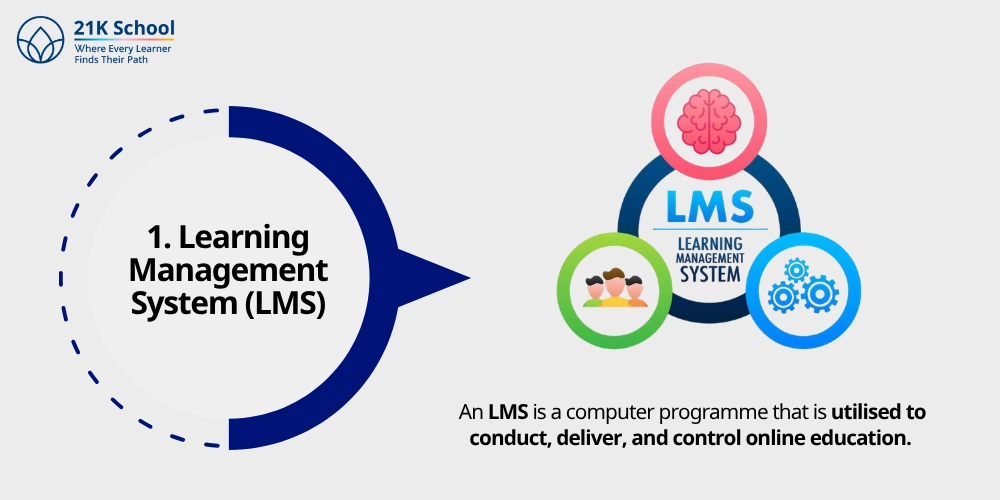
An LMS is a computer programme that is utilised to conduct, deliver, and control online education. It puts together courses, assignments, quizzes, and student progress in a single platform. The teachers can monitor performance, provide feedback and share resources easily.
The LMS systems are also easier to administer, blended and online learning and enhance interaction since all learning processes are focused and centralised.
2. AR/VR Integration
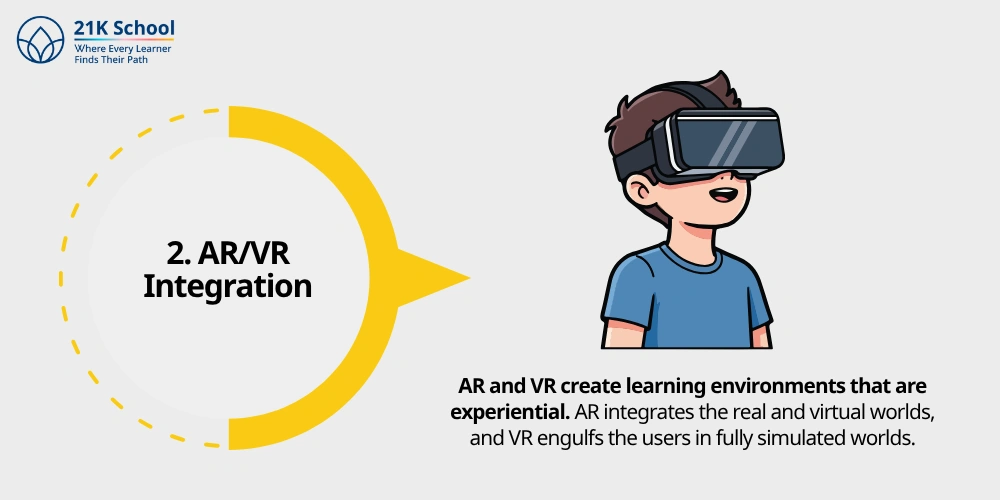
AR and VR create learning environments that are experiential. AR integrates the real and virtual worlds, and VR engulfs the users in fully simulated worlds.
These technologies allow two-way communication, on-training and visualisation of more complicated concepts. AR/VR enhances interaction, memorisation, and learning by means of real-life experiences that would otherwise be difficult or impossible to have in a traditional classroom.
3. Video Conferencing Tools
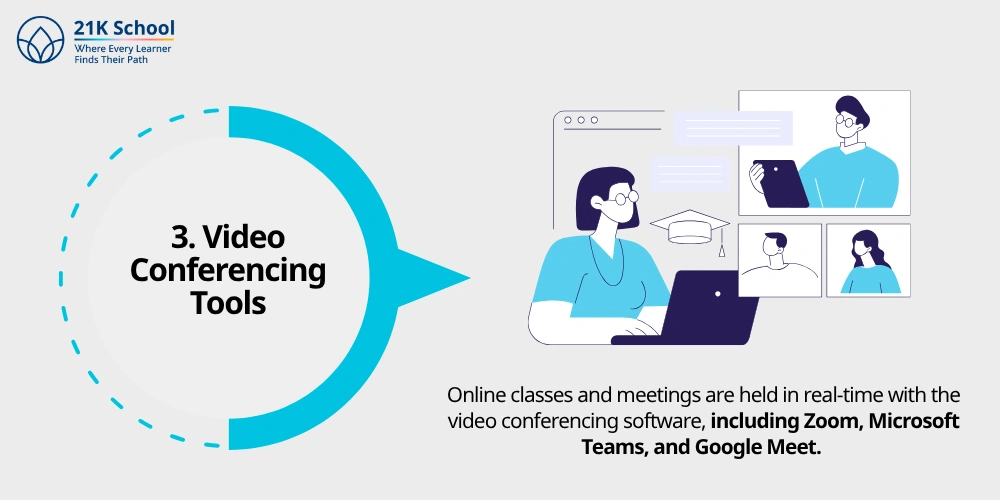
Online classes and meetings are held in real-time with the video conferencing software, including Zoom, Microsoft Teams, and Google Meet. They endorse live lectures, discussions, screen sharing and virtual collaboration.
These tools guarantee the interaction of the instructors and students, and the learning process is real-time, thus making the remote learning process more interactive, engaging and effective.
4. Multimedia Platforms
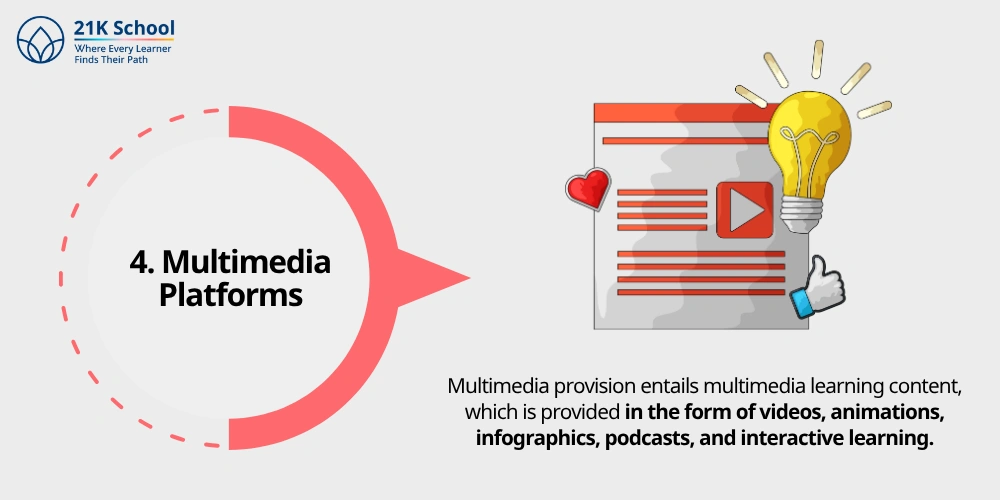
Multimedia provision entails multimedia learning content, which is provided in the form of videos, animations, infographics, podcasts, and interactive learning. They facilitate different learning styles, simplification of complex concepts, and lesson interest.
The visual and interactive learning made available by websites like YouTube, Khan Academy and Edpuzzle can enable students to better comprehend, memorise and be inspired in their learning experience both in school and at work.
5. Online Courses/Channels
Systematic learning is systematically offered through the remote learning and online channels as videos, video tutorials and materials. Coursera, Udemy, and LinkedIn learning are some of the platforms where some of the available subjects and certifications are available.
These provide a chance of self-paced and flexible learning opportunities where students can learn new skills, develop knowledge and quality learning without necessarily being tied to place or location-based schedules.
Conclusion
Online learning has revolutionised the process of learning in terms of being flexible, available and has offered numerous opportunities to learners the world over. The number of different types, tools, and platforms is huge as to make sure that learners have a chance to choose the methods that can be used in accordance with their purposes, schedules, and learning styles.
Online education is one of the solutions that allows people to obtain knowledge and learn other skills, improve academic, professional, and personal development in a digital-first world with immersion into VR, self-paced learning, and social learning.

You may also want to read