


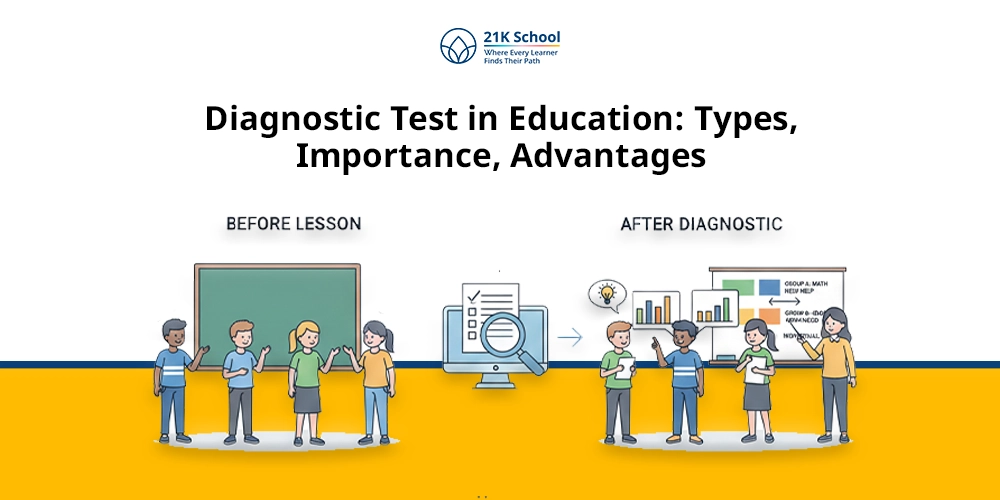
Have you ever considered how a diagnostic test can be a very important tool to help determine the knowledge and strengths of students?
Diagnostic testing in learning plays a significant role in the cognition of the strengths, weaknesses and the knowledge of the learners before they embark on formal education..
But, unlike traditional learning, which evaluates the extent to which the students have learnt after being taught, diagnostic tests are administered at the outset so as to establish the prevailing gaps in the learning and misconceptions and skills.
The use of diagnostic tests can assist the teaching staff in individualising the instruction, diversifying the learning activities and offering specific help when necessary, since they will be able to give a detailed picture of the readiness of the learners.
Table of Contents
- What is a Diagnostic Test in Education?
- 2 Types of Diagnostic Tests in Education
- 5 Characteristics of Diagnostic Tests in Education
- 5 Importance of Diagnostic Tests in Education
- 4 Steps of the Diagnostic Test in Education
- The Difference between Diagnostic and Prognostic Tests in Education
- 5 Advantages of Diagnostic Tests in Education
- 5 Disadvantages of Diagnostic Tests in Education
- 5 Examples of Diagnostic Tests in Education
- Ending Note
What is a Diagnostic Test in Education?
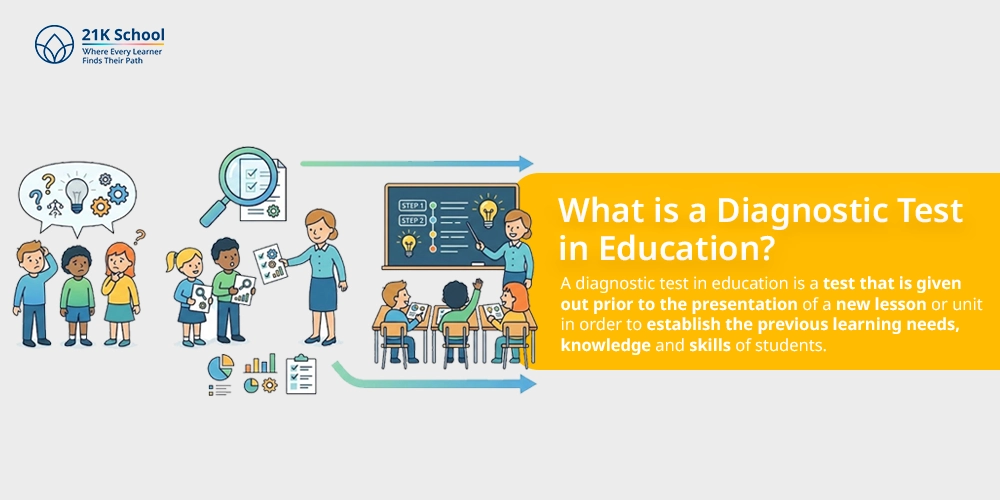
A diagnostic test in education is a test that is given out prior to the presentation of a new lesson or unit in order to establish the previous learning needs, knowledge and skills of students.
It is not directed to provide grades but to find out the strong and weak points and the misconceptions which might affect the process of learning. A diagnostic test helps in making a teacher more planned by showing what students have already learned and where they might have a problem.
It enables them to individualise instructions, give specific assistance and create early interventions or enrichment activities that suit the degree of readiness of the students.
2 Types of Diagnostic Tests in Education
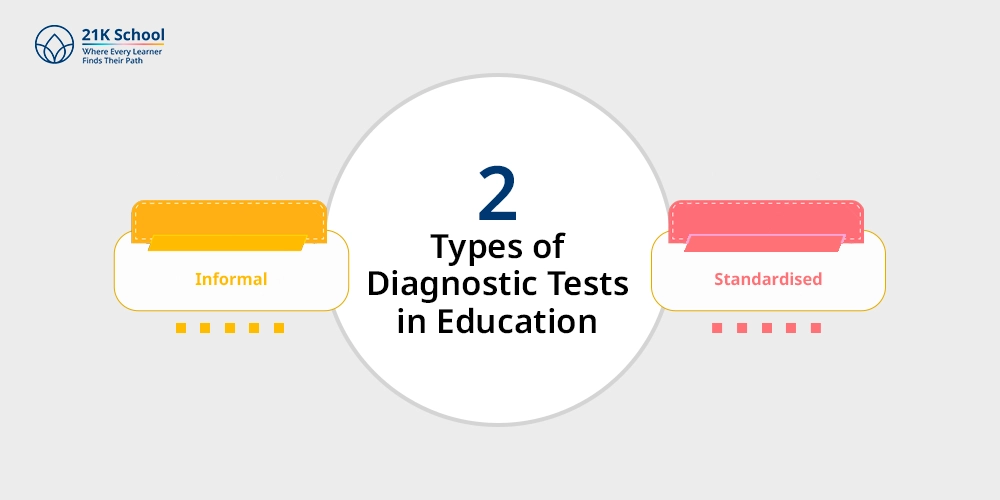
In education, diagnostic tests come in 2 broad categories, which include informal and standardised. Informal and standardised diagnostic tests together can enable educators to have a holistic education perspective of students’ readiness to learn and assist teachers to teach more effectively.
1. Informal
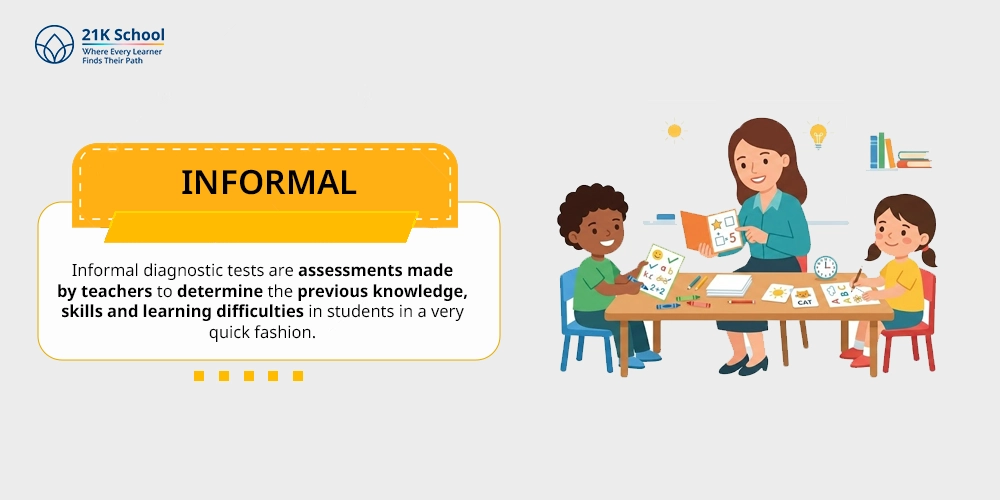
Informal diagnostic tests are assessments made by teachers to determine the previous knowledge, skills and learning difficulties in students in a very quick fashion. These tests are malleable, simple to carry out and may be used as a quiz, examination, checklists, notes of observation or brief written items.
As they are made by teachers, informal diagnostic tests can be adapted to an individual learner, a classroom or individual lesson needs.
2. Standardised
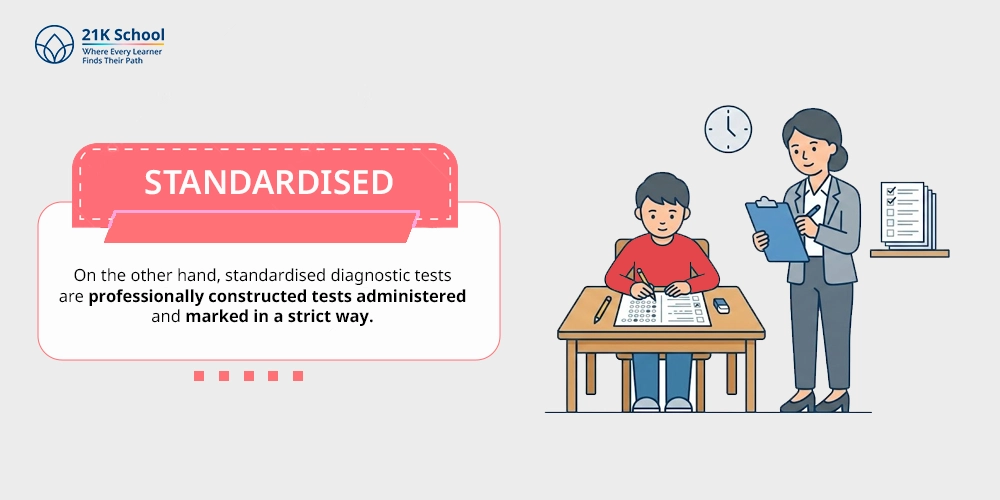
On the other hand, standardised diagnostic tests are professionally constructed tests administered and marked in a strict way. They are standardised tests, similar to every person who takes them, and are often designed to test more generalised skills, such as reading, mathematics or the proficiency of a specific language.
Standardised diagnostic tests give good, comparable data that is reliable and can be used by schools or districts to detect learning disabilities, student progress generally or educational planning on a large scale.
5 Characteristics of Diagnostic Tests in Education
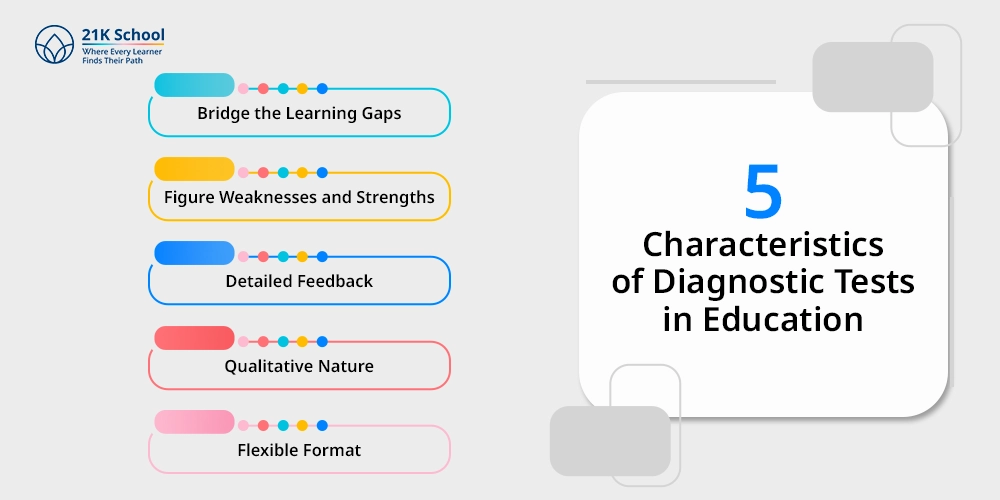
The diagnostic tests in education have a number of determining features that render them useful instruments in examining the learning needs of the students. These features render the diagnostic tests an effective instrument to inform the process of teaching and facilitate efficient learning. The characteristics of diagnostic tests in education are as follows.
1. Bridge the Learning Gaps
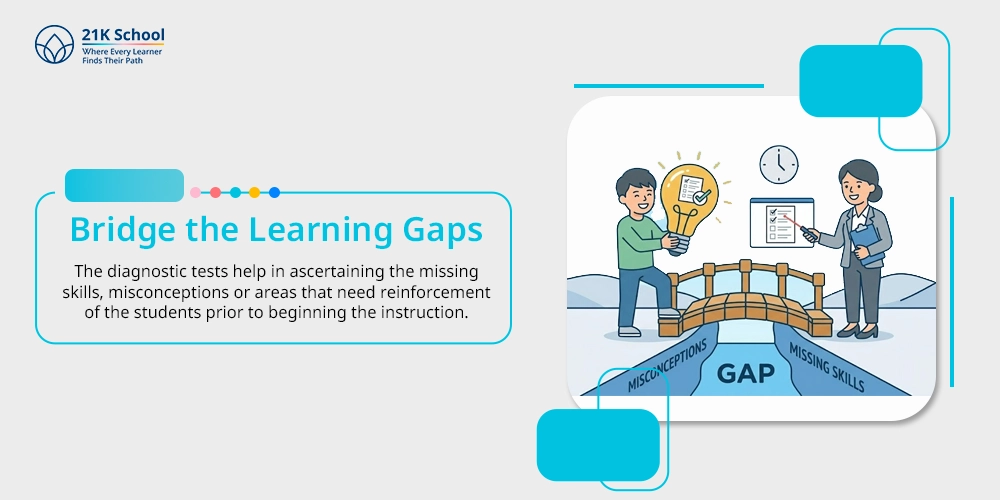
The diagnostic tests help in ascertaining the missing skills, misconceptions or areas that need reinforcement of the students prior to beginning the instruction. By exposing learners to what they have not mastered, teachers are able to create certain lessons and interventions.
This will ensure that the right amount of instruction is initiated and the students overcome some of the challenges, which will lead to an effective and smoother process of learning.
2. Figure Weaknesses and Strengths
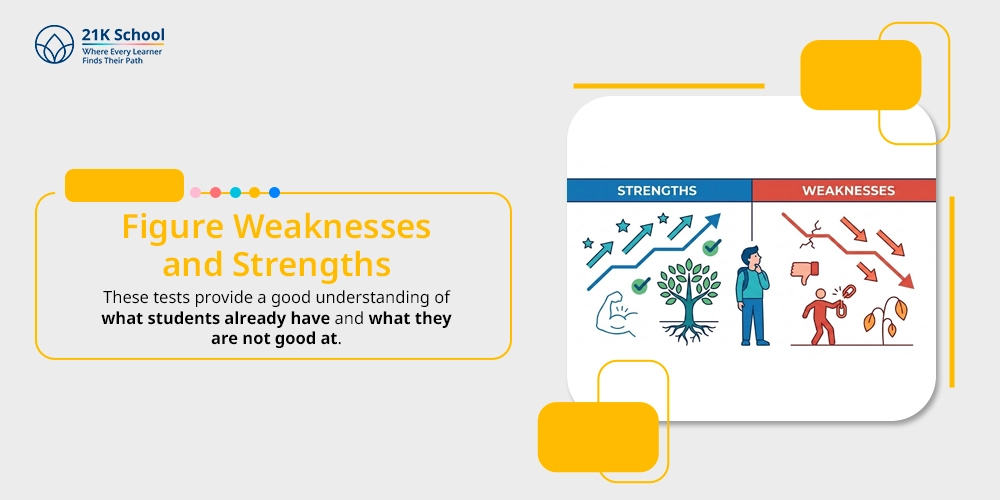
These tests provide a good understanding of what students already have and what they are not good at. The awareness of the strengths and weaknesses helps the teachers to tailor the learning process, exploit the available strengths and improve the weak areas.
This kind of prudent thinking helps in designing individualised learning strategies that help nurture individual learners and their fullest potential in the classroom.
3. Detailed Feedback
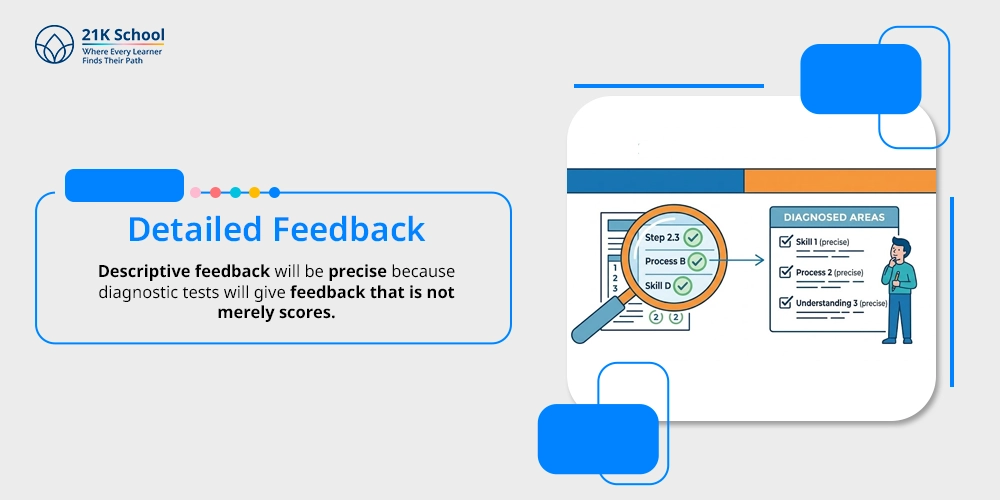
Descriptive feedback will be precise because diagnostic tests will give feedback that is not merely scores. They can determine what exactly the students are having problems with and why.
This is highly informative, and it helps the teachers to change their ways of instruction, and it enables the learners to be aware of what to learn. As a result, the teachers and the learners will be in a position to strive towards improvement.
4. Qualitative Nature
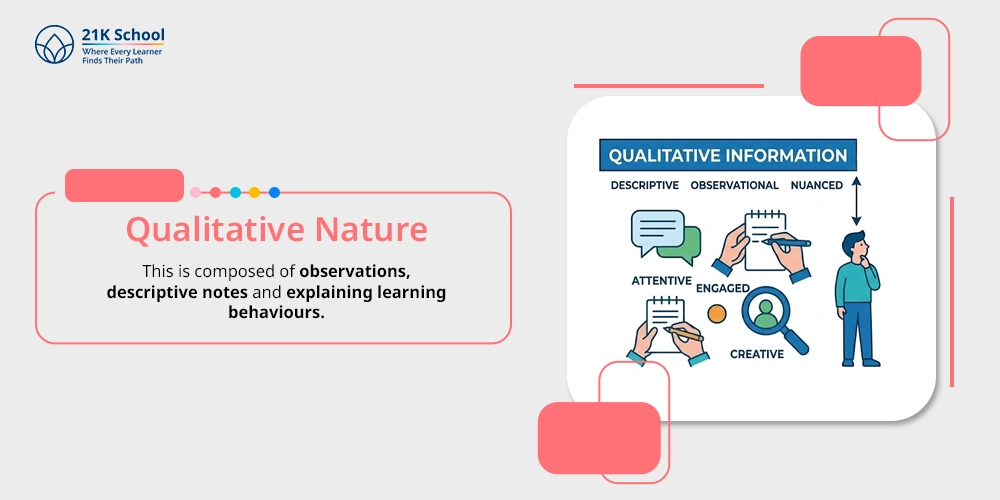
Diagnostic tests are more inclined towards giving qualitative information, in contrast to standardised tests that are normally based on numerical results. This is composed of observations, descriptive notes and explaining learning behaviours.
This is a very rich and detailed information that is handy to the teachers since they know how the students think and learn. It is concerned with learning rather than evaluating and, therefore, easier to organise teaching to meet the needs of the learners.
5. Flexible Format
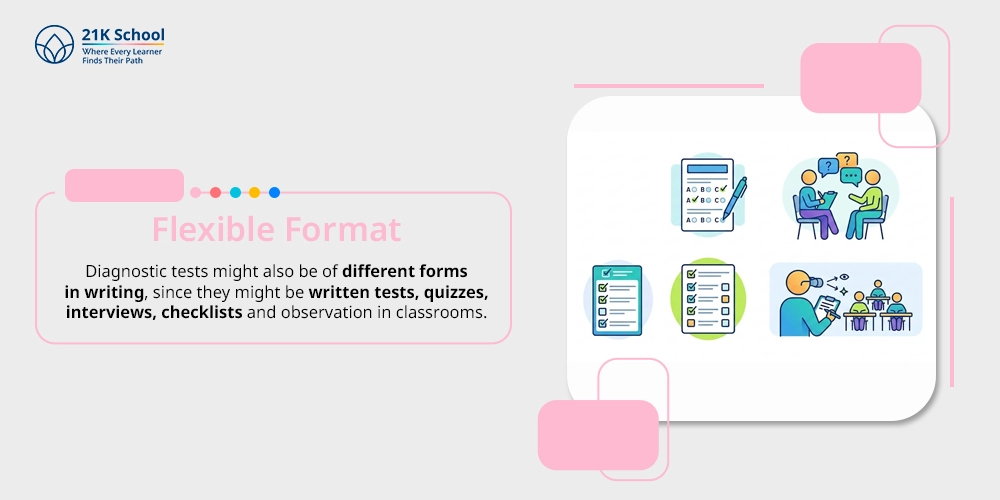
Diagnostic tests might also be of different forms in writing, since they might be written tests, quizzes, interviews, checklists and observation in classrooms. They are accommodating and allow the teachers to embrace the methods that are most suitable to the course or the goals of the lesson, or the learning style of the learners.
This flexibility may be incorporated in the diagnostic measurements to be carried out easily, and the information gathered at the end of the process is significant, and it can be used in the instruction.
5 Importance of Diagnostic Tests in Education
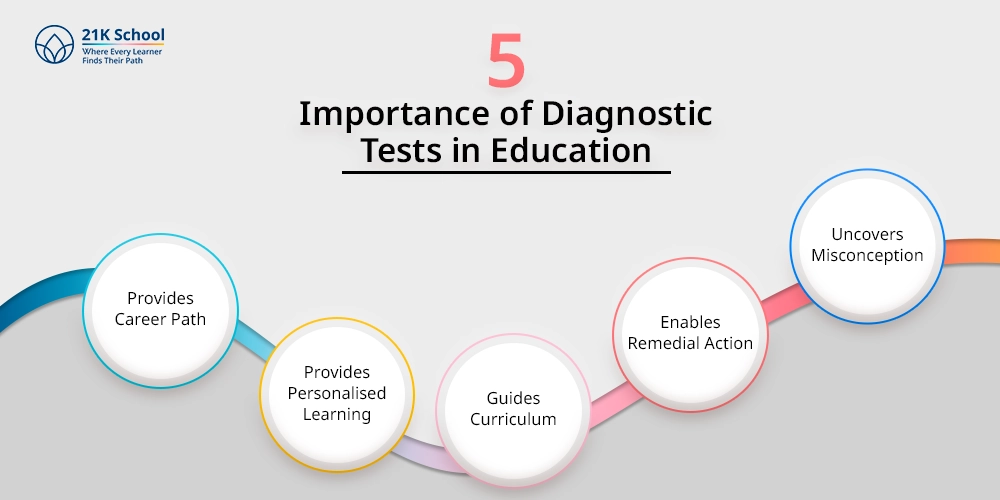
The diagnostic tests are important in the learning process since they identify the specific strengths and weaknesses and gaps in the knowledge of the students prior to or during the actual teaching process, so that the teacher can adjust the lesson and provide special assistance to the learners. The importance of diagnostic tests in education is explained below.
1. Uncovers Misconception
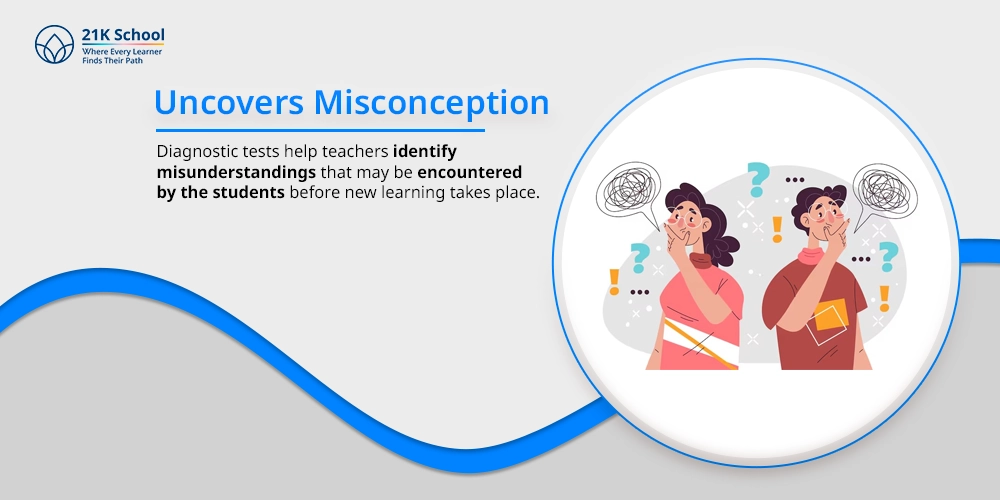
Diagnostic tests help teachers identify misunderstandings that may be encountered by the students before new learning takes place. The advantage of this is that when the wrong concepts or the lost thoughts are brought to light at the earliest, the teachers can correct them and make them permanent obstacles to learning.
It will ensure that the students acquire new knowledge with a sound and proper background, which improves students’ academic performance and overall knowledge.
2. Enables Remedial Action
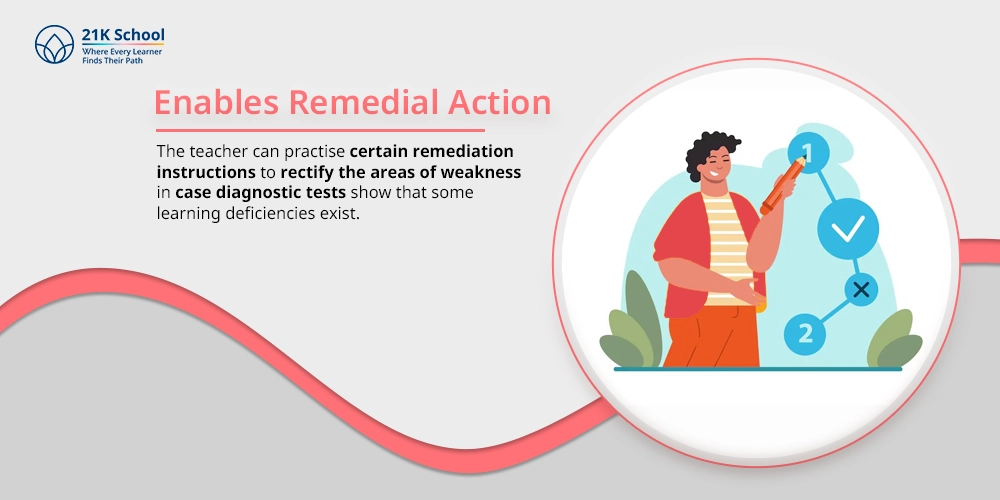
The teacher can practise certain remediation instructions to rectify the areas of weakness in case diagnostic tests show that some learning deficiencies exist. This support may be either form of further practice, simplified instructions or a single instruction.
Early intervention also helps to avoid the emergence of big problems out of little ones, to ensure that the problems remain manageable and the students do not fall behind.
3. Guides Curriculum
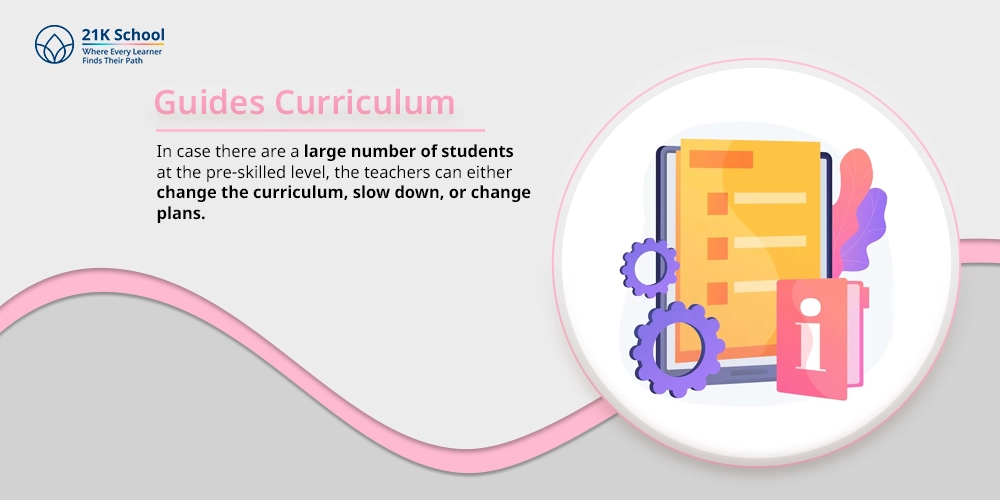
The results of diagnostic tests enable teachers to realise whether the intended curriculum is at the level of readiness of students. In case there are a large number of students at the pre-skilled level, the teachers can either change the curriculum, slow down, or change plans.
Instructional materials are aligned well and with the correct responsiveness to the actual needs of the learners.
4. Provides Personalised Learning
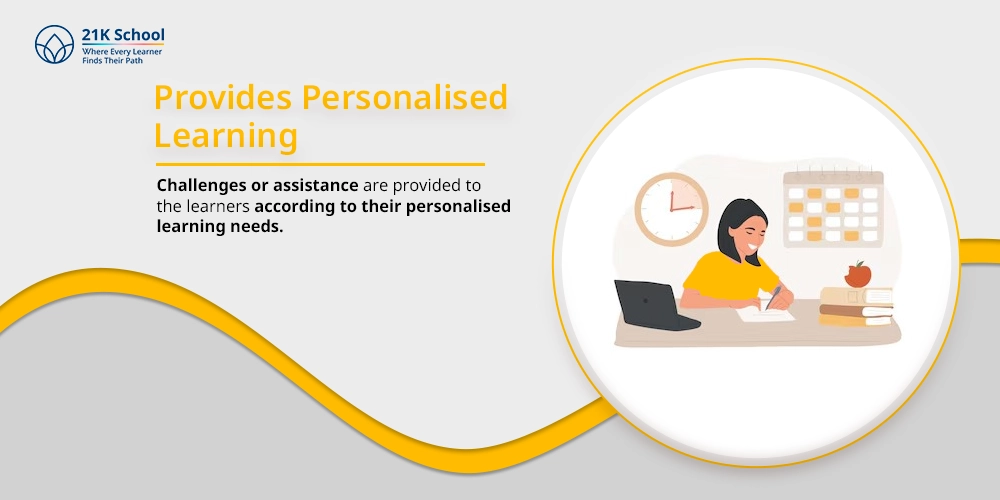
Teachers can tailor instructions according to the needs of each student because of the access to diagnostic tests that indicate the strengths and weaknesses of every student. Challenges or assistance are provided to the learners according to their personalised learning needs.
This form of personalisation is more engaging, motivational and will help the students to learn more effectively, as the classroom will become a more inclusive and student-centred learning environment.
5. Provides Career Path

With the interests, strengths, and potential areas of improvement in students identified, the diagnostic tests help such students make the right choice in their academic and career paths.
The awareness of their abilities at a young age helps students make a wise choice on study method, the skills to learn, as well as their career goals. This creates better preparation and increased chances in the long run.
4 Steps of the Diagnostic Test in Education
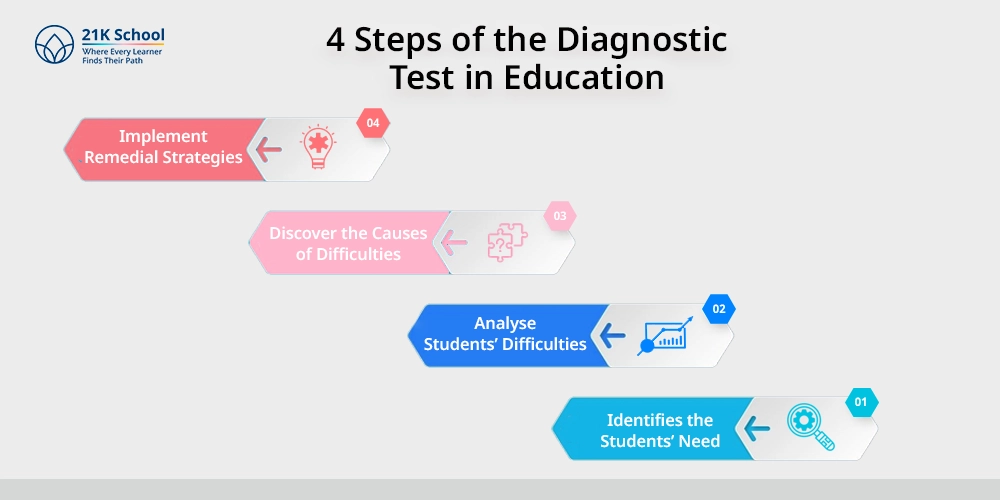
An education diagnostic test is a four-step process, which involves: identification of students requiring help, identification of the very errors or the learning issues and the causes of the learning issues. A diagnostic test in the field of education follows the following steps.
1. Identifies the Students’ Need
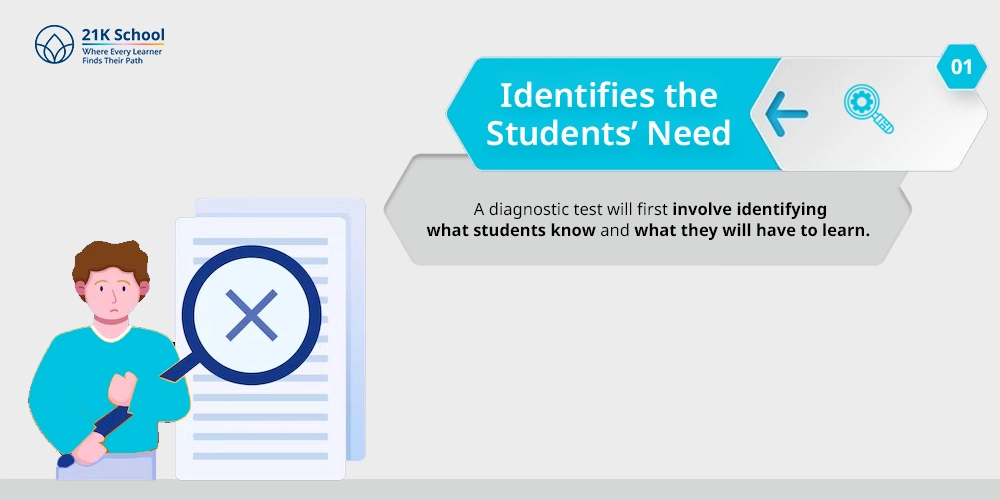
A diagnostic test will first involve identifying what students know and what they will have to learn. Teachers use pretests, surveys or simple tasks to obtain information about the previous knowledge, skills and preparedness of students.
This aids in establishing precise learning objectives and also makes the process of teaching begin at a level that would be appropriate to all learners.
2. Analyse Students’ Difficulties
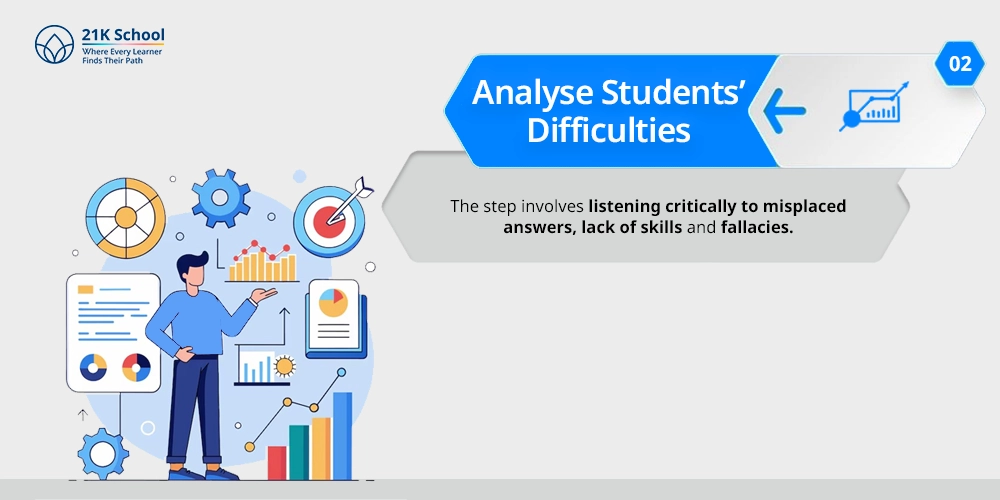
After collecting the results of the tests, the teachers analyse the mistakes and trends of the student performance in order to be aware of the areas in which they are not performing well. The step involves listening critically to misplaced answers, lack of skills and fallacies.
By researching such issues, a teacher will be in a position to single out specific areas that require additional attention or support to continue with the lesson.
3. Discover the Causes of Difficulties
Once the difficulties are detected, the teachers will seek to find out the reasons behind the difficulties. It may be attributed to the lack of knowledge in the past, instructions that are not clear, learning disabilities, language barrier or emotional causes.
By understanding what causes a student to be weak, the teachers come up with better interventions and identify the root difficulties that the challenges are dealt with and not the symptoms.
4. Implement Remedial Strategies
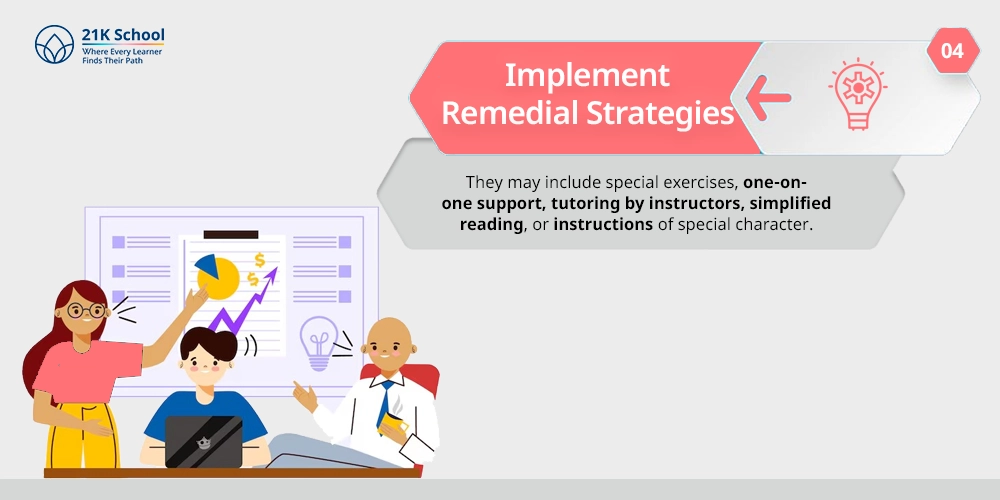
The teachers make and establish remedial measures to help students depending on the identified needs and causes. They may include special exercises, one-on-one support, tutoring by instructors, simplified reading, or instructions of special character.
The objective of the same is to make sure that the students will be capable of surmounting their difficulties and being at the required level of knowledge until the normal curriculum continues.
The Difference between Diagnostic and Prognostic Tests in Education
Diagnostic tests identify the current level of knowledge of a student and the gaps in learning, and prognostic tests are used to identify the performance of a student in the future.
The tests are diagnostic tests to inform the existing teaching and solve the immediate difficulties, and prognostic tests to plan and guide in the long term. This is the difference between prognostic tests and diagnostic tests.
| Aspect | Diagnostic Test | Prognostic Tests |
| Meaning | Determines what students already know, can do, and what they do not know or cannot do to help determine the remediation and teaching strategies. | Determines future academic performance or success, according to current or previous capabilities. |
| Goal | Intends to identify gaps and misconceptions in learning with the view to allowing focused and immediate instructional intervention to improve the student. | Intended to predict the future performance, which allows educators to prepare to be successful long-term and to achieve academic growth. |
| Application | Given in advance or at the start of teaching to determine present levels of student readiness and modify instruction and meet special needs. | They were informed after a bit of teaching to forecast upcoming academic results, to inform future teaching, testing, or career choices. |
| Focus | Emphasises the diagnosis of existing student strengths, weaknesses, and knowledge gaps and addresses the short-term requirements. | Concentrates on making predictions performance of students in future tests or assignments in accordance with current skills. |
| Example | A pre-test can be used to evaluate the level of knowledge on fractions to identify the level of readiness of the students undertaking a new unit of math. | An examination which is predictive of the actual performance of a student on the actual test on the basis of the available skills. |
5 Advantages of Diagnostic Tests in Education
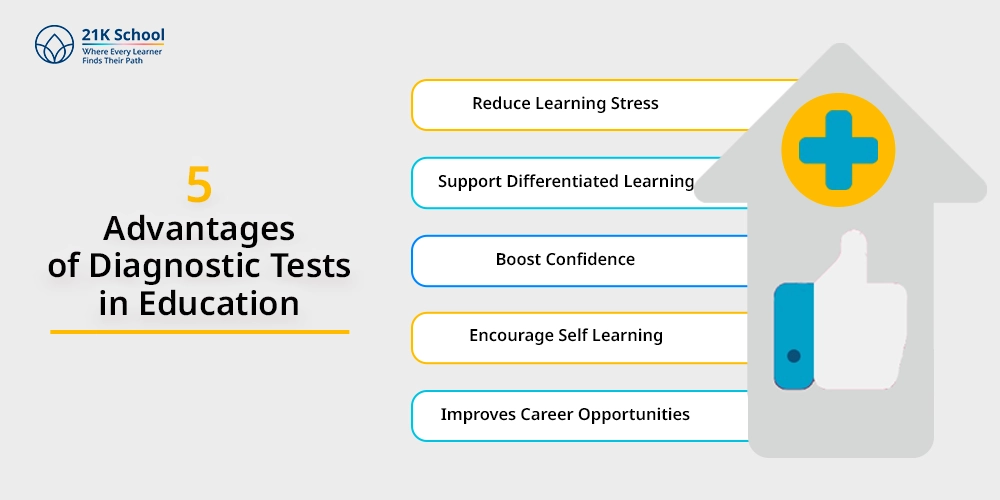
There are numerous advantages of diagnostic tests in the education process, which include exposure of the gaps and strengths of students in the learning process, facilitation of the individualisation of instruction by teachers and efficiency of the learning process.
This enhances the learning potential of the students as well as their performance in learning. The benefits of diagnostic tests in education are the following.
1. Reduce Learning Stress
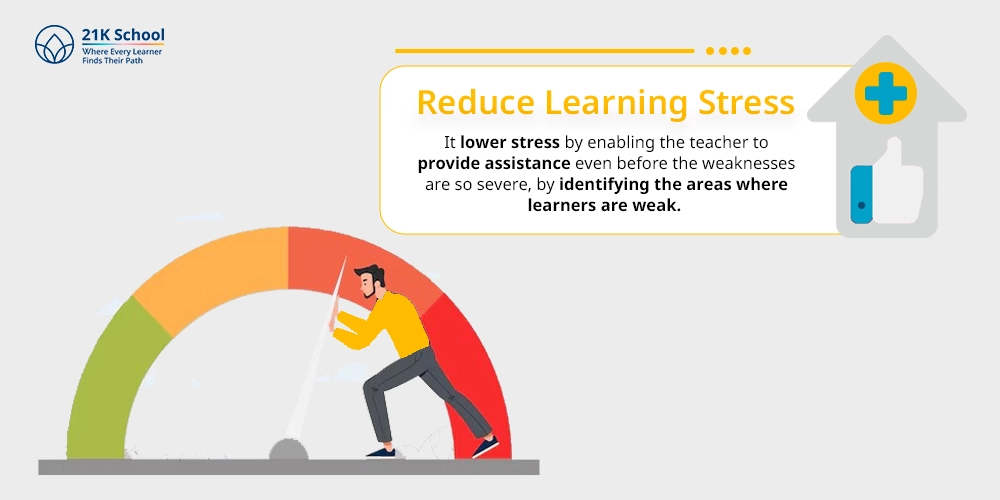
Diagnostic tests also lower stress by enabling the teacher to provide assistance even before the weaknesses are so severe, by identifying the areas where learners are weak. It will enable students to be less stressed by the fact that they know that these tests will not be graded, and thus they can focus on improvement rather than performance.
This renders the learning process informal and causes the students to view the new lessons with certainty and clarity.
2. Support Differentiated Learning
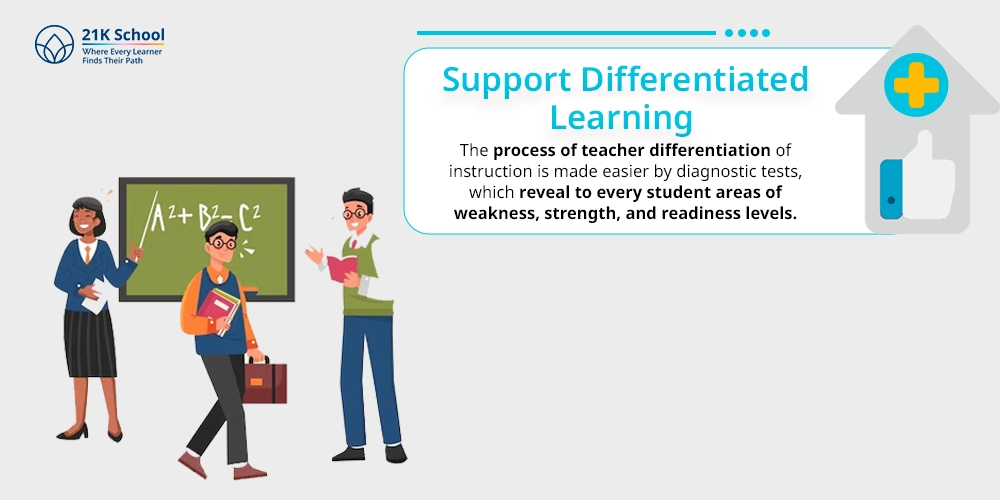
The process of teacher differentiation of instruction is made easier by diagnostic tests, which reveal to every student areas of weakness, strength, and readiness levels. They can design lesson plans, activities and support strategies that are in line with the needs of individuals.
This will be to ensure that the advanced learners are challenged, the struggling learners are helped, and everyone learns at a good pace and therefore makes the teaching better and accommodating.
3. Boost Confidence
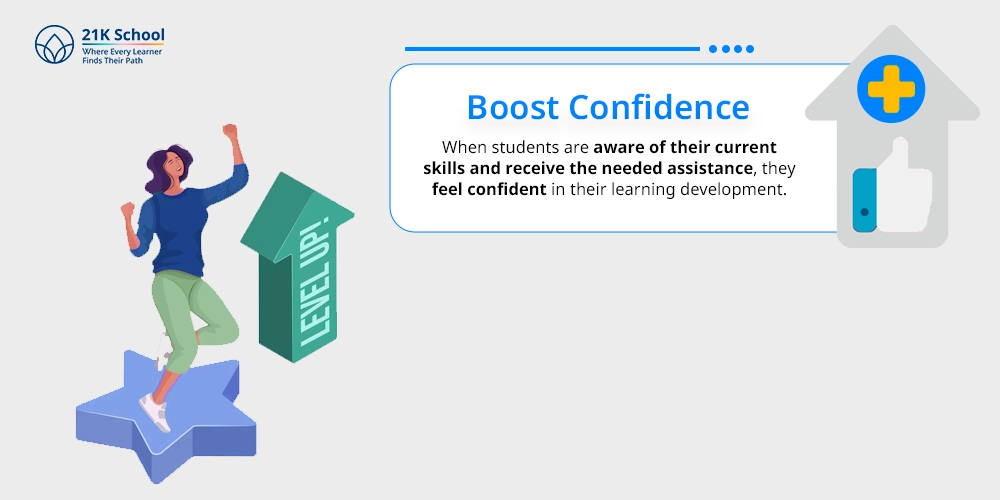
When students are aware of their current skills and receive the needed assistance, they feel confident in their learning development. The diagnostic tests cause them to perceive that misfortunes are average and manageable.
Their confidence in themselves grows as they improve with certain training. This confidence will result in participation, better performance and a good attitude to learning and school.
Explore how to build confidence in a child.
4. Encourage Self Learning
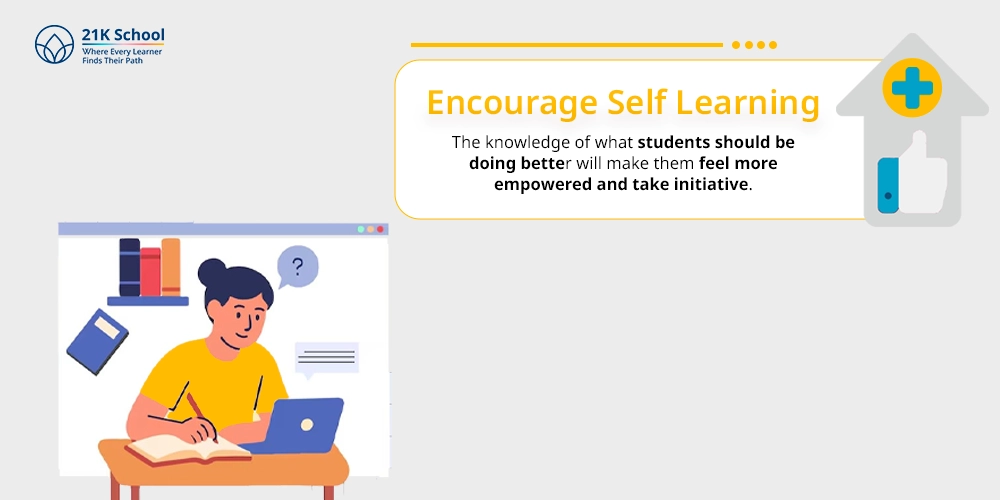
Diagnostic tests provide the students with a reference point of what they are good at and which they have to improve on, which makes the students work towards being the owners of their education. The knowledge of what students should be doing better will make them feel more empowered and take initiative.
They are able to demand additional materials, practise outside a classroom as well as establish a habit of self-directed learning, which can eventually make them achieve academic success in the long run.
5. Improves Career Opportunities

The better academic choice, required skills, and more direct career goals are even easier to achieve with the early definition of the strengths and weaknesses among the students. The diagnostic tests are able to guide them on their topics or directions, for which they have an excellent chance of succeeding.
The tests eventually give better choices of careers and future prospects after enhancing academic performance and confidence.
5 Disadvantages of Diagnostic Tests in Education
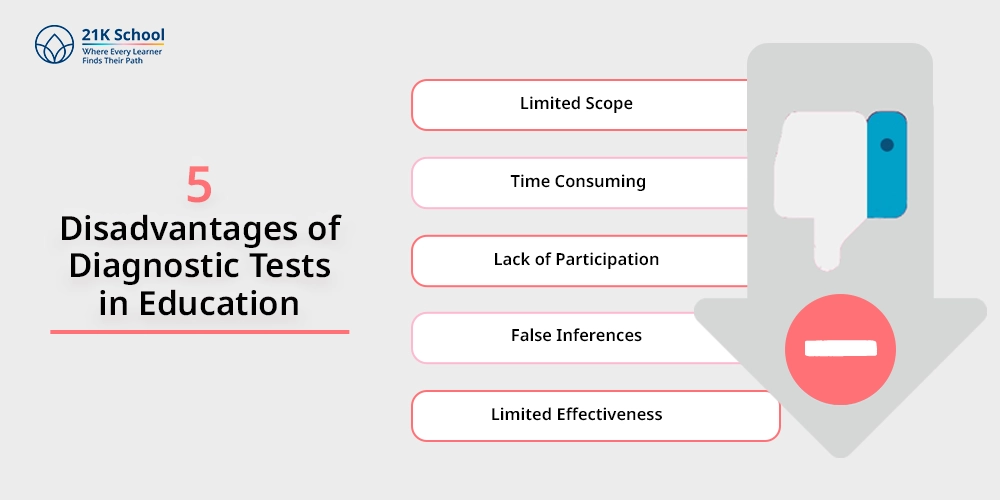
The negative aspects of diagnostic tests in academic institutions are that it is time-consuming on the part of the student and the teacher, and might fail to give the right conclusion regarding the capabilities of a student or a misinterpretation of the capabilities of a student.
This reduces the efficiency of diagnostic tests, and learning becomes complicated. These are the disadvantages of diagnostic testing on education.
1. Limited Scope
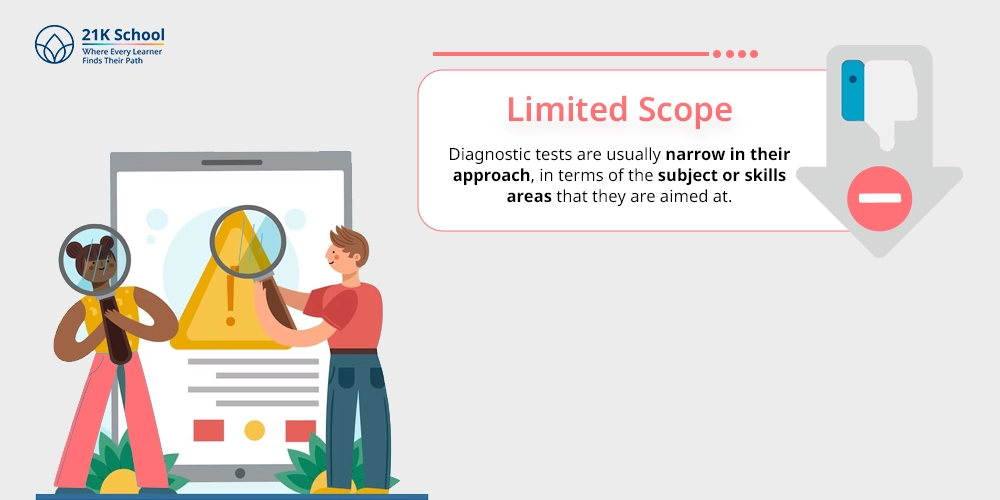
Diagnostic tests are usually narrow in their approach, in terms of the subject or skills areas that they are aimed at, so they may not be able to reflect the whole gamut of abilities or learning requirements of a student.
This may happen at the cost of other valuable elements of learning, like creativity, problem solving or social skills, which restricts the effectiveness of the assessment in general.
2. Time Consuming
Designing diagnostic tests, administering them, and analysing them may consume a lot of time on the part of teachers.
Customising assessments, grading them and studying the results can be quicker than conducting the actual teaching lesson planning or other classroom learning that can be cumbersome on a busy study schedule of a school.
3. Lack of Participation
Some students may not take diagnostic tests seriously because they are not graded or low-stakes. This partial engagement can result in an incomplete or inaccurate set of data, and teachers cannot possibly get the actual picture of the strengths and weaknesses of the students in the learning process.
4. False Inferences
There is a danger that the diagnostic tests could give misleading findings in case the students do not comprehend questions, guess the answers or even with exam stress. The educators can then make erroneous judgments concerning the knowledge or skills of students, and make wrong instructional choices.
5. Limited Effectiveness
There will not be enough diagnostic tests that guarantee improved learning outcomes. Their success depends on how the teachers use the results in planning their instructions, providing assistance and bringing interventions.
The data that is obtained after carrying out diagnostic tests may not lead to any considerable academic progress unless a follow-up is done.
5 Examples of Diagnostic Tests in Education
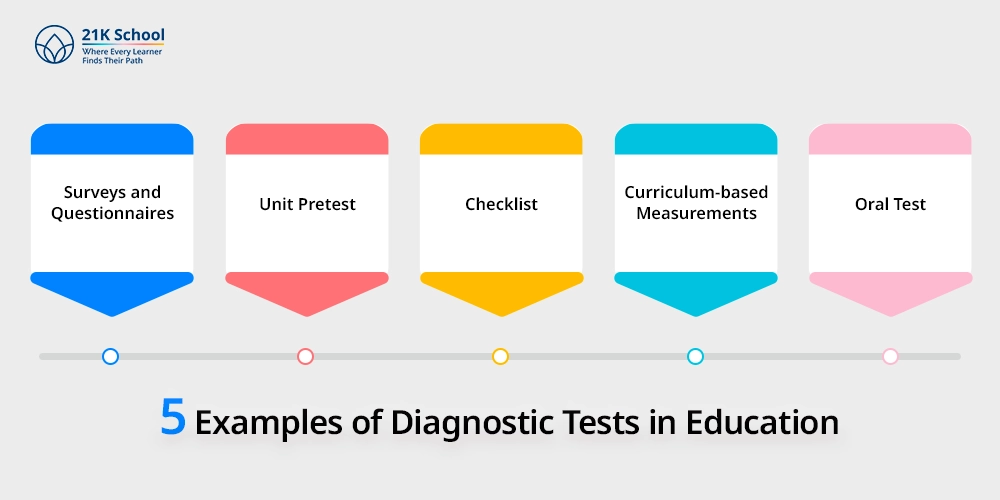
Such educational diagnostic tests are pre-tests, interviews, self-assessment, checklists, standardised tests, etc.
The test can be applied to define the strengths and weaknesses of the students, and students can improve their learning results. Some of the diagnostic tests in education include the following.
1. Surveys and Questionnaires
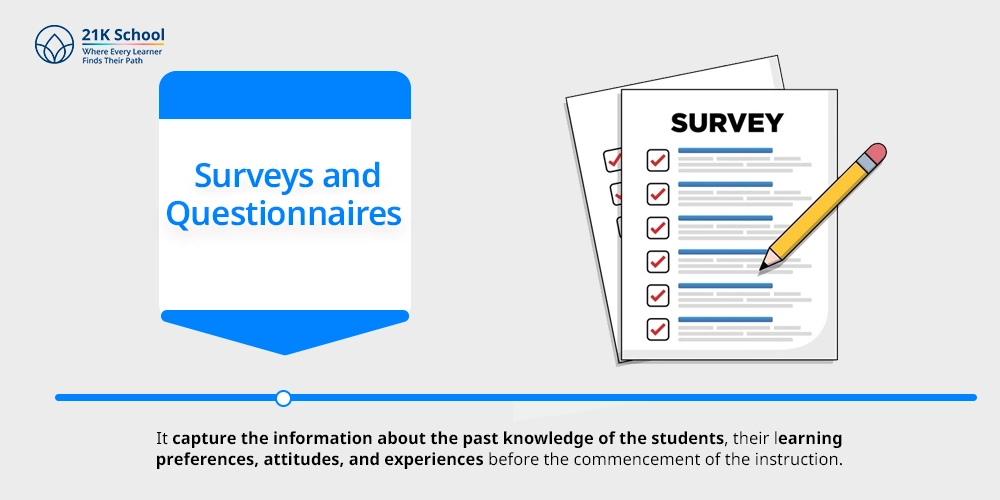
The data is collected by the use of surveys and questionnaires that capture the information about the past knowledge of the students, their learning preferences, attitudes, and experiences before the commencement of the instruction. They will help the teachers to understand the background and preparedness of the learners; therefore, better planning can be made.
The surveys could be based on multiple choice questions, rating scales, and open-ended questions, and thus could be used in discovering both academic and non-academic aspects that affect learning.
2. Unit Pretest
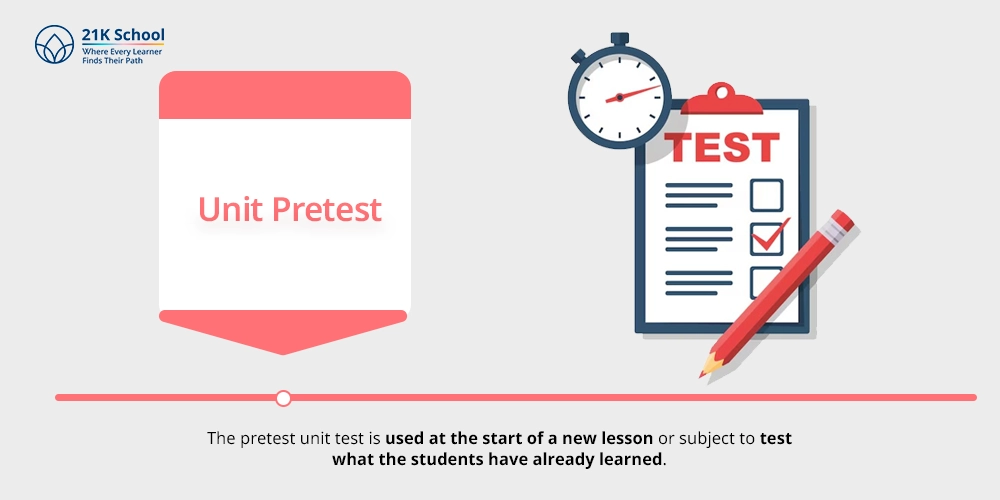
The pretest unit test is used at the start of a new lesson or subject to test what the students have already learned. It presents the strengths, weaknesses, and misconceptions about the future content.
The results help teachers change the teaching strategies, which is to ensure that the students receive the right amount of support. Pretests give an assurance that there is no repetition of the same information, and the areas that need special training are outlined.
3. Checklist
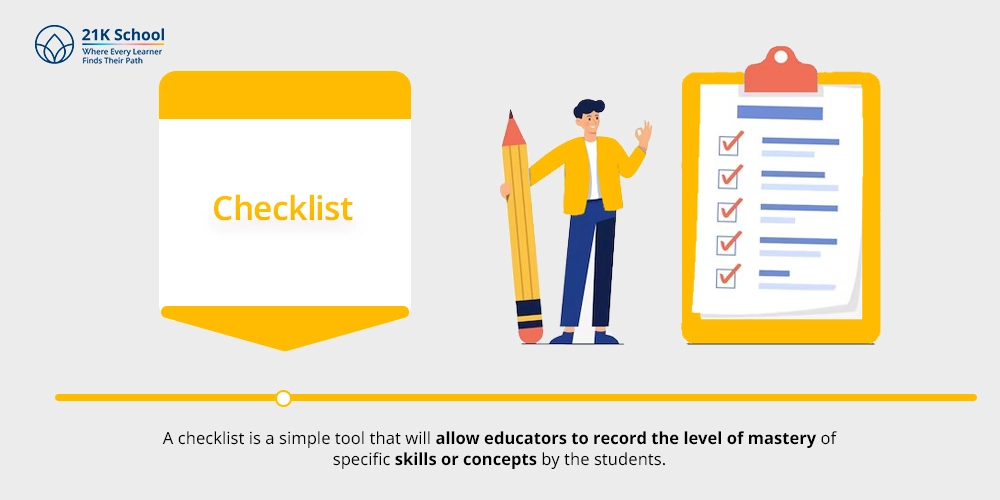
A checklist is a simple tool that will allow educators to record the level of mastery of specific skills or concepts by the students. It is especially relevant when dealing with young students or when the topic of the discussion is skills-specific.
The results can be easily identified by teachers, as the teacher can easily tell the learning gaps and track the progress of the student, by letting them know whether they have done the task or not. The checklists can also be used in the planning of targeted interventions.
4. Curriculum-based Measurements
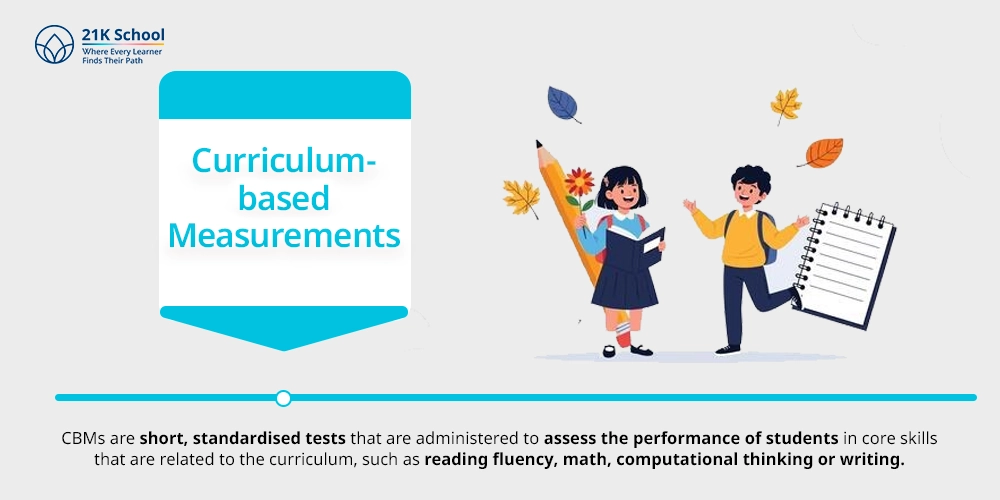
CBMs are short, standardised tests that are administered to assess the performance of students in core skills that are related to the curriculum, such as reading fluency, math, computational thinking or writing. They are quick to dispense and provide plausible data.
CBM helps the teacher to monitor the progress and detect learning difficulties at early stages, and adjust the instruction to ensure that students follow the school agenda.
5. Oral Test
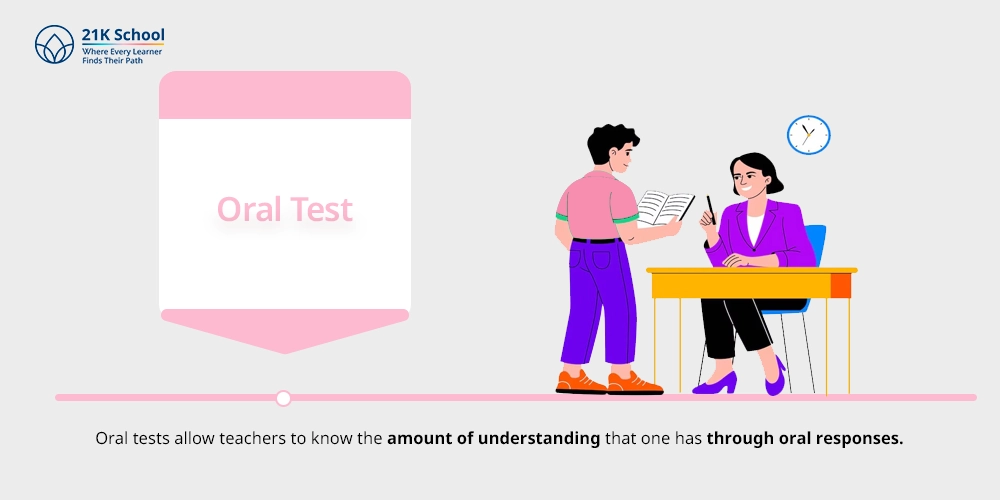
Oral tests allow teachers to know the amount of understanding that one has through oral responses. They aid in the evaluation of communication and critical thinking, and comprehension skills. This would come in handy, especially to learners who do not perform well with written tests.
Oral assessments have the potential of providing immediate feedback and the educator with an improved insight into how students are able to express themselves, to reason and apply knowledge.
Ending Note
The diagnostic tests are quite essential in education since they give appropriate information on the strengths, weaknesses and knowledge deficiencies of students.
They enable instructors to tailor the instruction, provide individualised guidance and enhance the entire learning outcomes with the help of early identification of such areas.
As much as these come with some drawbacks, such as time scarcity and improper interpretation, the drawbacks of using diagnostic tests can be more than what benefits them, and they should therefore be a mandatory component of facilitating student achievement and the most effective teaching practices.

You may also want to read