

Have you ever thought about why universalisation of primary education is essential in building an educated society?
One of the objectives in the development of mainstream society is the universalisation of primary education. It is an indicator of collective effort by governments and societies to initiate all children into the school system and retain them.
This strategy will combat the social disparities by enhancing access, participation and quality at the lower level in order to provide the foundation of individual growth, economic development and long-term national progress through inclusive education and sustainable systems.
Table of Contents
What is Universalisation of Primary Education?
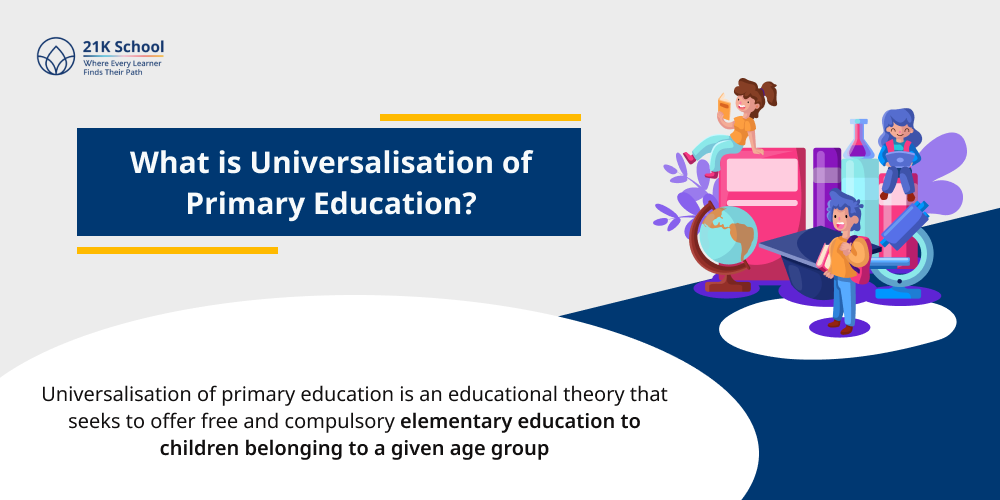
Universalisation of primary education is an educational theory that seeks to offer free and compulsory elementary education to children belonging to a given age group. It is concerned with the access, enrolment, retention, as well as quality education to all children irrespective of their gender, caste, economic status or geographical location.
The objective is to eradicate illiteracy at the lower level by lowering the dropouts and enhancing the learning outcome, which would provide a solid foundation for lifelong learning and social development.
Objectives of Universalisation of Primary Education
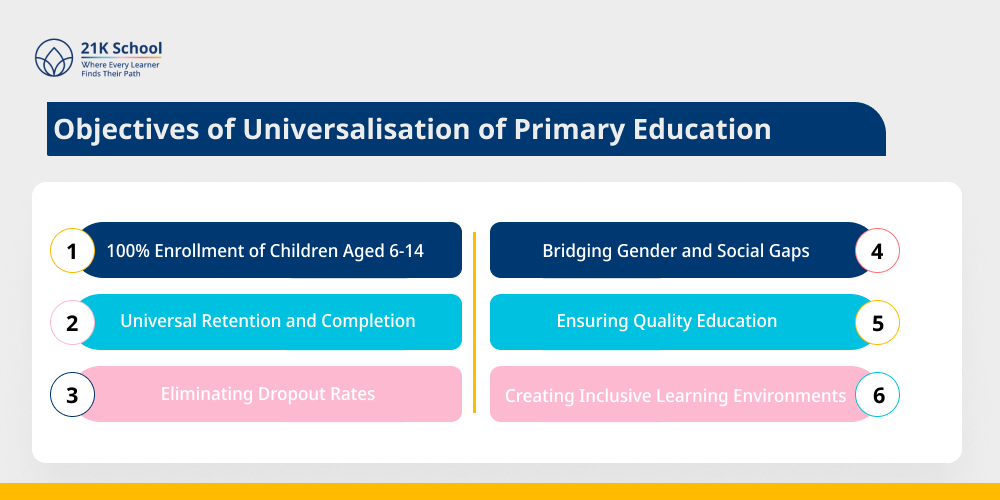
Universalising primary education aims at achieving 100% enrolment, retention and completion, eradicating dropouts, reducing social and gender disparities, delivering good quality education and establishing inclusive education systems for all children.
1. 100% Enrollment of Children Aged 6-14
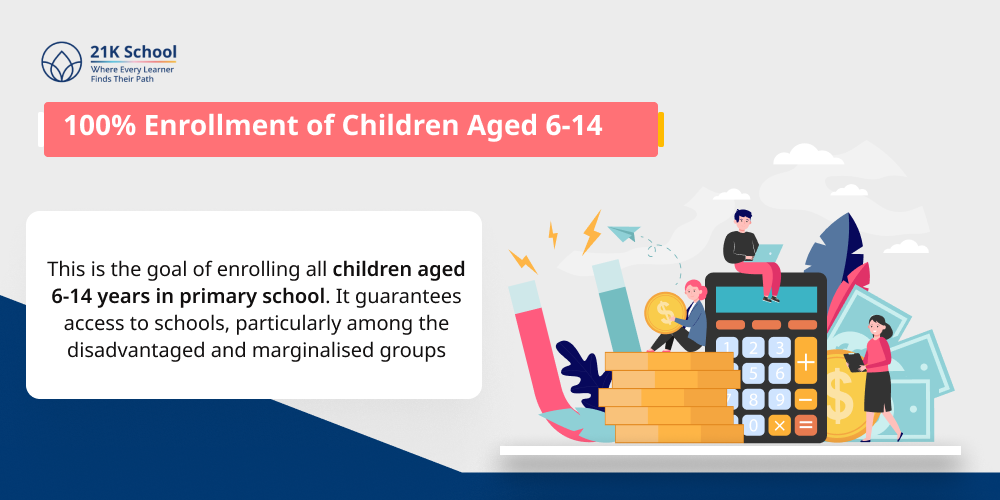
This is the goal of enrolling all children aged 6-14 years in primary school. It guarantees access to schools, particularly among the disadvantaged and marginalised groups.
Some of the efforts made are the construction of schools, offering free education, incentives, and increasing awareness to ensure that no child is deprived of basic education because of economic, social or geographical reasons.
2. Universal Retention and Completion
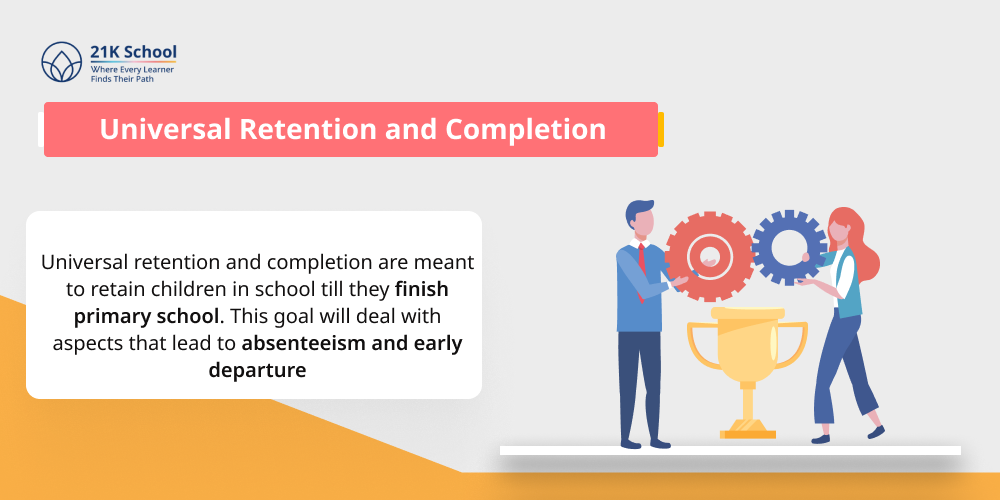
Universal retention and completion are meant to retain children in school till they finish primary school. This goal will deal with aspects that lead to absenteeism and early departure.
Mid-day meals, scholarships, and child-friendly and positive learning environments are some of the support systems that facilitate consistent attendance. Completion helps children to acquire the necessary skills and avoid disruptions to their schooling process.
3. Eliminating Dropout Rates
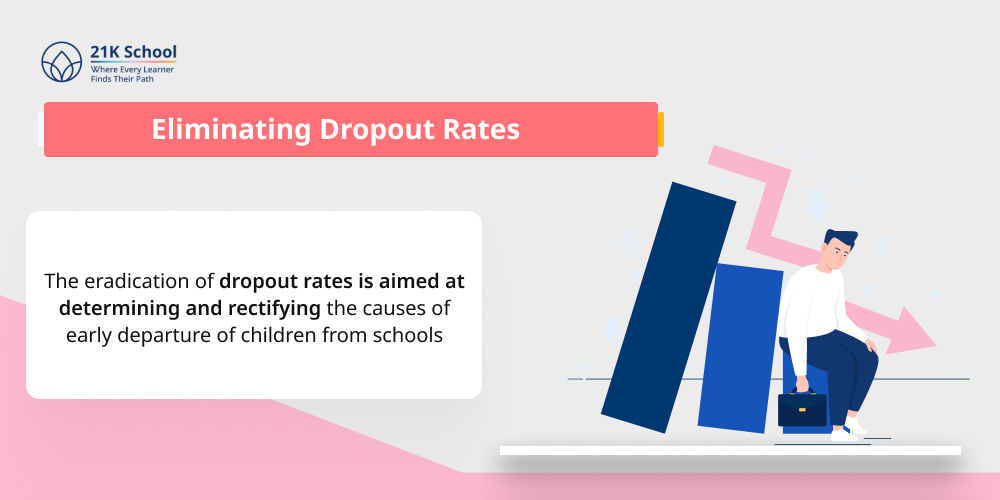
The eradication of dropout rates is aimed at determining and rectifying the causes of early departure of children from schools. These causes could be poverty, child labour, uninterestedness or inadequate schooling facilities.
Some of the interventions that help in retaining students include financial support, participation in teaching and community. The low school dropouts mean that individuals continue to learn, and overall, there is an overall better performance in the knowledge world.
4. Bridging Gender and Social Gaps

This would help in eliminating the gaps in education along gender, caste, class, disability or social backgrounds. Special projects encourage the enrolment of girls and children from marginalised groups.
The equal opportunities are created through the provision of safe school environments, scholarships and inclusive policies. Closing such gaps enhances social justice and equitable educational growth among the communities.
5. Ensuring Quality Education
Quality education aims to improve the standards of teaching, learning materials and the learning method as well as the mode of assessment. Professional knowledge of teachers, revised curriculum, and child-oriented pedagogy help to achieve the improvement of the learning outcomes.
Quality education also implies that the children do not merely attend school, but they acquire substantive knowledge, skills and values that can make them grow and have opportunities in future.
6. Creating Inclusive Learning Environments
Inclusive learning environments will imply making schools friendly and open to every child, regardless of special needs or disabilities.
This includes physical environments, support instructional strategies, and auxiliary learning materials. The inclusive environments encourage student engagement, appreciation of diversity and make every child feel important, encouraged and capable of learning effectively.
Importance of Universalising Primary Education
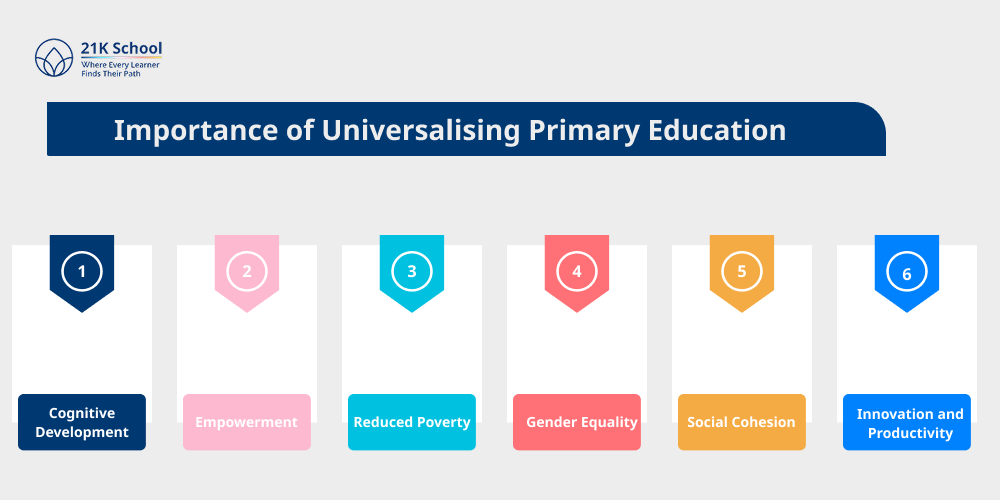
Primary education must be universalised since it is required to facilitate cognitive development, empowerment, alleviation of poverty, gender equality, social cohesion, and economic prosperity, which offer a solid foundation of individual development and state development. Universalisation of primary education is important as follows.
1. Cognitive Development
Universalisation of primary education facilitates cognitive development by establishing basic skills such as reading, writing, reasoning, and problem-solving. Early education improves memory while studying, concentration, and critical thinking skills.
When all children reach primary school, students develop the intellectual capacity that is needed in higher learning. It also leads to a high level of cognitive development at this age, which enhances academic performance and decision-making skills towards lifelong learning within a wide range of social and economic situations.
2. Empowerment
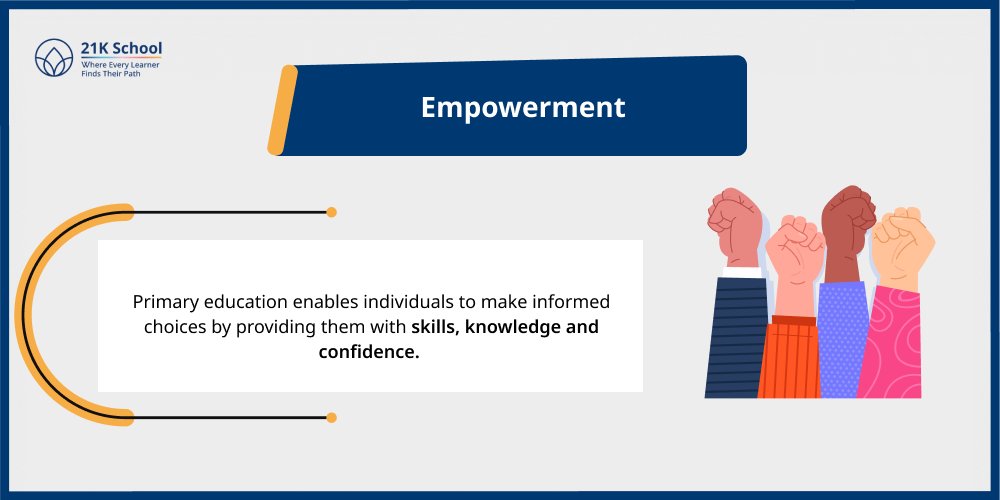
Primary education enables individuals to make informed choices by providing them with skills, knowledge and confidence. When children are educated, they become adults who are capable of actively participating in the society, and their rights, as well as contribute greatly to their societies.
Universal education encourages self-reliance, awareness and independence. It makes people prepared to better their living circumstances and to be able to demand social change and personal ways of developing.
3. Reduced Poverty
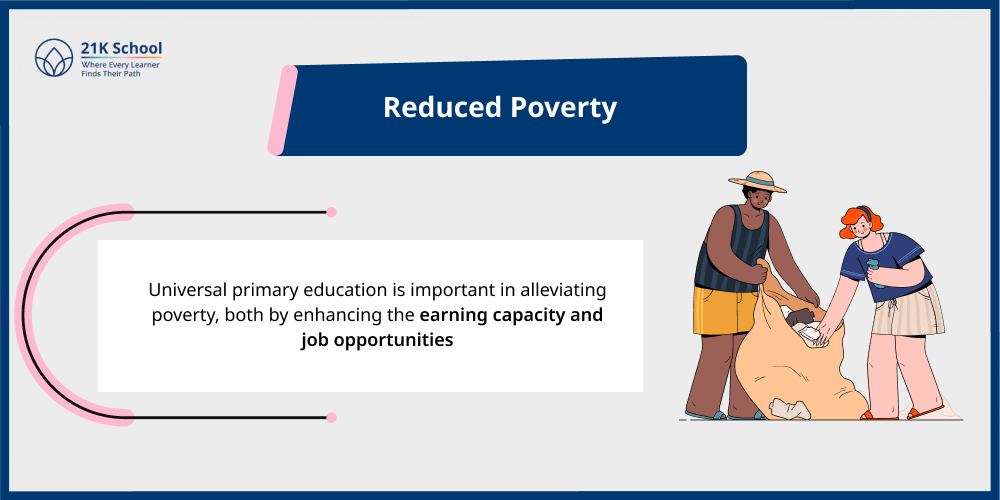
Universal primary education is important in alleviating poverty, both by enhancing the earning capacity and job opportunities. An educated individual will have better chances of getting stable jobs and ending the poverty cycle.
Education raises productivity, financial literacy and social mobility. In this way, by providing all children with basic education, societies will be able to cut income inequality and make economic growth sustainable across generations.
4. Gender Equality
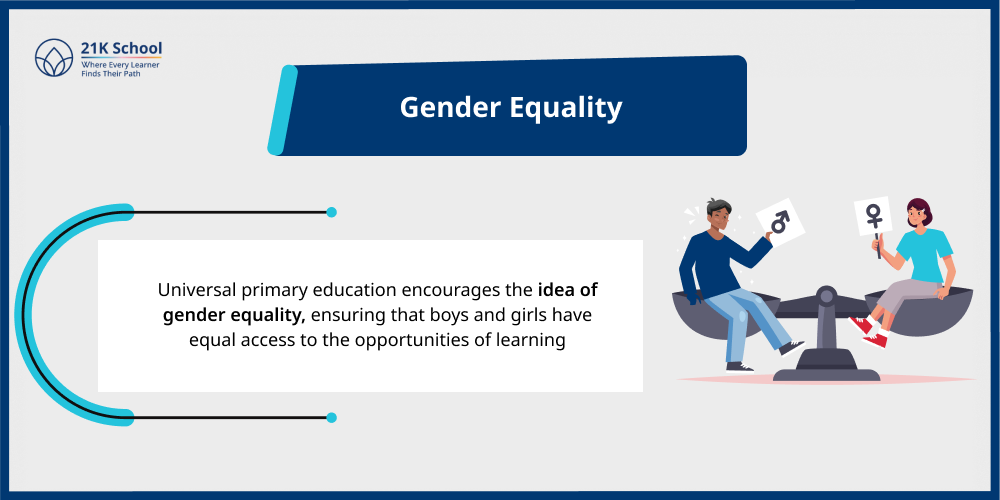
Universal primary education encourages the idea of gender equality, ensuring that boys and girls have equal access to the opportunities of learning. Girls’ education helps to postpone early marriages, enhance better health and also workforce participation.
Equal education lowers the level of discrimination, and women are made socially and economically empowered. By offering education to girls, families, communities, and nations are enjoying better welfare, leadership, and development in all sectors due to inclusiveness.
5. Social Cohesion
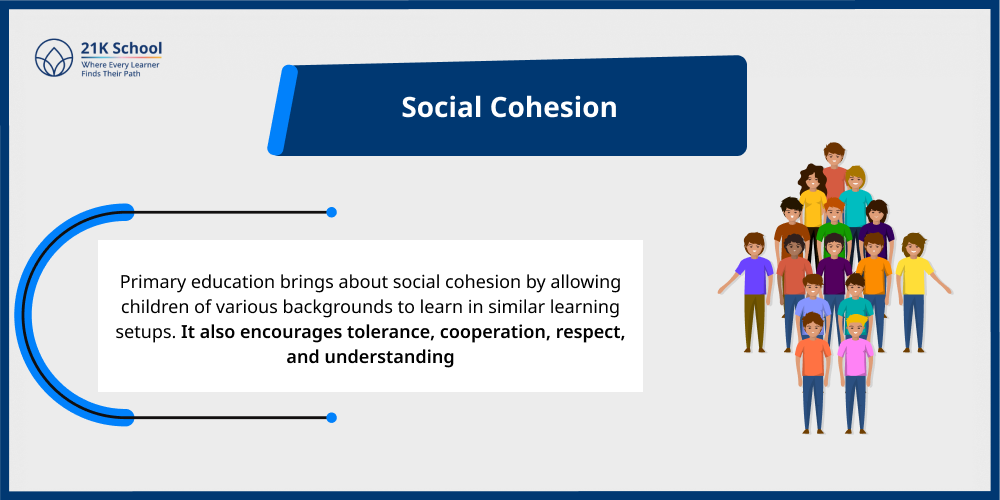
Primary education brings about social cohesion by allowing children of various backgrounds to learn in similar learning setups. It also encourages tolerance, cooperation, respect, and understanding.
Universal education brings down the social differences in terms of caste, class, gender, or ethnicity. Learned citizens would be more inclined to take a positive part in society, solve conflicts without violence and help unite the nation.
6. Innovation and Productivity
The foundation of innovation and productivity is universal primary education, which develops basic skills which are essential in higher learning and problem-solving skills. A well-educated population is more adaptable to changes in technology or economic needs.
Effective primary education enhances the efficiency of the working population, creativity and innovativeness. With every child educated, societies will have increased productivity, competitiveness and long-term economic and technological developments.
Key Components of Universalising Primary Education
The important constituents of universalising primary education revolve around access, affordable nature, delivery of quality teaching, provision of sufficient resources, inclusive learning environments to have every child in school, learn well and successfully finish the learning journey of primary education. These are the main elements of universalising primary education.
1. Universal Access and Infrastructure
Universal access and infrastructure ensure, such that all children can access schools, and it is safe. This involves the construction of schools in remote areas, transport, clean classrooms, sanitation facilities, and basic amenities.
Effective infrastructure eliminates geographical barriers to education and promotes frequent attendance, particularly in children in the underprivileged communities.
2. Free and Compulsory Education
Free and compulsory education is a way of breaking the financial lines that divide institutions of education, as school fees are abolished and children are now obliged to receive an education. This is in order to ensure that parents bring their children to school despite their economic status.
The government also ought to help with the legal laws and sensitisation of the masses so that every child gets access to primary education without any form of financial burden.
3. Quality Curriculum and Pedagogy
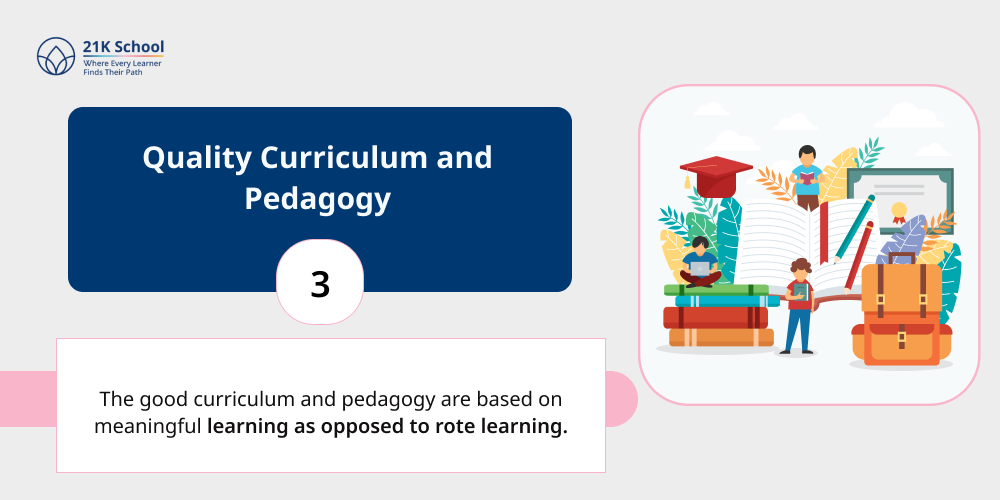
The good curriculum and pedagogy are based on meaningful learning as opposed to rote learning, Relevance, student-centred learning and continuous assessment are used to enhance learning and interest.
Basic skills also emerge through a good curriculum and assure the students of the knowledge that they will be able to use in their lifetime and apply it in real life.
4. Trained and Motivated Teachers
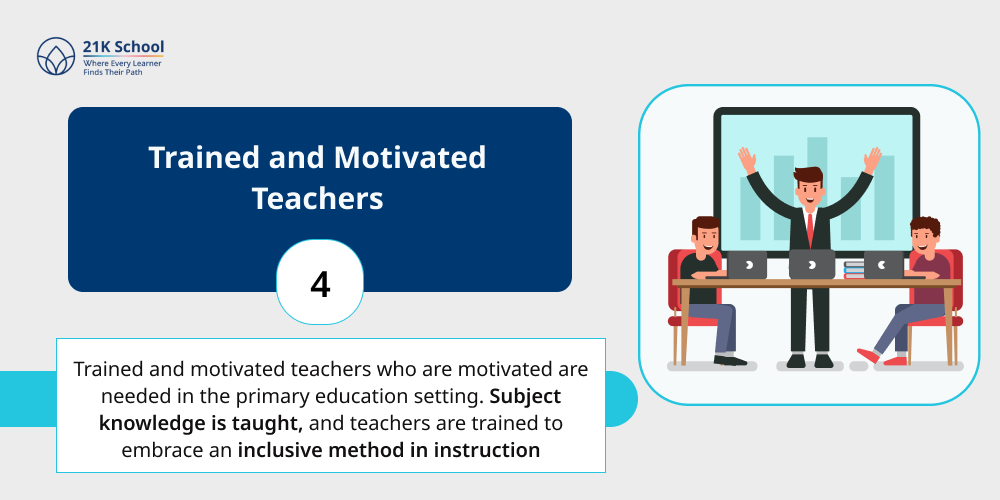
Trained and motivated teachers who are motivated are needed in the primary education setting. Subject knowledge is taught, and teachers are trained to embrace an inclusive method in instruction. Motivation enhances performance in terms of high salaries, support and development.
Good teachers bring up interesting classes, support different students and contribute to higher learning levels among students.
5. Adequate Learning Resources
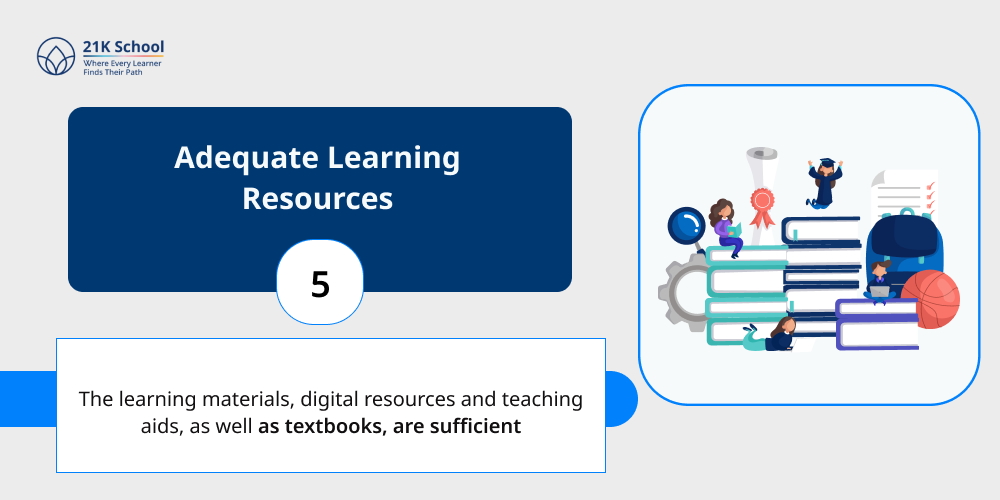
The learning materials, digital resources and teaching aids, as well as textbooks, are sufficient. Such materials can be used to help students to learn fatser, efficiently and develop knowledge.
Availability of this materials involved will ensure that the learning methods have uniformity and that students are left to train themselves in skills, something that improves the quality of learning and performance.
6. Inclusive Education for All
Inclusive education is where all children, whether or not they are disabled or any marginalised group, are given the freedom to acquire quality education. It entails flexibility in teaching, availability of infrastructure, and favourable policies.
An inclusive classroom encourages equality, fosters diversity and makes every child engage and succeed academically in primary education.
Challenges in Universalising Primary Education
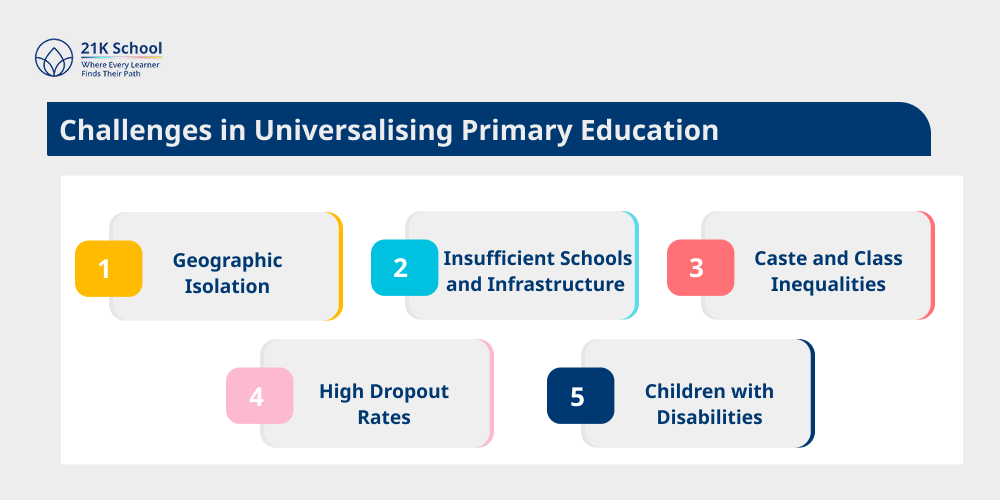
The social inequalities, insufficiency in the infrastructure, geographical location, high number of dropouts and lack of support to children with disabilities are some of the challenges that have been encountered in universalising primary education, affecting access, retention and quality. The following are the difficulties in universalising primary education.
1. Geographic Isolation
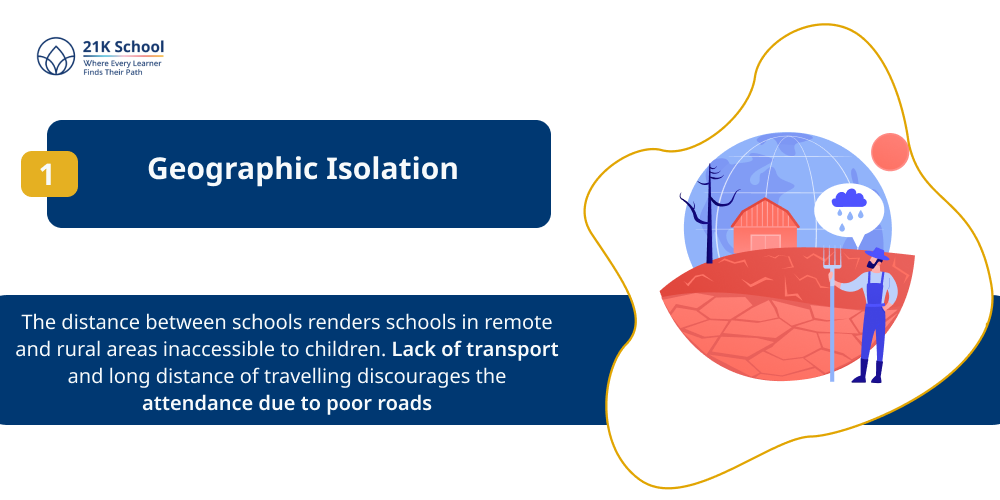
The distance between schools renders schools in remote and rural areas inaccessible to children. Lack of transport and long distance of travelling discourages the attendance due to poor roads.
There are also inadequate facilities in such areas and an insufficiency in the number of teachers, which further reduces enrollment. To address the geographic isolation, one should build schools close to the communities, improve transport facilities and use other education example to reach every child.
2. Insufficient Schools and Infrastructure
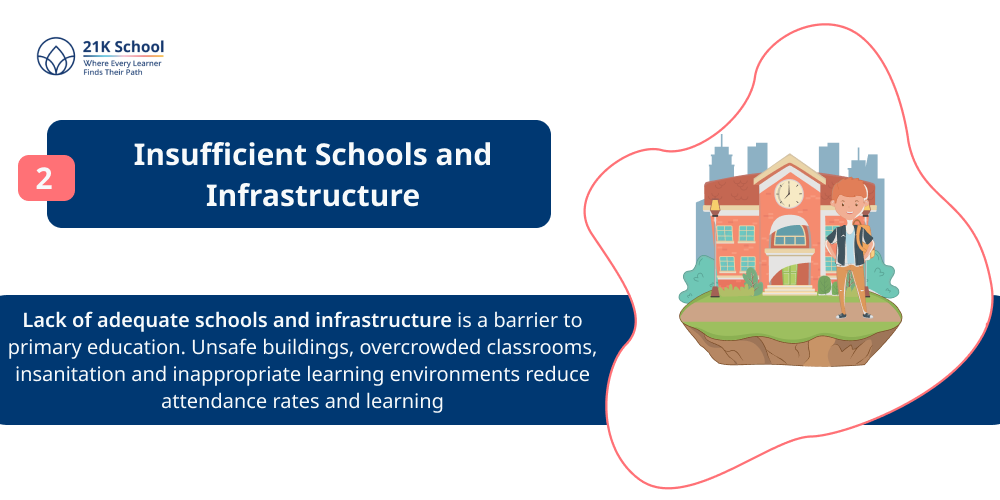
Lack of adequate schools and infrastructure is a barrier to primary education. Unsafe buildings, overcrowded classrooms, insanitation and inappropriate learning environments reduce attendance rates and learning.
The number of children who cannot join schools is high because of the lack of schools. Universalisation of primary education requires enhancement of infrastructure in terms of building schools, maintaining and allocating resources.
3. Caste and Class Inequalities
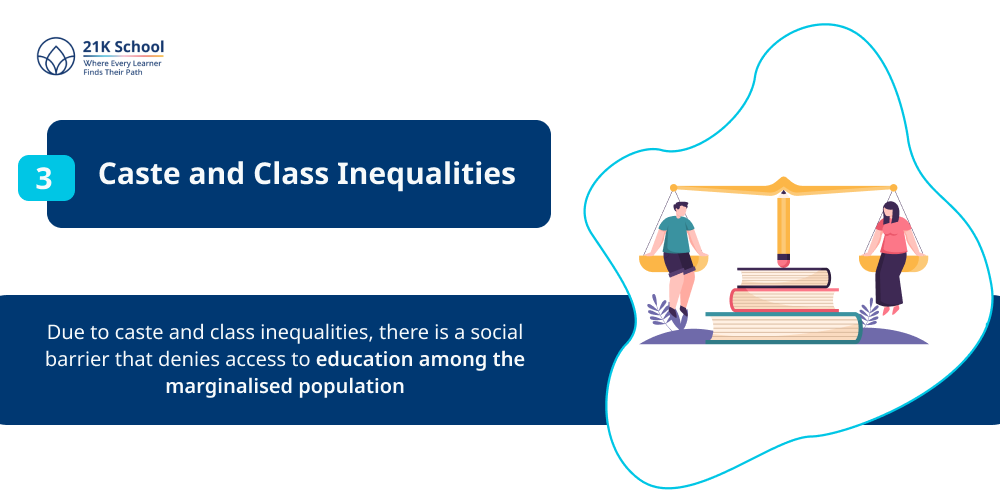
Due to caste and class inequalities, there is a social barrier that denies access to education among the marginalised population. Enrollment and regular attendance are discouraged through discrimination, poverty, racial problems in schools and social exclusion.
Disadvantaged children are not well supported or provided for. This effort should deal with these disparities through inclusive policies, scholarships, community education, and interventions that will provide equal education to everyone.
4. High Dropout Rates
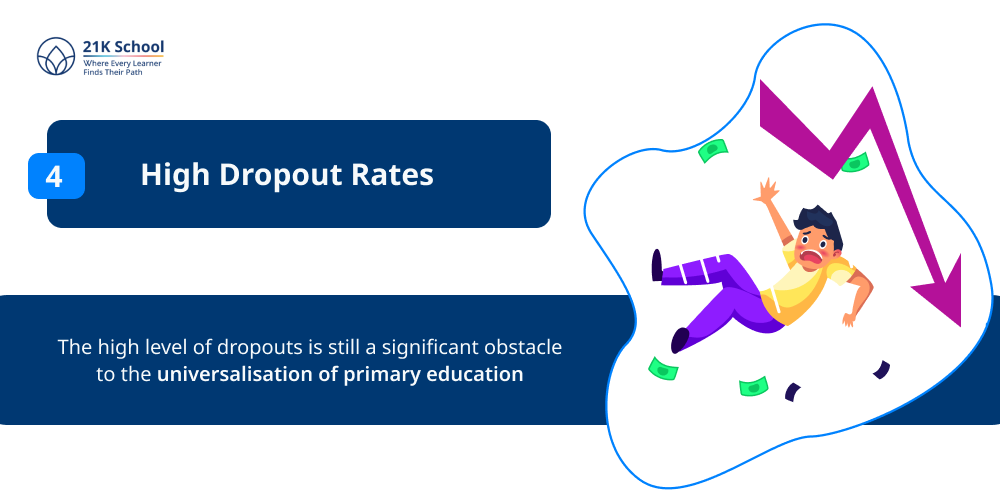
The high level of dropouts is still a significant obstacle to the universalisation of primary education. Child labour, lack of interest, poverty, and poor learning conditions are the reasons that contribute to early school dropout.
When dropouts break the chain of learning, they limit the opportunities they have in the future. To improve the dropout rates, it is necessary to support them with financial resources, teaching techniques, and effective monitoring and retention plans.
5. Children with Disabilities
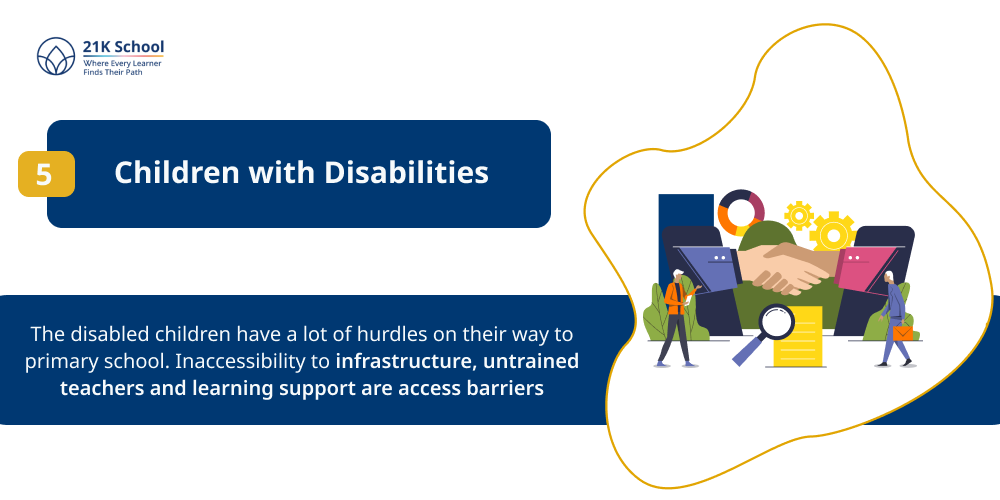
The disabled children have a lot of hurdles on their way to primary school. Inaccessibility to infrastructure, untrained teachers and learning support are access barriers.
Numerous schools do not have the means to address the various needs. Practices in inclusive education, assistive technologies, teacher training, and supportive policies are necessary to provide children with disabilities with an equal opportunity to get an education.
Conclusion
Universalising primary education is essential to establishing an inclusive, equitable, and progressive society. Access to quality schooling ensures the strength of cognitive development, empowerment, social cohesion and economic growth.
The challenges that would help achieve this objective include geographic isolation, infrastructure gaps, social inequalities, high dropout rates, and support for children with disabilities.
Universal primary education has provided the basis of lifelong learning, equality, and national development through comprehensive policies, diversity in practices, trained teachers, and community involvement.

You may also want to read